
Sluice is still figuring things out
The Durham, North Carolina band visits Rumba Cafe for a concert on Saturday, May 9, playing behind its excellent new album ‘Companion.’
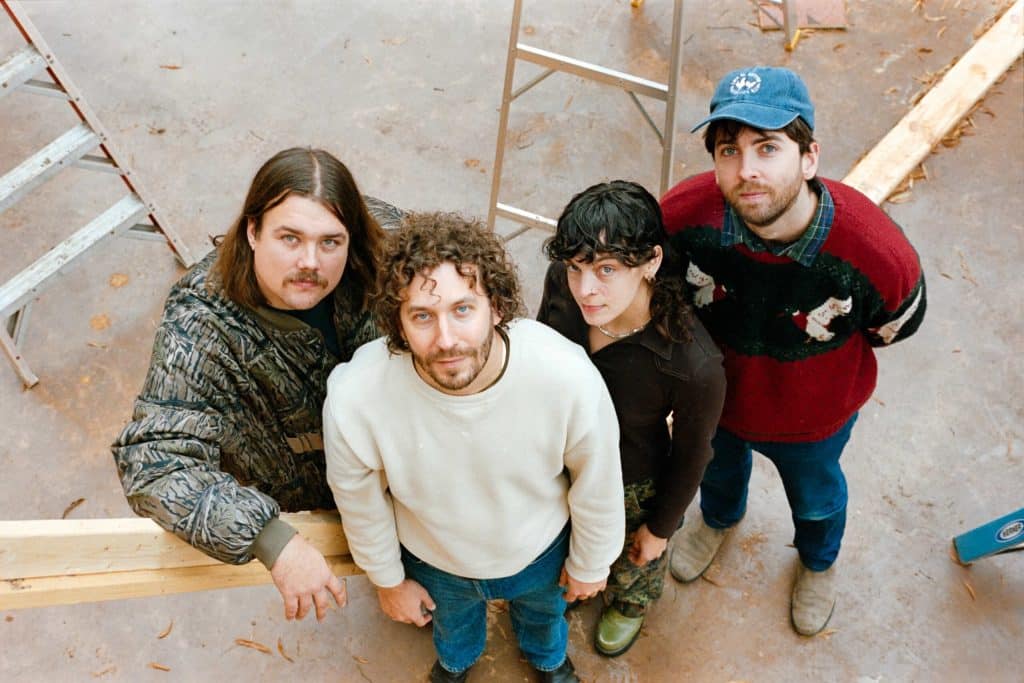
Companion, the new album from the Durham, North Carolina band Sluice, vividly captures the mid-to-late 20s years when many begin to find a sense of footing even as they remain clueless about what those next steps might be.
Singer and songwriter Justin Morris nods to this stake-planting on “Beadie” – “I used to move every spring,” he sings, and then adds, “Now I don’t” – and then spends the rest of the record trying to unpack both where he’s been and perhaps more importantly where he could go from here. On “Vegas,” he briefly flirts with abandoning music for a career in construction, while “WTF” is more blunt in its uncertainty. “I don’t know what the fuck is going on,” he sings. “Do you?”
To be completely transparent, not really. But there’s a sense of connection to be found in the knowledge that we’re all just fumbling our way forward as best we can, which is an idea that reaches full flower in the reflective “Unknowing.” Structured around a prayer published within Thomas Merton’s Thoughts in Solitude, from 1956, the track finds Morris, his voice digitized by a vocoder, seeking comfort in this ambiguity, steeled by an awareness that he’s accompanied on his journey by some kind of presence. “You are ever with me,” he intones, “and you will never leave me to face my perils alone.”
A donation powers the future of local, independent news in Columbus.
Support Matter News
“[‘The Merton Prayer’] has the word God in it, but with some minor edits, it could feel Buddhist, or like something your therapist might tell you,” said Morris, who will join his Sluice bandmates in concert at Rumba Cafe on Saturday, May 9, supported by Hiding Places. “And it felt really, really comforting to me, that submission to the reality that I have no idea what I’m doing but I will throw myself at this. And those times in my life when I feel like I can truly submit and trust are the times when I feel the happiest.”
A similarly joyous sensation drives album highlight “Vegas,” on which Morris recounts the headlong rush he felt as a younger man selling merch on tour for the singer and songwriter Angel Olsen, rubbing elbows with his musical heroes and celeb spotting from a distance. “Saw Miley Cyrus and the ‘Thor’ guy,” he sings, and then corrects himself, “Oh, that’s his brother.”
Morris recalls some darker times within Companion, too, with “Torpor” detailing the stretch he lived in New York as a young 20-something, when he ended up bound and gagged during an apartment robbery on his second day in the city. “And I think what happened was one of the other roommates in this sublet was involved in some bad stuff, and maybe was involved in drug dealing,” said the musician, who also plays in the excellent North Carolina band Fust. “It felt like a bungled situation where these guys came in with guns thinking they were going to have this big score, and they just got me, who didn’t know shit and was scared and didn’t have anything.”
In the weeks and months after the robbery, Morris penned an early draft of the song, which he described as more “fraught,” eventually ditching it because the frayed nerves sat too close to the surface for him and he didn’t want anyone else to have to share in that experience. The version that appears on the record arrived years later and introduces a sense of calm that can feel jarring, given the lyrics. When Morris sings about one of the men stepping into his apartment and ordering him to “get on the fucking ground,” for instance, he does so in the tone of a genteel neighbor inviting you to take a load off, his voice buoyed by graceful fiddle courtesy Libby Rodenbough.
“I think that space helped, and coming back to it years later was a conscious choice,” said Morris, who took further inspiration from the 2012 rerecording of Bonnie “Prince” Billy’s I See a Darkness, which saw the musician rework the album’s bleak songs into deceptively cheery numbers alongside Angel Olsen and the Cairo Gang. “And we were definitely taking a note from that, where it was like, okay, this is the darkest shit I’ve ever written, now how can I make it palatable? And then, how can that be a helpful tool for me?”
While ostensibly a folk-rock record, Morris and Co. incorporate a range of musical textures, found sounds, and field recordings that lend the album a more experimental quality. “Unknowing,” for one, closes with 90 seconds of atmospheric noise that Morris recorded a few years back on a sunny fall day outside of the Abbey of Our Lady of Gethsemani in Nelson County, Kentucky.
“It was a really beautiful day, and I had a couple hours to kill walking around, and hearing the birds, and hearing the bells at the monastery, and just feeling very alive,” said Morris, who initially felt compelled to stop at the monastery owing to its connection to Merton, who lived at Our Lady of Gethsemani for more than two decades up until his death in 1968. “And it was all so visceral, like, I can’t believe I’m here, and I’ve been reading so much that was written here.”
Music has always existed as a space of processing for Morris, who said this can present a challenge as he attempts to discern the difference between something he needs to write for himself – such as the therapeutic early draft of “Torpor” surfaced in the immediate aftermath of the robbery and subsequently discarded – and something meant for a wider audience.
“I don’t think it’s always clear, and that distinction felt really difficult to me as a younger musician,” he said. “The first 20 or 30 Sluice shows I played, probably, were a very painful and embarrassing and mentally fraught experience, and I went through a lot of loops of feeling like this was masturbatory and these were my own things and why am I even talking about them with other people? But I think a combination of muscle memory and repetition, coupled with the one or two people who might come up to you after a show and tell you what you shared was meaningful to them, has helped me feel less worried about oversharing. … But it’s complicated. And I don’t always know.”
Author

Related Articles

Pigeon Pit takes in the big picture, centers the small moments on ‘Leash Aggression’
The Olympia, Washington folk-punk band hits Dirty Dungarees for a concert on Wednesday, May 6.
Faye Williams begins her climb with ‘Woman in Black’
‘I would say hitting rock bottom helped to remind me what my priorities are and why I even started making music to begin with.’

Happy Chichester provides comfort amid hardship with ‘Test Time’
‘I’ve always been drawn to artists who take a moment to actually look that awful reality in the eye … and then give us something that helps us.’