
‘American Doctor’ asks viewers to not look away
The gut-wrenching documentary from director Poh Si Teng, who will be on hand when the film screens at the Wexner Center this weekend as part of ‘Unorthodocs,’ takes viewers inside Nasser Hospital in Gaza.
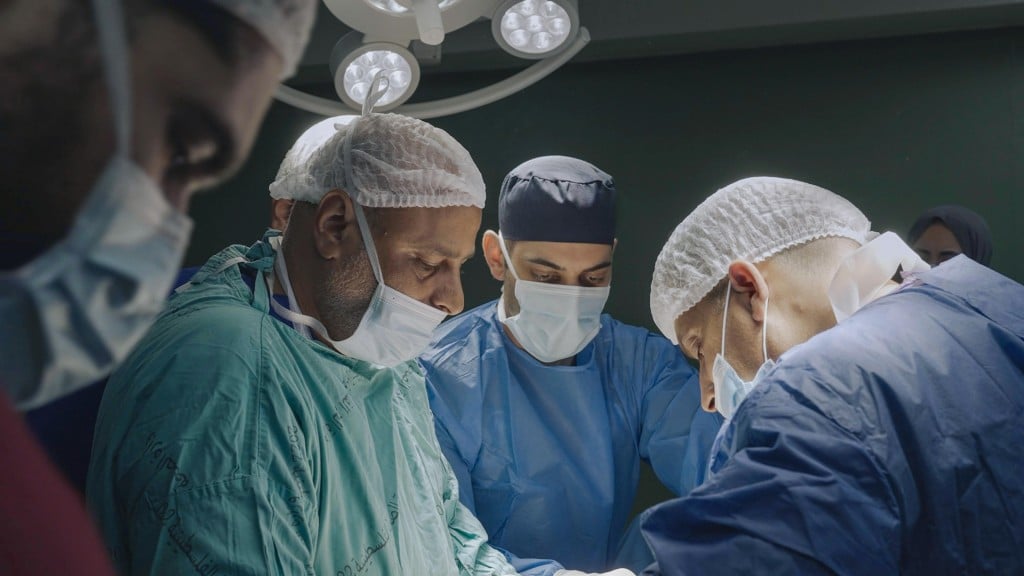
Early in “American Doctor,” director Poh Si Teng engages Dr. Mark Perlmutter, a Jewish American surgeon, as the two view photos of Palestinian children mutilated by Israeli weapons during the ongoing genocide in Gaza.
As the discussion unfolds, Teng says she might blur or pixelate the images as a means to preserve the dignity of those killed – a point which causes Perlmutter to bristle. “Israel took away their dignity,” he says. “You’re not dignifying them by not showing that.”
The exchange proves illustrative of a documentary that refuses to look away, Teng helping to capture an on-the-ground view of a brutalized society through the experiences of three American medical professionals who dedicate themselves to saving Palestinian people torn apart by bullets and bombs.
A donation powers the future of local, independent news in Columbus.
Support Matter News
“As a journalist and a filmmaker, we always have to balance what we show, right?” said Teng, who will be on hand along with Dr. Feroze Sidhwa when “American Doctor” screens as part of “Unorthodocs” at the Wexner Center for the Arts at 7 p.m. on Saturday, Oct. 24. (Click here for a full list of films and showtimes.) “You show too much, and it’s gratuitous, and the mind can’t take it. … You show too little, and it’s a disrespect to those who survived and those who were lost. So, being confronted by Mark early on that second day filming with him, and … being told that I’m just like the rest of the media… And, you know, he was right. And so, I leaned into it, because I felt like I needed to learn something here.”
Teng, who has served as a documentary producer for outlets such as The New York Times and Al-Jazeera (in addition to a stint as an editorial intern at The Columbus Dispatch), began to consider making a film centered on Gaza a year into the genocide, she said, horrified by watching respected journalist colleagues targeted and killed by Israeli forces. (The Committee to Protect Journalists documented 129 members of the press killed globally in 2025, the majority by Israeli fire.)
“And I knew I wanted to make a film, but this is my directorial debut, so what is it I have to offer? … Is my voice needed? Can I really make something that is going to be so different it can maybe move the needle?” Teng said. “And it took me some time to find the right story, the right entry point. … But then along came Dr. Mark Perlmutter. He was the first one I saw on the news, and he’s different. He doesn’t mince words. And I met him, and soon after he introduced me to two of his buddies: Dr. Feroze Sidhwa and Dr. Thaer Ahmad.”
These three become the eyes through whom viewers experience events, with Perlmutter and Sidhwa shipping off to Gaza and Ahmad, a Palestinian American from Chicago, staying behind in Jordan following Israel’s revocation of his travel approval. It’s not the only time Ahmad will be sidelined; while Sidhwa and Perlmutter are recruited by national news networks to speak to their experiences in Gaza, Ahmad is left to talk at Palestinian conferences and to read aloud the death threats he receives via social media.
“I’ve always been perceptive in all my years in media and in filmmaking, asking, who gets to say what? Who gets to do what? Who gets to go where?” Teng said. “And that was part of the attraction as a director going in: How is one voice weighed more because of their background and race and ethnicity? And I can’t say I will ever fully understand how it feels to be discriminated against in the United States as a Palestinian. But I hope the film shows some of those inequities and racism and holds a mirror up to the viewer, so we can widen the space on whose voice is allowed to go forward, especially on the subject of Palestine.”
Sidhwa said that he understood the platform granted him to speak on Gaza by his background. Born to immigrant parents from Pakistan, he is neither Jewish, Palestinian, nor Israeli, neither Christian nor Muslim. “My only real identity is as an American,” he said, adding that this freed him from the blanket assumptions some people might have of voices on any side of the conflict. “And also, if somebody tries to justify the things I saw in Gaza, the things everybody who works there has seen, the things that are being done to these people by bringing up standard propaganda talking points, most doctors are uncomfortable. … But for me, I’m just going to tell them, ‘No, you’re wrong. And this is where you’re wrong.’”
It helps, of course, that Sidhwa has long studied the Israel-Palestine conflict, and in particular the United States’ role within it, in addition to spending multiple stints working in Gaza dating back to 2004. (He most recently attempted to return to the region in November, but Israel declined to grant approval for reasons unknown to the doctor.)
Myriad tensions exist within the film as the doctors wrestle with the necessity of their work, the indifference of the larger world to the suffering of the Palestinian people, and the inability of the media to give an accurate portrayal of on-the-ground realities. In one Zoom interview, Sidhwa is interrogated about the supposed Hamas tunnels said to exist beneath the hospitals in Gaza, which he has never seen and expressly states do not exist. Eventually, the reporter produces a video they describe as proof to their existence: a CGI clip created and disseminated by the Israel Defense Forces.
“Gaza is inhabited. It’s loud. It’s human. It’s lived in. It feels like a community even under these horrific circumstances,” said Sidhwa, who also noted the tonal shift that takes place when the doctors return to the United States, advocating for Palestine in a dreary series of media Zoom calls and meetings with faceless congressional staffers that collectively highlight the disconnect that exists in large swaths of the American public. “And, yeah, when we’re interacting with the media, when we’re interacting with Congress, it just doesn’t feel like a human interaction.”
Further tensions surface when the doctors return to America from Nasser Hospital, which is shown getting bombed by Israel in the closing moments of the film, each expressing guilt over their decision to leave, concerned for the friends and colleagues left behind to carry on life-saving work under increasingly dire conditions.
“When we were leaving, there was a gentleman who was kind of like a security guard for the hospital, but he happened to have his probably one-and-half-year-old boy with him, just taking care of him. And we had a team of maybe 13 people, and we were all standing around waiting for the vans to take us to Cairo. … And we were talking about the food we were going to eat. … And all of a sudden there was a collective lull in the conversation, and now the only person making noise was this little one-and-half-year-old boy,” Sidhwa said. “And I remember looking up at everybody else, and everybody’s faces just sank. And it was so clearly obvious why. We’re going to pat ourselves on the back and eat food in Cairo and think we’re so great, and this little one-and-half-year-old who did absolutely nothing to anybody … is going to be stuck in this Hobbesian hellhole of a place. … And who on Earth knows what is going to happen to this little child?”
Teng expressed similar qualms. Speaking to me from Egypt, where the night before our interview she had attended a screening of “American Doctor,” she described the unreality of traveling with the film to the resort town of El Gouna at the same time that a number of the people essential to the documentary’s creation – in particular director or photography Ibrahim Al-Otla and co-producer Mohammed Sawwaf – were clinging to eroding hopes of survival in Gaza.
“My friends, they’re on the other side, and the Israeli military is closing in. They’re drawing this yellow line, and I don’t know whether our team will survive this,” she said. “And both of these men have five children each. And it weighs heavily on me. What is it for me as an American to have so much power over their lives? Because I know and many people know, if the United States wanted to stop this, we would have a long time ago, but we continue.”
Author
Related Articles
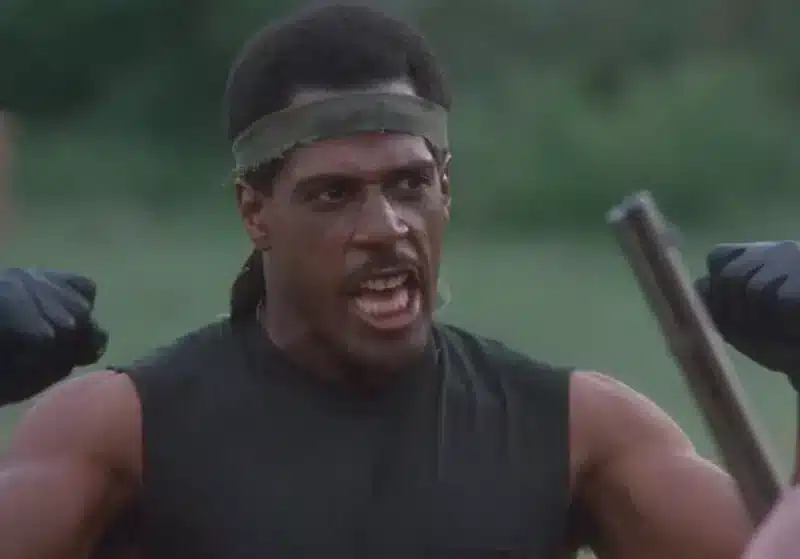
A newly restored ‘Riverbend’ finds fresh resonance in the modern era
A series of unlikely events collided to give new life to the 1989 film, which will screen at the Wexner Center for the Arts on Friday, Oct. 2.
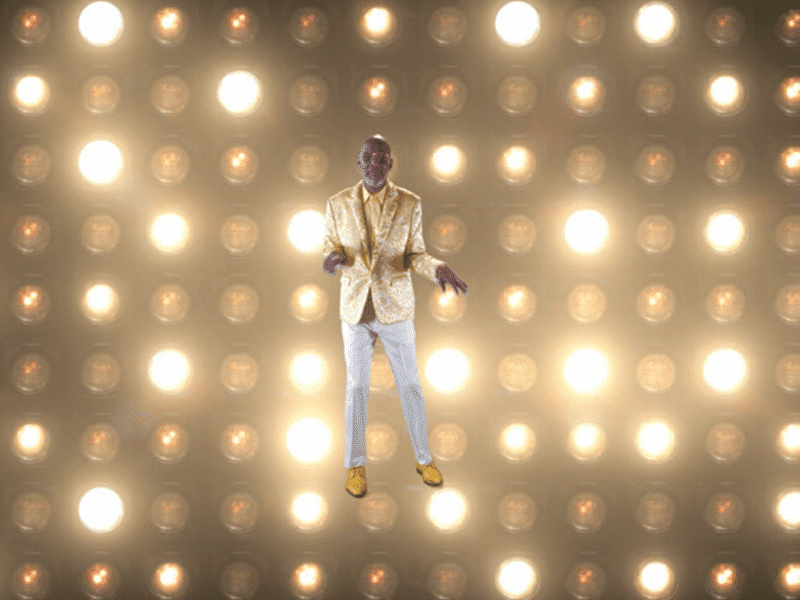
‘Ice Cream Land’ balances fantasy, reality in making its way to the big screen
More than two decades in the works, the new documentary from artist David Denniston lovingly traces the life and experiences of Ricky ‘Ice Cream’ Jackson, who will be on hand when the film premieres at the Lincoln Theatre on Thursday, Sept. 17.

‘Wood Street’ was filmed in Oakland but it could have been made in Columbus
The new documentary from California journalist and filmmaker Caron Creighton screens at the Drexel Theatre this weekend as part of Cinema Columbus.