‘You can’t shut me up’: Artists speak to the moment in new group show ‘UnCensored’
Curated by Ohio Art League, the exhibition runs at RAW Gallery through Sept. 11.
Artist Julia Barrett began work on the painting that would become “Not That It’s Your Business” not long after Republican legislators began passing the first round of so-called “bathroom bills,” which require people to use the public restrooms that corresponded with the sex listed on their birth certificate.
Completing the painting – a vulnerable portrait of Columbus artist Briden Schueren – was a two year process, and Barrett remains struck by the public and political shift that took place in that time and even more so in the years since, with the dehumanization of trans people reaching tragic new lows under the current Trump administration, which has moved to strip the community of everything from access to health care to the right to serve in the armed forces. Compare this with the widespread public condemnation that met North Carolina Republicans when they passed the state’s initial bathroom bill in 2016, which reached such a furor that it led them to roll back the legislation just a year later.
This horrific shift has evolved the meaning of “Not That It’s Your Business” for Barrett, who now views the painting as a guardian, or a beacon of hope in dark times. “For me, I have these paintings high up in my studio, so they’re normally looking down on me,” said Barrett, whose piece is currently displayed in the Ohio Art League (OAL) exhibition “UnCensored,” which will remain on view downtown at RAW Gallery through Sept. 11. “These people I know are so strong, and … they’re guiding me toward strength and acceptance and love, and that’s what I want most.”
A donation powers the future of local, independent news in Columbus.
Support Matter News
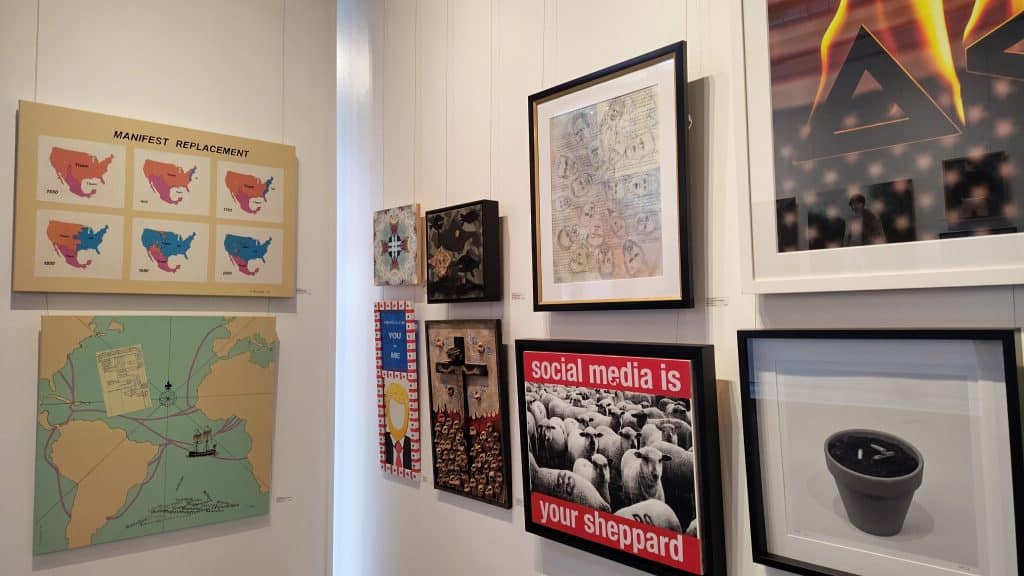
In an early August interview at RAW Gallery, OAL executive director Laura Savage said the idea for “UnCensored” sprung from “Second Amendment Rights,” a sculpture by artist Jim Bowling that depicts a blindfolded man painted red, white and blue and holding a pistol to his head. The piece was juried in the spring OAL exhibition at the Works in Newark, winning second prize, but was subsequently removed from the show.
“And I was able to get them to show the piece during the opening reception, but then it was tucked away for the duration of the exhibition,” Savage said. “The Board of Trustees [at the Works] found the subject matter challenging, and they have a lot of children going through the space, so the gun was a concern. … So, with this exhibition, we wanted to create a space where artists could submit the work they’re making and creating without the concerns of commercial galleries, funders, and boards.”
The work on display covers a breadth of subjects and mediums, incorporating sculpture (“free abortion” by the artist Gwen Waight, a veritable torture chamber of an object that highlights the dangers inherent in restricting women’s access to healthcare), photography (“Milchoc” by Patrick Affourtit), and a range of painting styles and approaches, from Barrett’s photorealistic representations, done in the manner of the old masters but centered on those communities routinely overlooked in their practices, to the diaristic collage style embraced by Rebecca Gonzalez-Bartoli, whose recent works have reckoned with her diagnosis with schizoaffective disorder at age 20.
“I was revisiting that headspace and everything I was going through back then,” Gonzalez-Bartoli said at 934 Gallery prior to the opening of her April exhibition. “And I was laughing and crying, and it was such an emotional experience. But it was also healing, too. … It brought back a lot of things I didn’t want to think about, but I knew that in order to move forward, not only creatively with my art but emotionally, that I really had to sit down and face it.”
“UnCensored” arrives at a fraught time in the arts world, which has struggled amid spending cuts initiated by the Trump administration. Locally, the Greater Columbus Arts Council had to pause its artist grant programs when an expected $4 million payment from Franklin County failed to materialize – the result of county-wide belt tightening in response to federal spending reductions. Savage said the widespread defunding of the arts has already impacted the nonprofit OAL, as well. “It’s a scary time and everyone is feeling it,” she said.
These realities have made art spaces more cautious, with some more hesitant to display the kind of work that might draw negative attention and ultimately impact funding, though Barrett said this isn’t necessarily a new development in an increasingly red Ohio.
“My art has always been a challenge here,” said Barrett, whose “Not That It’s Your Business” was removed from an earlier show at Fort Hayes, as was the piece she then replaced it with, “Anxiety Attack II.” “But right now it is a very scary time, where I do feel worried about my political views. … And the more we advance into Trumpism, the more I’m fearing for my own safety and the safety of those who I love very deeply. But it’s important to be like, no, I will talk about these things, and you can’t shut me up. … I’m an artist, and my voice comes out through my painting. And it is what it is. You can try to stop me. You can try to silence me. But I’m still going to have these thoughts, and I’m still going to create, and other people are, too.”
Author

Related Articles
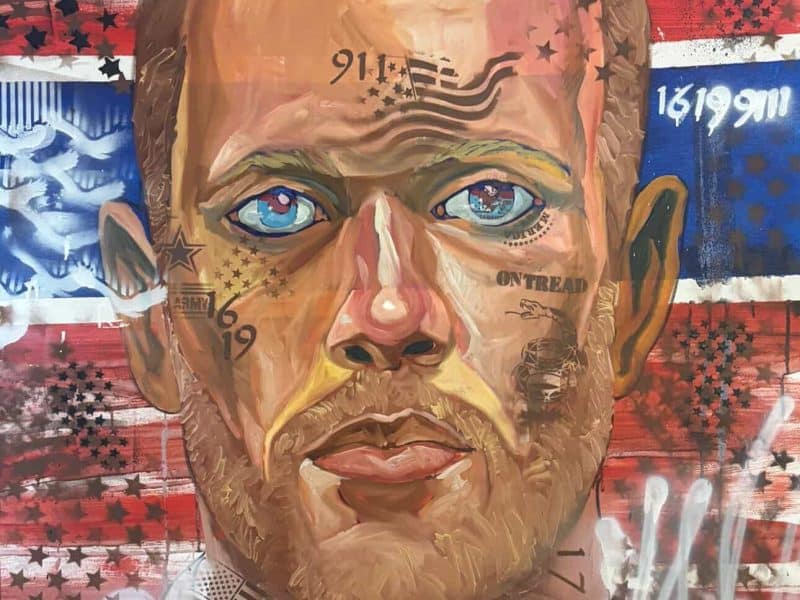
David Butler makes a stunning return to ‘Whiteland’
The Columbus artist’s thought-provoking new exhibition kicks off at Hammond Harkins Galleries with an opening reception on Saturday, May 9.
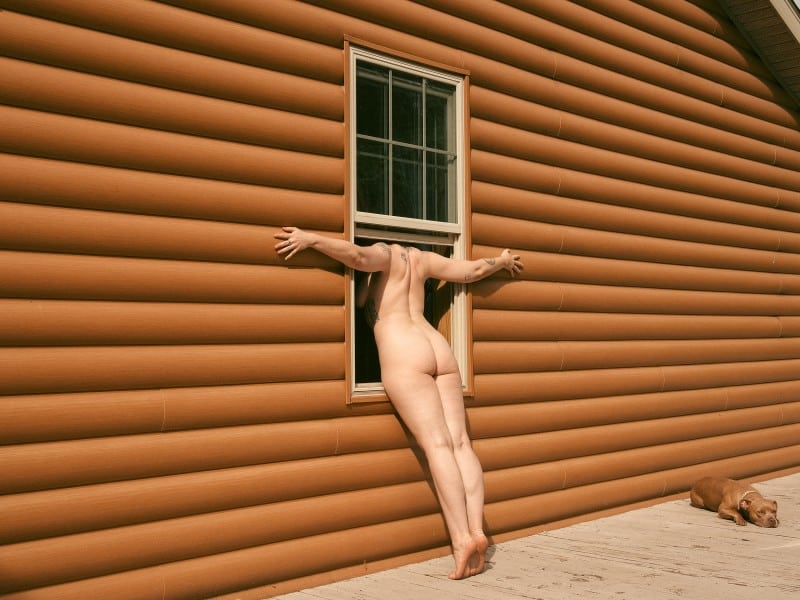
Kate Sweeney captures herself at the threshold
The Columbus photographer recently had two images named to the 2025 Booooooom photo awards longlist, including an eye-catching shot taken on a summer trip to Michigan that she described as ‘a self-portrait of transformation.’
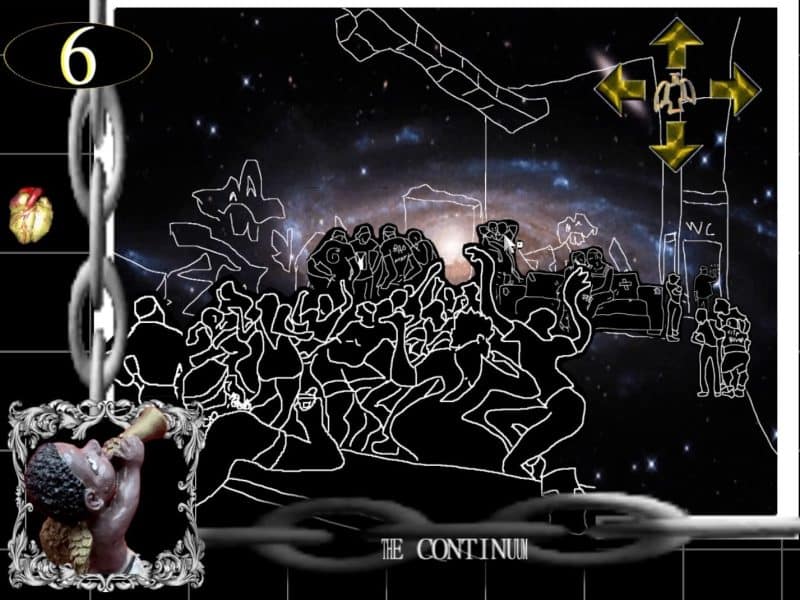
Cameron Granger’s debut video game doubles as a love letter to the Columbus DIY scene
In ‘Sidechain,’ set at a warehouse party on the final night before the world ends, players navigate scenes that draw inspiration from the formative years the artist spent frequenting spaces such as MINT, Corrugate, and Skylab.