
Duece Dysart establishes his own cadence with ‘Chapter Black’
The Columbus rapper will celebrate the release of his new Audio Unit-produced EP in concert at Rehab Tavern on Saturday, Aug. 1.
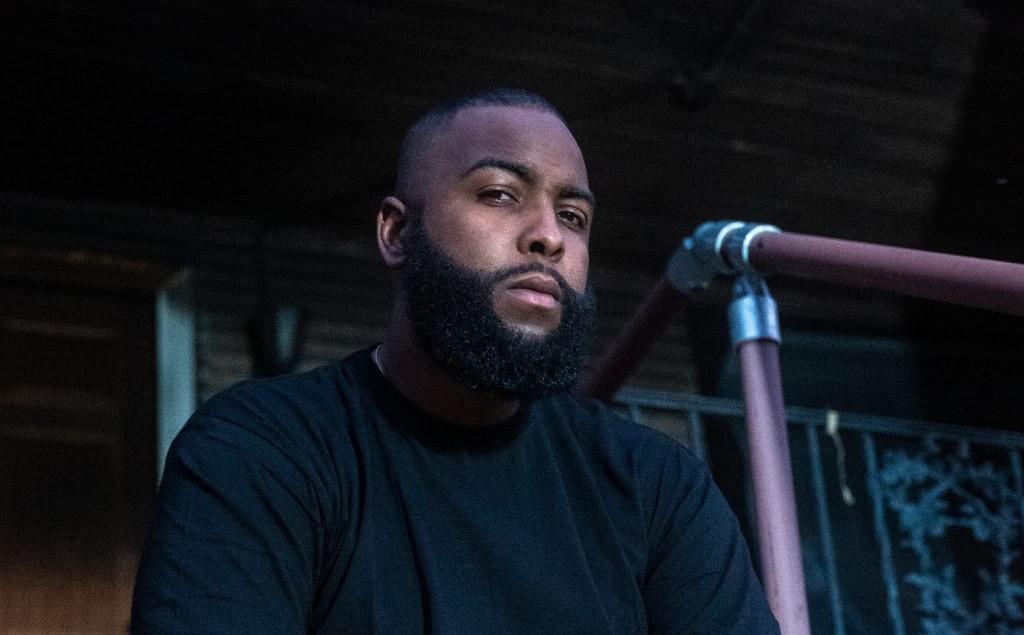
Ten tracks into Duece Dysart’s initial collaboration with the producer Jack “Tha Audio Unit” Burton, the Columbus rapper pulled the plug.
“And [the music] was cool, it was good, but something about it just wasn’t clicking,” Dysart said in a late July interview. “And so, I kinda tapped in with A.U. on the side and said, ‘Hey man, I’m not feeling this. How are you feeling about it?’”
In the aftermath of this conversation, the two opted to table the in-progress LP, immediately pivoting to a new project built around a series of more atmospheric, drumless beats, which provided a comparatively cinematic backdrop for Dysart to unpack his hardscrabble upbringing, the fates befallen many of those he grew up alongside, and how thin the line can be between surviving one’s surroundings and succumbing to them.
A donation powers the future of local, independent news in Columbus.
Support Matter News
Throughout the resulting EP, dubbed Chapter Black and set to release digitally on Thursday, June 30, the rapper adopts a rhythmic, innately percussive cadence, syllables snapping like drum hits and helping to set the musical pace. “Depending on the production, a lot of times rappers might find themselves reacting, like, ‘Man, this beat sounds great. Now how do I fit on it?’” said Dysart, who uncovered a sense of freedom in the drum-free tracks presented to him by A.U. “The drums for a rapper are the rhythm, the cadence. And so, when your voice becomes that drum, you become the rhythm, you become the cadence. … And because you’re the drum, you can dictate the tempo.”
The resulting tracks also stand as some of the musician’s most revealing to date, with Dysart allowing that on earlier records he sometimes painted an incomplete picture, intent on keeping his guard up in a way that began to feel disingenuous. “When I started making music, someone compared me to Chance the Rapper, like overly positive, and I started to look at my music like, man, this is almost a character I’m playing,” said Dysart, who will join A.U. in celebrating the release of Chapter Black in concert at Rehab Tavern beginning at 8 p.m. on Saturday, Aug. 1, supported by Co City and Cherimondis J. “And I think this one is me getting to a different place of openness and vulnerability and honesty.”
Dysart attributed the shift to everything from the setting at Derek Christopher’s Penfield Studio, which he said enabled him to ask questions in a way that opened new doors, to the birth of his first daughter and the clarity of self that has come with age, the 32-year-old rapper acknowledging that his priorities have evolved over time. It also helped, of course, that producer A.U. provided the emcee with a pack of musically rich instrumentals ideally suited to allowing one’s mind to drift back in time, Dysart rapping about how even as a younger man he tended to picture his life taking a different path from those he moved alongside.
“That’s the family business but I wanted different,” he raps of the neighborhood brick runners populating the deeply cinematic “Yours & Mine,” later adding, “Most of my brothers ended up in the kitchen/Cheffing for some junkies like a home assistant.”
“And that was just the environment, and you learned different things good and bad,” said Dysart, who has come to understand that little separates him from those he knew who did end up serving time, (or worse).
Elsewhere on the EP, Dysart raps about overcoming adolescent struggles (“Took the dirt road, made a path of it,” he offers on “Influence”), pays homage to his daughter (“Chapter Black”), and beams about coming into his own on the triumphant, EP-ending “Evidence. “Guess I’m moving at a different pace,” he raps on the string-kissed closing statement. “Win the race even if they do discriminate.”
Dysart said he benefited early on from lessons he absorbed from his grandfather, a man he described as “a character” whose unvarnished stories of the criminal underworld helped compel the rapper to make different decisions. “I learned from my grandfather you don’t get away with every heist,” said Dysart, who recalled how the elder told him of a robbery he nearly took part in that resulted in a security guard being shot and killed and murder charges being meted out to all of the conspirators. “And he said, ‘If I’ve been there, I’d have got a murder charge, too, and I’d be doing life in prison.’ … And when you’re from it for real, and you really know the consequences of certain actions, then you make certain choices.”
And yet, the empathy Dysart uncovered for those he grew up alongside whose paths diverged from his own resonates throughout Chapter Black, with the rapper painting their decisions as a byproduct of circumstance, having come up in a neighborhood burdened by a combination of historical neglect, limited resources, and overpolicing.
“When I was a kid, I thought what I was doing was right, because it was applauded and it was respected,” he said. “And as I grew older, I came back to Earth and realized these guys … were very adjacent to me, but it would be like one day they stopped going to football practice. And maybe it was just because they didn’t have the support system I had, so they weren’t able to make the same choices I did. … And that’s a thing I think I battled with for a long time, where I felt so different because of the choices I made. But innately, we are the same.”
Author

Related Articles

Keith Hanlon takes advantage of an unexpected layover to create ‘Music for Airport Workers’
The Columbus musician will celebrate the release of his new ambient album in concert at Old First Presbyterian Church on Friday, Sept. 25.

‘Obviously, we make songs for the sad folks’: BeachKitty gears up for 934 Fest
Ahead of the release of new album ‘Cool Breeze,’ the shoegaze-indebted Columbus band, led by songwriting duo Milly May and Keano Smith, will feature at the annual art and music festival on Saturday, Sept. 12.
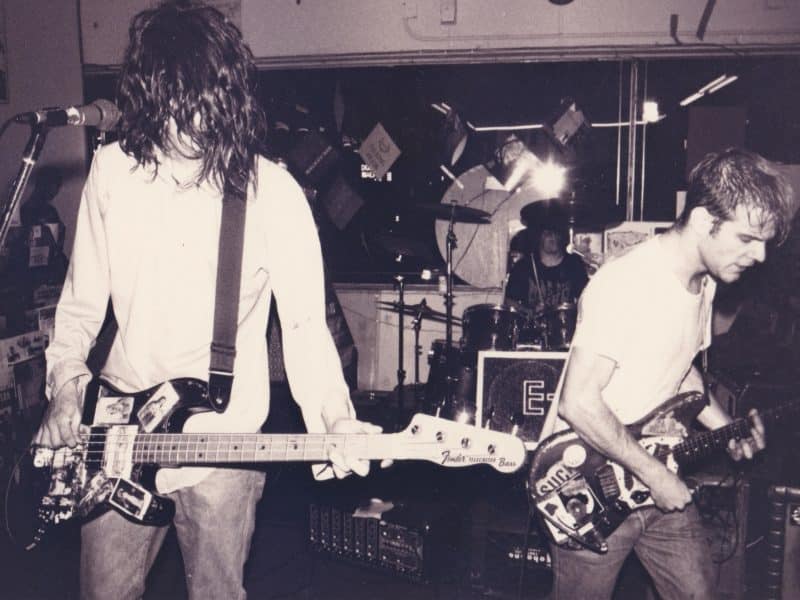
Newly reunited, the musicians in Nice Strong Arm continue to destroy themselves, listeners
Following 30 years apart, the Texas noise rock trio visits Cafe Bourbon Street for a concert on Thursday, Sept. 10, playing alongside Ron House and Scrawl.