
Derf Backderf delves into the past, finds lessons for the present with ‘The Dissidents’
The Cleveland cartoonist will celebrate the release of his sprawling, deeply engaging new book with an appearance at the Wexner Center for the Arts on Wednesday, Sept. 23.
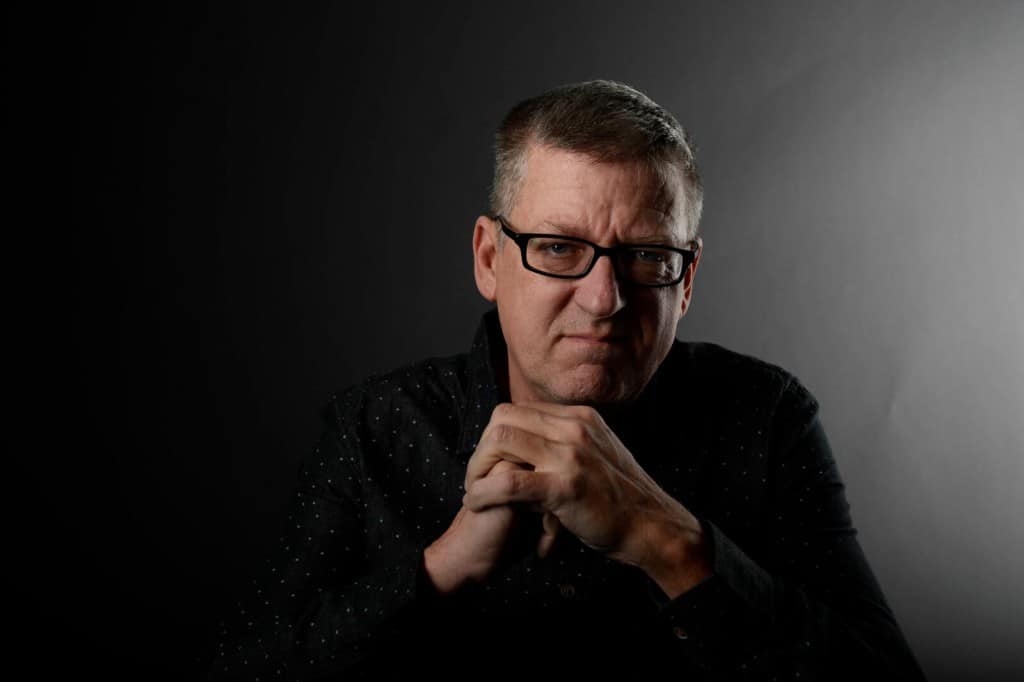
Derf Backderf only began work on his new graphic novel The Dissidents about three and a half years ago, but he’s been carrying around the idea for decades.
Centered on the cartoonists who produced work for The Masses, a radical socialist magazine that published for six years beginning in 1911, the roots of Backderf’s book can be traced back to the stint he worked for the student newspaper while in undergrad at Ohio State University.
“I started out as a political cartoonist at The Lantern … and I was looking around for some inspiration. And Lucy Caswell, she was a professor of mine, she said, ‘You’ve got to take a look at these guys,’ and they blew me away,” said the Cleveland-based Backderf, who will return to his college stomping grounds for a book release event at the Wexner Center for the Arts at 7 p.m. on Wednesday, Sept. 23. “And then I slowly over the years learned about their story, and how they’d been hunted and hounded and indicted, and then put on trial and imprisoned by the U.S. government. … And I kept seeking that information out. … And the more I kept learning, the more the story kept expanding.”
A donation powers the future of local, independent news in Columbus.
Support Matter News
This expansion carried over into the setting, as well, with much of the action taking place in the Greenwich Village neighborhood of New York City – a geographical leap for the cartoonist, whose earlier books, including My Friend Dahmer and Kent State, are planted firmly in Northeast Ohio, prompting one European interviewer to note that Backderf’s entire body of work had previously been set within a 50-kilometer radius of the house he grew up in. “This is my attempt to break free of that,” Backderf said. “But it does start in Akron and Cleveland, so I didn’t break completely free.”
At times, the lengthy research process sent the cartoonist venturing hundreds of miles from his home base, with trips to the Billy Ireland Cartoon Library & Museum on the Ohio State campus and to the Library of Congress in Washington, D.C. Of particular value were a handful of autobiographies he discovered written by those central to the story’s events, which included thorough retellings of the trial along with more mundane but equally essential details about their day-to-day existences at the time.
As a result, The Dissidents can be viewed both as a suspenseful political thriller and an act of preservation, with Backderf resurfacing and celebrating the incendiary early work of a group of cartoonists whose contributions had been all but lost to time.
“Political cartoons really have no shelf life at all. And these ones, not only are the cartoons long gone … but the cartoonists as well,” said Backderf, who spent a couple years after college working as a political cartoonist before being fired “for general tastelessness,” as he explained it. “And so, one of the things I wanted to do was bring these cartoonists and their work back and then show them in context and explain why they were so powerful.”
One of these individuals was Robert Minor, whose drawing “At Last a Perfect Soldier” Backderf kept pinned to the wall above the drafting table in his Ohio State dorm room long before he even knew the cartoonist’s name. “It’s one of the best political cartoons ever made, and it just keeps coming up,” he said. “I saw it pop up recently in a modern cartoon reworked for Iran, and it popped up in Vietnam, and on and on.”
In detailing the post-World War I era from which these works emerged, Backderf paints a damning picture of a time when the actions of a vindictive president helped to fuel the formation of a vigilante group rooted in some of humanity’s worst instincts – a history that feels particularly relevant at this political moment.
“When I started on this, I originally thought, well, this will be a warning. Well, too late. And I worked as fast as I could, but it’s a big book,” said Backderf, who sees myriad echoes between the Woodrow Wilson administration that persecuted the cartoonists of The Masses and the one now being led by Donald Trump, who most recently barred a trio of news networks from the White House reporting pool.
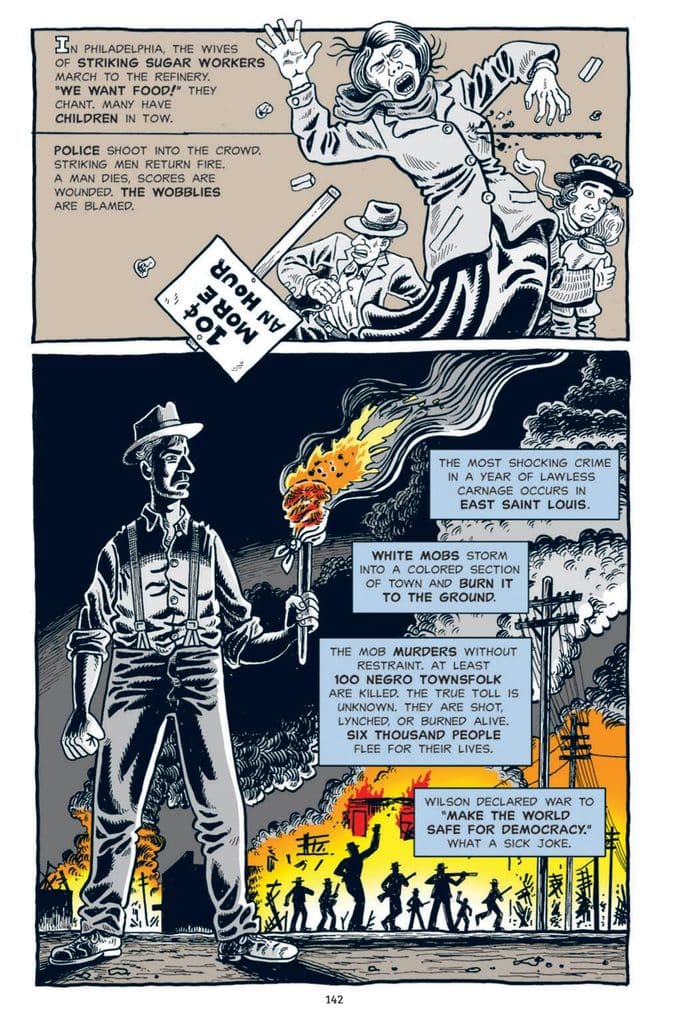
Other echoes exist between these eras, with Backderf seeing in the brutal expansion of ICE a similarity to the Wilson-era American Protective League (APL), a volunteer force aimed at “keeping an eye on disloyal individuals and making reports of disloyal utterances,” as stated by then-Attorney General Thomas Gregory.
“And they (the APL) just kind of ran rampant over everything: society, the Constitution, local laws,” Backderf said. “They didn’t care. They trampled everything in their sight.”
While The Dissidents doesn’t resonate as a deeply optimistic work, there is a degree of hope embedded within it, born of the reality that Americans were eventually able to head off this authoritarian turn and preserve democracy. And yet, questions remain for the cartoonist about how often the country can successfully pull off this escape act before it all falls apart.
“We got very close to complete autocracy [with Wilson], and there was opposition and we pulled back,” Backderf said. “But how many times can you keep going to that cliff edge before falling off? I don’t know. We’ll see how this one plays out.”
Author
Related Articles
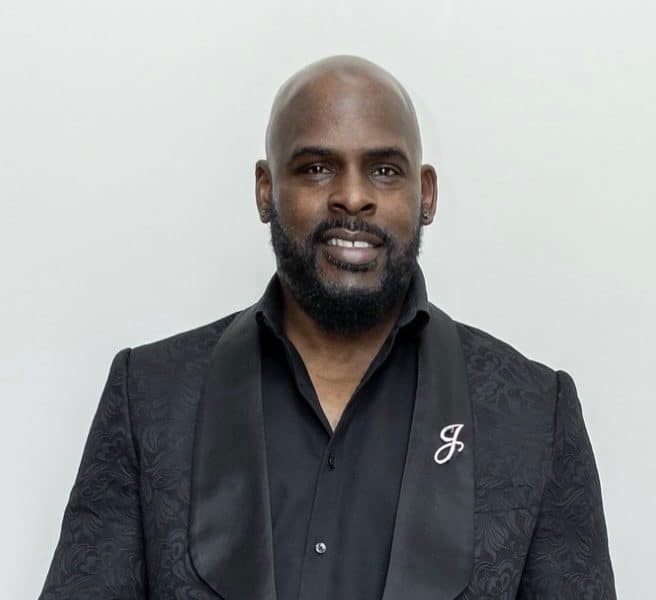
Edward Julian Sr. embraces poetry as a means to release and reflect
Ohio’s poet laureate features at Urban Arts Space tonight (Thursday, Sept. 24), appearing as part of the Poetry Festival, which continues through the weekend at Thurber House and the Grange Insurance Audubon Center.
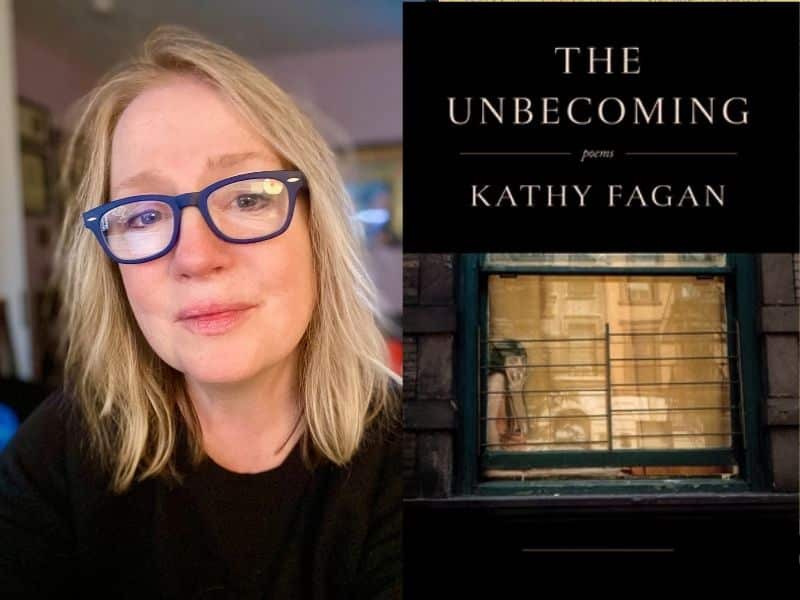
Kathy Fagan takes stock with ‘The Unbecoming’
The poet will celebrate the release of her new collection with a reading at Gramercy Books on Thursday, Sept. 24.

Barbara Fant returns to Columbus ready to leave her mark on Thurber House
The poet and newly minted executive director of the literary nonprofit will take part in a community reception welcoming her to the role on Thursday, Sept. 17.