
Hello Emerson finds the beauty in ‘Brief Interviews on Heartbreak’
Sam Bodary will join his bandmates in celebrating the release of their new album at Natalie’s Grandview on Saturday, Nov. 14.
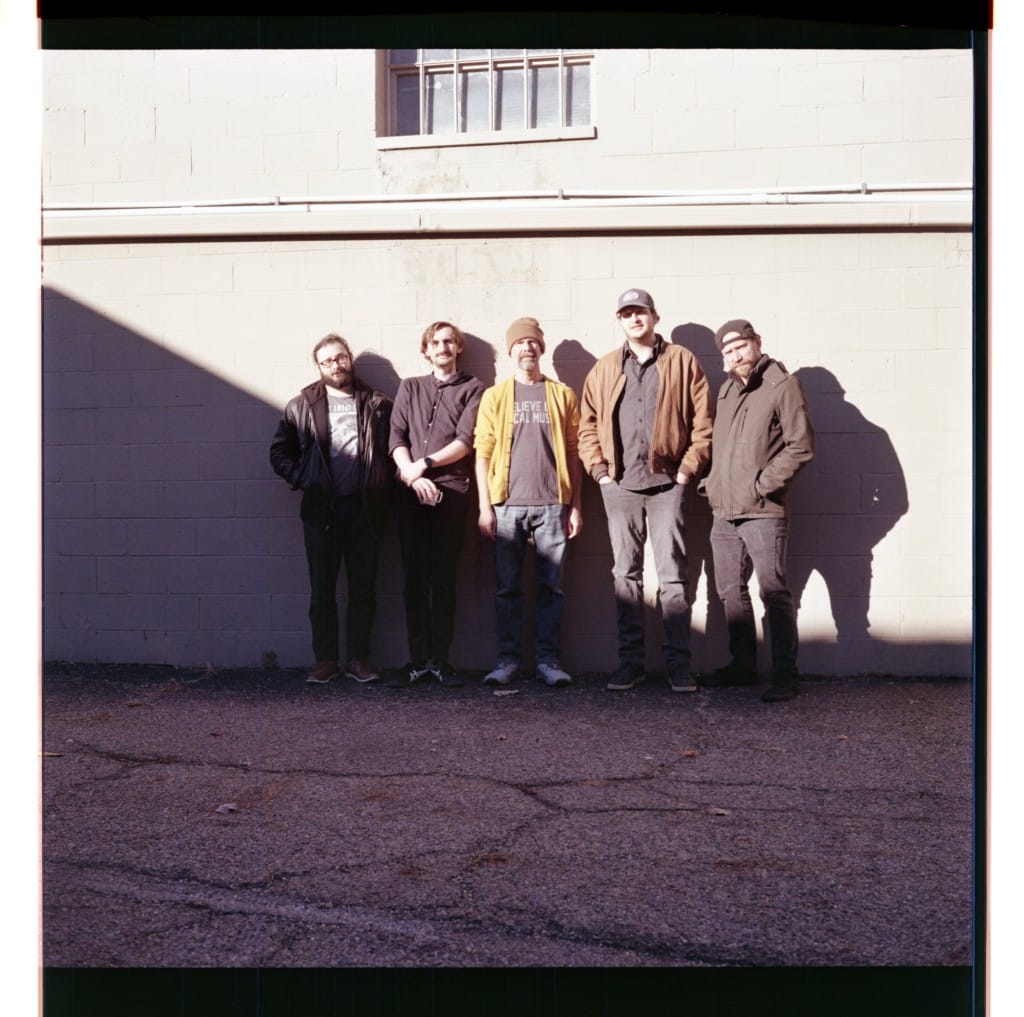
As a kid with mild depression, Sam Bodary learned to sit with heavy feelings, sharing in an early November interview at an Easton coffee shop how this practice slowed him down and allowed him to become more of an observer.
“I think since being a teenager, I’ve been able to feel things deeply but also observe them at the same time. And sometimes that feels a little isolating. And sometimes I think I may not be the very emotional person that I may appear to be through music,” said Bodary, who will join his Hello Emerson bandmates in celebrating the release of new album Brief Interviews on Heartbreak at Natalie’s Grandview on Saturday, Nov. 14. “I feel like I approach a lot of emotions and a lot of music much more as an engineer. … But that’s how I’ve understood patience and heartbreak and grief and all of that stuff, by just trying to be a thoughtful observer as much as I can.”
This intentionality served Bodary well in the journey to his band’s new album, which has its roots in a series of interviews on heartbreak that he conducted with 14 strangers in 2024 and that builds upon a stripped-down 2025 EP graced with intimate “bedroom versions” of the songs recorded solo by the musician.
A donation powers the future of local, independent news in Columbus.
Support Matter News
In a sense, the gradual evolution of the project reflects the processing of grief, which can begin in solitude and then radiates outward as a person begins to let others in, the band’s gorgeously orchestrated new full-length serving as a musical representation of the transformation that can take place once someone allows themselves to open up.
Bodary described the creation of Brief Interviews as having taken place in a trio of stages. The first involved the initial conversations, which he said served as the point at which he was closest to the person’s direct experience, and which he entered into with full awareness he would be “mainlining some big emotions.” In the second, he immersed himself in writing alone, trying “to alchemize something tangible and artistic from that experience,” as he explained it. The final stage involved bringing these cave drawings to longtime Hello Emerson bandmates Daniel Seibert and Jack Doran, plus a host of collaborators that included Lydia Loveless, Mery Steel, Lily Bloom, Angela Perley, and the string quartet Chamber Brews, among others.
“And I think that was the coolest thing, because you can see what good comes from sitting with a hard thing and trying to understand it, trying to put it in context, and then trying to make something out of it,” Bodary said.
The ways grief can mutate over time into something beautiful is more broadly reflected in the way the album is arranged and orchestrated, the musical collective lacing songs such as “Hide and Seek” with graceful violin and piano notes as soft as cat paws on the snow. It’s a transformation that also presents on a more cellular level within the staggering “Bright Yellow,” which is rooted in a story told to Bodary by someone whose father died in a plane crash, and who recounted their experience of visiting the site when it was little more than a black pit and then again two decades later where they were greeted by a swath of tall sunflowers ringing the scarred earth.
“And they expressed their sincere belief that, ‘Well, [my dad] snacked on sunflower seeds all the time, and maybe those were the same ones planted [where his plane crashed] in Idaho,’” the musician said. “And that is the coolest thing in the world to me, taking this situation that says, ‘Hey, there’s a plane crash. There’s jet fuel. There’s fire. But I’m choosing to believe something survived there. And I’m seeing evidence of it surviving there, and it’s beautiful.’ And nothing in that says it’s good a plane crashed. But everything in that says things can still be good even though the plane crashed. And being willing to talk about grief opens the door to that, which to me is the most exciting and exhilarating and hopeful thing.”
Elsewhere, the songs often hinge on smaller details: a child sleeps in the crook of their father’s arm, unaware that in the morning he’ll have disappeared forever from their life; a person cries on a trampoline next to their bouncing, blissfully unaware brother; another escapes the relentless nature of existence in a viewing of “Paddington 2”; and in the midst of processing a phone call delivering bad news, someone else presses their forehead solemnly to the window.
These nearly imperceptible moments also speak to the way that Bodary hopes the album will be received by listeners, the musician saying that victory, for him, would be if the album functioned like an unexpected conversation in line at the grocery store.
“I was talking to a friend yesterday, and he said, ‘Yeah, I’ve been talking to strangers more in line. And it’s amazing, because people are just waiting to tell you about the best brand of pasta at Kroger, and all of a sudden, I’m talking to an older woman about which kind she was buying to use the last time her son visited,’” Bodary said. “It’s almost like people are walking around hoping to be opened up. And maybe that’s not universal, but I think we’re all carrying around stories, and we’re all looking for those passing moments of connection.”
Less than 10 minutes after expressing this idea, our interview would be briefly interrupted by one of these magical random moments when Bodary happened to spot someone he had interviewed for the project nearly two years ago, and who had shared with him the heartbreak that leveled them at the ending of a romantic relationship. Now, they said they were in the midst of planning for a wedding – an almost-too-perfect example of the kinds of transformations existent throughout Brief Interviews on Heartbreak, which at its core is less about grief than the reality it can be navigated without completely abandoning joy, beauty, or hope.
The project has been transformative for Bodary, as well, though in ways maybe the musician is still processing.
“I think maybe I feel more prepared to tackle the hard things that are coming, because I have so many examples of people who have gone through something hard and who have then been strong enough and open enough to share it,” he said. “Things will happen. And unanticipated randomness will happen and force you to deal with it. But all of these examples of people persevering gives me a lot of comfort and a lot of confidence that something can be hard, something can be overwhelming, and you can still sort of scooch your way through it and tell a story on the other side.”
Author

Related Articles
Smug Brothers learns to embrace the good times with ‘Pinhole to Vortex’
The Columbus rock band plays in support of its newest album at Rambling House on Saturday, Nov. 14.
Ultra Lights frontman John Robinson is still figuring things out
The buzzworthy Atlanta band headlines a concert at Rumba Cafe on Saturday, Nov. 7.
Friko expands on its sound, delivers ‘Something Worth Waiting For’
The rising Chicago rock band headlines a show at A&R Bar on Saturday, Oct. 31.