
With ‘Us Fools,’ Nora Lange sees America reflected in the heartland
The author, whose debut novel released last year via local publisher Two Dollar Radio, will be in town for this weekend’s Columbus Book Festival, which takes place at the Main Library on Saturday and Sunday, July 12 and 13.
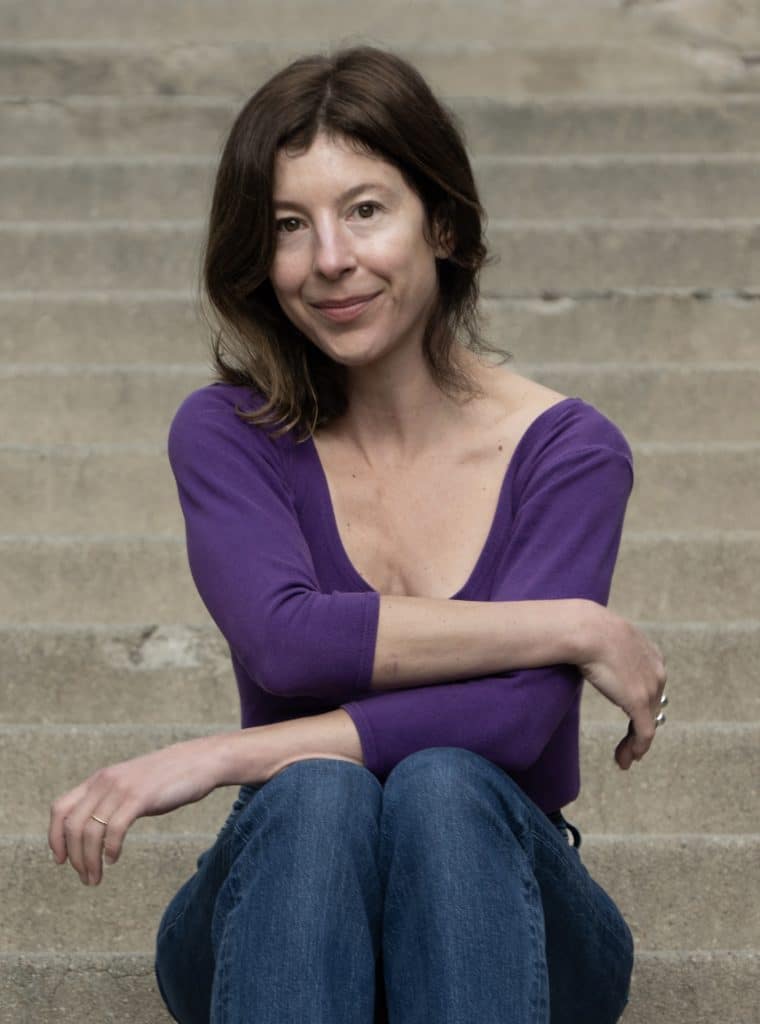
Henry Fareown, the alcoholic patriarch who plays a supporting if corrosive role in Nora Lange’s debut novel, Us Fools (Two Dollar Radio), is a diligent reader of The New Yorker magazine. This holds true despite the fact that the publication once advertised itself as “Not for the old lady from Dubuque,” a reality that clearly irked the midwestern farmer.
“There are people, even those at The New Yorker, who believe that America ends at Pittsburgh and there’s nothing but desert and a few Indians and Hollywood on the other side,” he says in Lange’s text, and then adds, “What do they have against elderly ladies?”
Were Henry still following the magazine (in addition to being an actual, physical person rather than an imagined character), he could now read a new work of fiction by Lange on The New Yorker website, which published today (Thursday, July 10) and will reappear in Day Care, a story collection Lange will again team with local publisher Two Dollar Radio to release.
A donation powers the future of local, independent news in Columbus.
Support Matter News
Reached by phone in early July, Lange was inhabiting that limbo-like state where some distance has passed from the release of her debut but she has not yet entered the media cycle for her next collection – the excitement for which has been further stoked by the success of Us Fools, which was a finalist for the National Book Critics Circle Award in Fiction and received the Sue Kaufman Prize for First Fiction from the American Academy of Arts and Letters.
“And it’s interesting, because I’m going to be talking about Us Fools in just a few days, and I probably need to get back to the headspace of that book, because my head is so in all of these other things at the moment,” said Lange, who will be in town this weekend for the Columbus Book Festival, which takes place at the Main Library (96 S. Grant Ave.) on Saturday and Sunday, July 12 and 13.
Lange then paused and slightly amended her statement.
“You know, that’s not entirely true. I have been thinking about the festival, because I was looking at one of the panels I’m on, and I think the title is ‘Small Town America,’ and I sort of just bristle at that,” the author continued. “It’s sort of a hokey phrasing, and so John Mellencamp. … I just think in time these sorts of phrases can become belittling, so having my book positioned in this context of small town America, it’s so odd. And, yes, I know it’s about the heartland, and it’s where these two sisters live, but strangely, and I don’t know what my problem is, I don’t see it that way. I was talking to my partner, and I said, ‘I see it as the effects of capitalism on the life that someone in a rural setting might lead, that might be different from the bankers.’”
Set amid the farm crisis of the 1980s, the novel unfolds over nearly 20 years, tracing the rural Illinois upbringing of sisters Bernadette and Joanne, a pair of restless, self-described “junk kids” who binge-watch episodes of Sally Jessy Raphael’s talk show and engage in oddball intellectual exercises “just as the classics had taught us to do.”
In many ways, the sisters exist as polar opposites. Jo, the elder sister, born a “nine pound skeptic,” quite literally crashes her way into the text, jumping from the roof of the farmhouse in the book’s opening pages as a way to “experience falling,” she says. Bernie, the more grounded of the two, naturally emerges as the book’s narrator, Lange equating the younger sister’s presence to soil. “When I kept getting these visuals, I was thinking of dirt, like Bernadette being the ground,” she said.
Another constant presence in the text is America itself, Lange seeing in the Reagan era the seeds that have come to flower in this tumultuous political moment. Indeed, there are countless passages within the book that read like modern commentaries, such as when Lange writes of “the ruling few with their venomous attitude toward those who had lost economically.”
“I wanted to highlight that these militias were sort of growing at the time, and that antisemitism and all of these other things aren’t new,” she said. “The book isn’t about one particular issue, but about how all these things are tied together.”
These historical observations are supported by exhaustive research, the author stressing her desire to create a text that could not be unraveled by anyone intent on pulling at loose threads.
“I didn’t want the book to be dismissed, and so I think the research was an extraordinarily important part in the crafting of it, because I didn’t want there to be any opportunity for a reader to be like, ‘Well, this didn’t happen,’” said Lange, who was aided in this pursuit by a natural streak of curiosity she traced back to the first word she spoke as an infant (“Why?”). “I’m the kind of person who makes friends with the cashier at the checkout, where I sort of know what they like to eat when I’m gone.”
It’s a personality trait could have played a role in the skillful way Lange fleshes out her characters, who tend to spring from the page in vivid, three-dimensional life, imbued with flaws and hopes and histories that shape how they move in a given moment. Lange said these traits generally develop over time, with the characters surfacing half-formed and then revealing more of themselves, becoming real to such a degree that even now she will occasionally find herself turning to the Fareown sisters, questioning how each might respond to a given situation with which she might be grappling. “I feel like I’m still hearing them,” she said. “I just invoked them today.”
Lange also grew up harboring a deep fascination for language that reveals itself consistently in the text, the novel reading like the work of a person who takes great pleasure in the craft itself. Even as a child, Lange said she would often wake up and yell from her bed to her stepdad’s office, located adjacent to her room, asking him to look up and define words such as “cataclysmic.”
“And he would look it up at 10 p.m. or whatever and remind me, or maybe not remind me, but tell me what it meant,” she said. “And then even in college, I was one of those students who was not afraid to not know what a word meant, and my philosophy book would be covered in definitions, because I didn’t know what all of whatever [Carl] Jung or whoever was talking about. … So, yeah, I’ve always had a big-time love of [language]. It’s always been a puzzle.”
Author

Related Articles
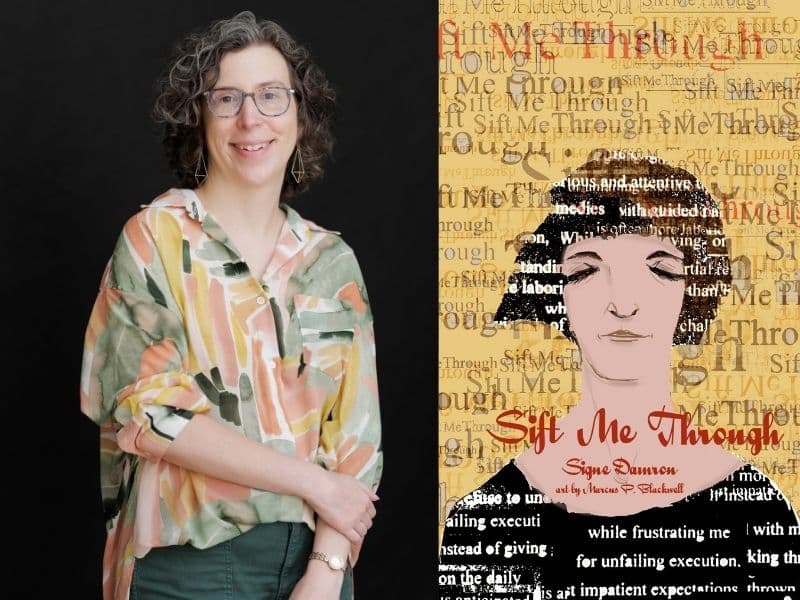
Signe Damron begins to see things more clearly with ‘Sift Me Through’
The Columbus poet said her new collection, illustrated by artist Marcus Blackwell, arrived as she began ‘processing and coming into my own.’
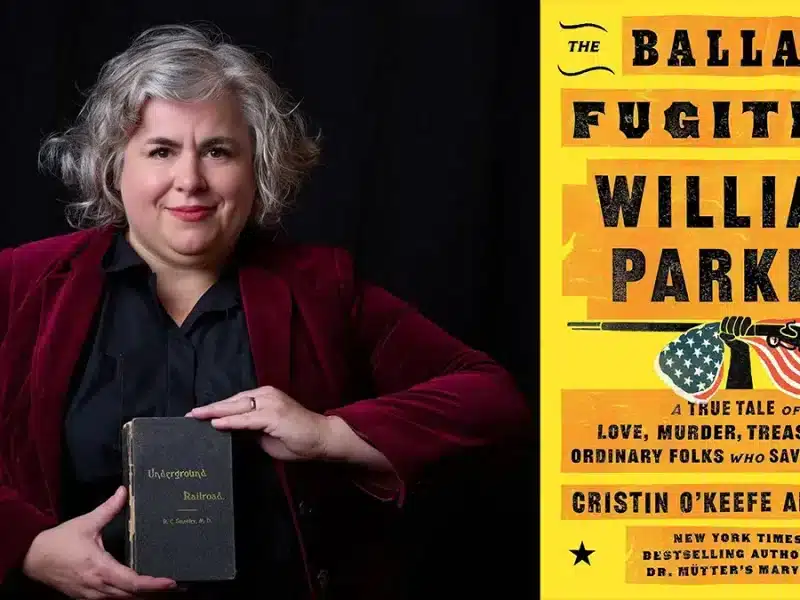
Cristin O’Keefe Aptowicz finds in history lessons for this current moment
The author will celebrate the release of her new work of historical nonfiction, ‘The Ballad of the Fugitive William Parker,’ in conversation with Ernest Cline, Hanif Abdurraqib, and Scott Woods at CCAD this weekend.
Matthew Ellis reckons with the impacts of religion in ‘Little Heresies’
The Columbus poet will celebrate the release of his debut collection with a reading at Two Dollar Radio Headquarters on Tuesday, Aug. 25.