
On Development: The sad treatment of downtown Special Improvement Districts
The so-called Columbus Way – public/private partnerships – applies to developers and other large businesses. Partnering with community groups? Apparently, not so much.
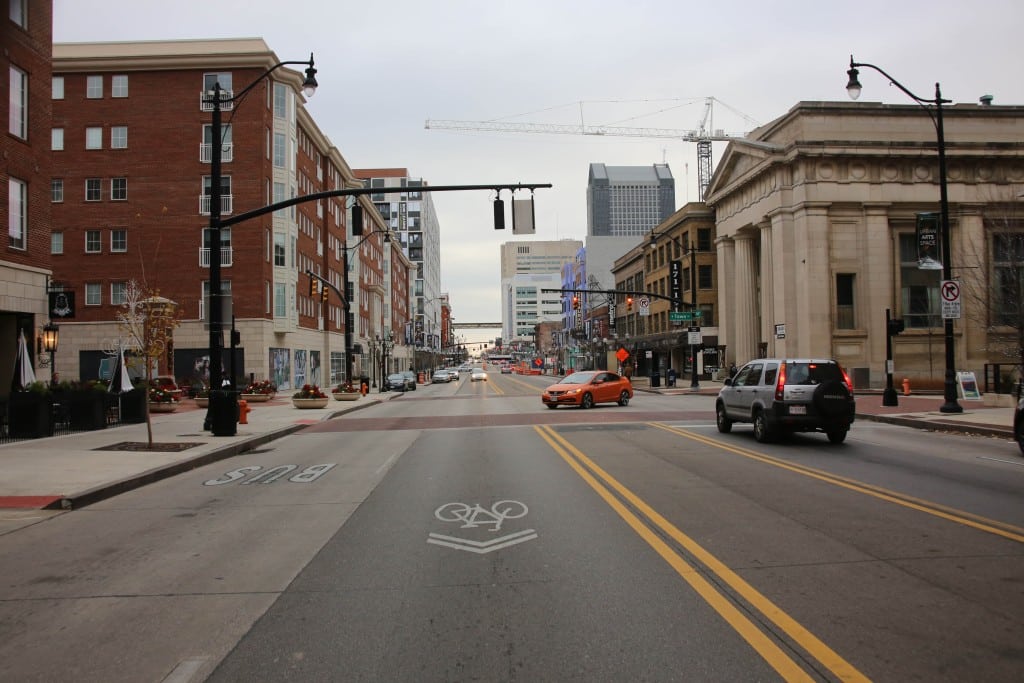
The Capitol Crossroads Special Improvement District may be the region’s most productive public-private agency of which most people have never heard.
For nearly 25 years, the SID has been primarily tasked with keeping the heart of downtown Columbus clean and safe. It was later joined by the Discovery District SID, serving the area around Columbus State, CCAD, Columbus Museum of Art, Columbus Metropolitan Library, Capital Law School, and Franklin University.
Together, the two SIDS encompass about one-third of downtown’s estimated 1,500 acres, according to Marc Conte, who has served as executive director for the past five years.
A donation powers the future of local, independent news in Columbus.
Support Matter News
A “special improvement district” is a quasi-public entity funded through a voluntary property assessment – an additional tax – paid by property owners within a designated area. Sixty percent of the property owners in the district must support the assessment, which then applies to all properties. (The city established its first SID in the Short North, while other local versions serve parts of Morse Road, East Main Street in the Eastmoor area, and Franklinton.)
The downtown SIDs have had a bit of “mission creep” over the decades. In addition to the clean-and-safe responsibilities, the SID’s 28 flexible and resilient “ambassadors”:
- Maintain planters, light-post flowers, and bicycle shelters
- Oversee and maintain three public toilets installed last year
- Convene various downtown stakeholders to collaborate on addressing challenges and issues that arise such as post-Covid plans for downtown, or scooter use in downtown parks.
The SID and its property owners also led the charge to create C-Pass – which allows eligible downtown workers to ride COTA buses at no cost, more than doubling downtown ridership. In 2019, the partnership comprising Capital Crossroads, COTA, and the Mid-Ohio Regional Planning Commission led to COTA’s highest ridership since 1988.
The downtown SIDs share an office staff of six, along with the 28 “ambassadors,” who make in the range of $40,000 per year. On average, ambassadors work for the SID for about three years. Some are former military personnel; others are aspiring police officers or EMTs. Dealing with people who have mental issues or who are without steady housing is a significant part of the job. Their approach is based on outreach – not enforcement.
Despite this success, the Capital Crossroads and Discovery District SIDs are in their final six months as an independent agency.
Ham-handedly, the city’s Development Department, at the behest of Mayor Andrew Ginther, is taking over the operation through Downtown Columbus Inc. (formerly the Columbus Downtown Development Corp.). The city touts the benefits of keeping all downtown development-related activities under one umbrella – though it appears not to have tried to ensure a smooth transition, as experienced SID ambassadors face uncertainty in their jobs.
The situation has also raised questions among downtown property owners who have willingly paid special assessments for decades. There’s no guarantee they will vote to recertify the SID under city management.
This move has parallels with the Recreation and Parks shutdown of the Tuttle Park Community Recreation Council, a successful community fundraising group in the University District.
Officials said last year that they were developing a centralized fundraising model for the city’s 28 community centers under the nonprofit Columbus Recreation and Parks Foundation. The Tuttle group had long been a leading fundraiser, thanks to its proximity to Ohio State University football games. Over the course of three decades, it raised roughly $500,000 offering convenient parking on game days. The money raised for Tuttle allowed the city to spend more money on other parks.
Most cities would be thrilled to have an active community group easing costs at a public park. But when the leader of a community group, former mayoral candidate Joe Motil, is a political enemy of the mayor, things might be different. So, rather than embracing Tuttle as a model for additional funding at other parks, city leaders decided to squash the Tuttle citizens group. (A representative for the Recreation and Parks Department told the Dispatch last year they weren’t aware of any animosity toward Motil motivating the changes.)
To say the least, it’s very odd that the city frowns on and undermines independent and community-based initiatives such as the SIDS and the community park groups. The city’s approach seems arrogant and does not appear to promise better service to the community. Many cities would be thrilled to work with civic groups, viewing these collaborations as a sign of strength.
The so-called Columbus Way – public/private partnerships – applies to developers and other large businesses. Partnering with community groups? Apparently, not so much.
Maybe Columbus can learn from Marion, Ohio, which has been eager to collaborate with community entities rather than subsume them. It’s working well for Marion, which just received recognition from the national Strong Towns movement.
Meanwhile, Columbus had to settle for being a 2025 Golden Padlock Award finalist – given by Investigative Reporters and Editors, a national journalism association that identifies the country’s most secretive public agencies and officials.
Brian Williams is a semi-retired reporter and planner.
Correction: The column originally stated that the downtown SID ambassadors make in the range of $18,000-$20,000 per year. Ambassadors actually make in the range of $18-20 per hour, or roughly $40,000 per year. Matter News regrets the error.
Related Articles

If you start from a place of love, you can’t go wrong
A vigil for an unhoused community member who recently died in Newark served as a call to not look away.
On Development: Rapid-transit is moving slowly. Maybe we need a new model
Our policies suggest a willingness to spend any amount to add lanes and bigger (towering!) interchanges for major highways, while transit spending is too often regarded as frivolous.
Local Politics: Drain the swampy Municipal Courthouse
Columbus wants to renovate the Franklin County Municipal Courthouse instead of replacing it. The people who work there say this very wet “derelict” building is beyond repair.