
Opinion Essay: Columbus should take lessons on mobility from Brazil
The quality of life in our cities should be of interest to us all, and the more we know, the better we can contribute to the necessary dialogue.
As a now-retired professor at Ohio State University, I regularly taught a course on public good to undergraduate and graduate design students. A number of readings were assigned and discussed, and a selection of films that reinforced important issues were viewed over the term.
The documentary “A Convenient Truth: Urban Solutions from Curitiba, Brazil” proved to be an important part of the course and deserves to be more widely viewed and understood. The film provides several lessons applicable to transportation, recycling, affordable housing, and green space for us to consider as central Ohio’s population continues to grow. (Another film to recommend: “Urbanized: The Issues and Strategies Behind Urban Design,” which also covers mobility and other urban design issues in an easily understood format.)
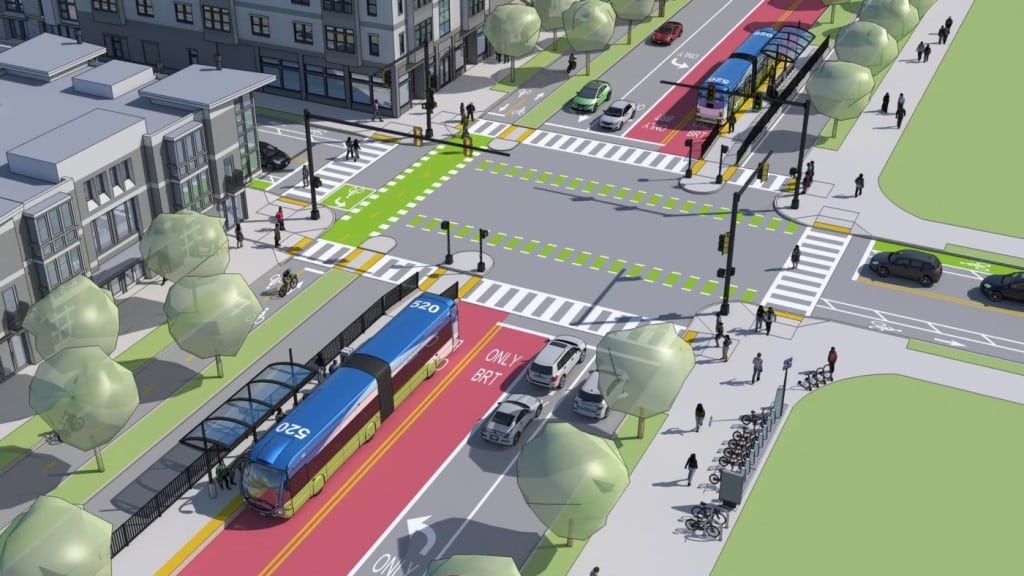
For those unfamiliar with Curitiba, it’s located in southern Brazil and has a metro-area population of roughly 3.5 million people. It’s also recognized as an early adopter of Bus Rapid Transit (BRT) as part of its innovative urban design efforts. BRT uses buses to provide flexible, less expensive and comprehensive transit, and has been implemented in numerous cities internationally.
A donation powers the future of local, independent news in Columbus.
Support Matter News
In November 2024, voters approved funding for COTA’s LinkUs initiative, which includes typical BRT features such as traffic signal priority, platform-level boarding, high-capacity buses, modern stations, dedicated transit lanes, and off-vehicle payment. Combined with a 45 percent increase in service hours and other transit-supportive infrastructure improvements, LinkUs should lead to a clear boost in central Ohio mobility.
And yet, a COTA spokesperson said in a recent NBC4 report, “Columbus 2.0: The Way We Move,” that its current efforts are often seen as somewhat lacking. Bus commutes can often take significantly longer than driving. After decades of that level of service, it will likely be an uphill battle to convince a large segment of the public to leave their cars at home and ride the bus to and from work.
A careful viewing of the “A Convenient Truth” section on BRT provides one major feature that COTA would be wise to consider adopting. Curitiba also provides numerous, smaller buses throughout the metro area that connect to the main BRT corridors. As this larger, comprehensive system would be more expensive to run, contractors are engaged to provide smaller buses, and they’re paid by the regional authority for miles traveled on connecting routes to insure regular and frequent service.
COTA’s role might include working with appropriate contractors on a similar plan, and any additional costs to manage that function might be a good use of public funds. Local leaders often point to “The Columbus Way” as a model of public/private partnership. Borrowing this approach to dramatically and economically expand bus service could benefit both riders and local businesses. It could also help central Ohioans to eventually view COTA as a reliable alternative to commuting by car.
To be fair, COTA currently offers the on-demand “COTA Plus” program in the Grove City, Westerville, and South Side areas, which provides first-mile/last-mile solutions — that is, smaller vehicles connecting to main routes. COTA also notes in its “Short & Long Range Transit Plan 2020-2050” that it plans to explore public/private and corporate/community partnerships to fund and expand this initiative. However, as this program began in 2019, one could certainly question how effective the strategy has proven to be thus far.
On a larger scale, the Mid-Ohio Regional Planning Commission’s 2024-2050 plans for our region address transit, roads, bikeways, pedestrian facilities, and more. And COTA’s LinkUs system integrates well with that vision. It remains to be seen if greatly improved mobility in central Ohio will eventually result as various modes are upgraded. One thing is clear, however: Change is needed. And it’s coming, like it or not. I suggest we embrace it and make the most of the opportunity.
Paul Nini is an Emeritus Professor and a past Chairperson in the Department of Design at Ohio State University. He’s written for numerous design publications and has presented at a variety of national and international conferences.
Related Articles
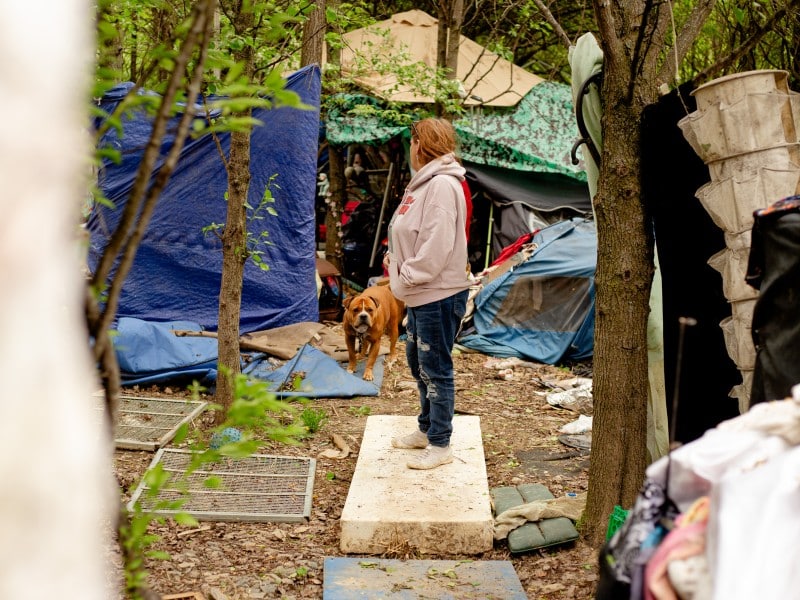
The billionaire-backed think tank that wants to change harm reduction and homeless policy
Joe Lonsdale’s Cicero Institute contends that we can arrest our way out of the housing crisis, and that states must enforce laws ‘prohibiting open drug use, urban squatting, camping, and loitering.’
Opinion: You can’t talk about Issues 8 and 9 without race
A problem with the discourse around these issues is that it isn’t being completely honest when it comes to race. Not publicly, anyway.
Opinion: Trifectas are only good for racing and the lottery
The legacy of Ohio’s Republican Party is corruption, scandal, and culture wars. Our votes could put an end to their occupation of state government.