
‘Southern Oracles’ shines a light on Columbus’ South Side
For his latest show, which takes place free at Ohio State’s Weigel Hall on Tuesday, Sept. 1, Scott Woods brings together musicians, dancers, rappers, and more to explore a side of town that he said holds the city’s ‘truth.’
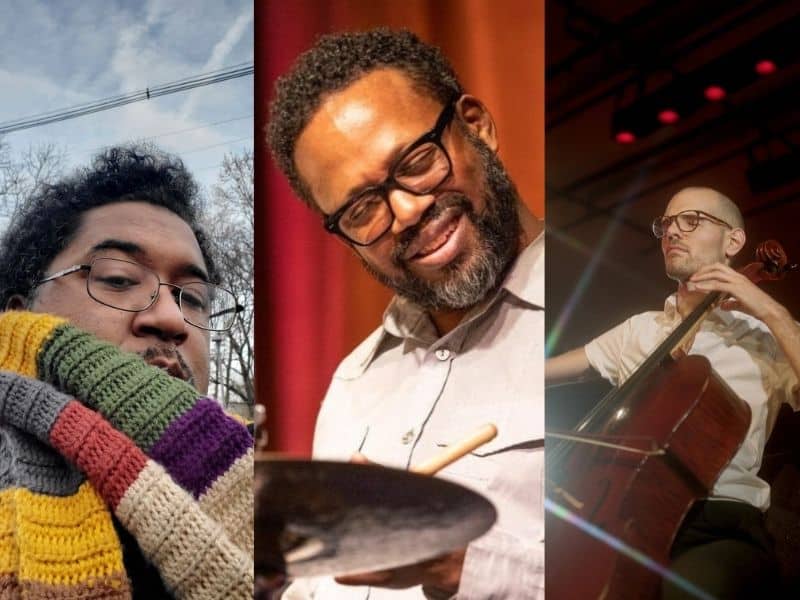
Scott Woods said that growing up he viewed Ohio State University and the surrounding neighborhood as “a magical place” – a perception shaped in part by his older brother, who gigged in bands that frequented campus dives in the late ’70s and early ’80s.
“And so, I always had this … fascination with OSU and campus in general, which came from growing up with the idea that there was this weird place in town where all the shops were weird and all the people were weird, but they were all kind of cool, in a way, and they all played music,” said Woods, who described the businesses then inhabiting High Street as the kinds of spots where you’d see ninja stars being sold in head shops – a far cry from the more sanitized, corporate strip since built out by Campus Partners.
And yet, the area continues to hold sway over the poet, author, and cultural critic, who acknowledged his “soft spot” for OSU remains in spite of having been expelled from the university as a younger man, and regardless of the campus overhaul that has seen the area scrubbed of much of its personality, which Woods has written about extensively.
A donation powers the future of local, independent news in Columbus.
Support Matter News
Owing to this, Woods shared his sense of pride in being able to stage “Southern Oracles: A Celebration of the South Side,” presented by the Johnstone Fund for New Music in partnership with Streetlight Guild, at a university that decades ago booted him – for good reason, he noted – after just two quarters. “And because I was expelled from OSU, any chance I get to go back and show and prove, I’m going to take,” said Woods, who brings “Southern Oracles” to Ohio State’s Weigel Hall at 7 p.m. on Tuesday, Sept. 1. “It’s something I can go back and show my mom, because I didn’t give her a degree.”
The free show features more than a dozen local artists representing a range of disciplines (musicians, rappers, dancers, and composers are all represented) and focusing exclusively on Columbus’ South Side, a neighborhood that stands in deep contrast to campus, in that development has not yet shaped it into something altogether unrecognizable from decades back.
“To me, the South Side is Columbus’ truth. And what I mean by that is whatever Columbus used to be is still there,” said Woods, a South Side native who has maintained a deep connection to the neighborhood. “There are places there that are old, and that still hold a measure of their history. And there are people who have been there for generations and not been pushed out. People who worked at Buckeye Steel. People who have been going to Plank’s as a family for generations. Sills Ballpark, where I played as a kid, is still Sills Ballpark. … [The neighborhood] is a real measure of what Columbus was and is. And while I can’t predict Columbus’ future, the answer to whatever that question is, it’s probably on the South Side, too.”
This isn’t to say the neighborhood hasn’t changed in ways – stores have closed and swapped fronts, and what might have once stood as a piano shop might now be a mattress retailer – but “the bones are still there,” Woods said. “And once the bones are gone, it’s a whole other place.”
These ideas are reflected throughout “Southern Oracles,” a multidisciplinary event for which Woods tasked artists with creating compositions around a range of South Side sites past and present. This includes Sills Ballpark, which will become the site of a Mark Lomax drum solo that Woods envisioned capturing the percussive pop of a baseball striking a catcher’s mitt, among other things, and Mae’s Market, which serves as the inspiration for a “grounded but floating” cello solo courtesy musician and composer Sam Johnson, who saw in the picture of the now-shuttered stand painted for them by Woods the roadside markets of their South Carolina youth. (Woods told me he could never ascertain if Mae’s was a building, a trailer, or a shed, finally accepting it was “all of those things cobbled together juke-joint style.”)
“And these were the kinds of markets on roadsides in upstate South Carolina that sold fresh peaches, boiled peanuts, fruit preserves, and pickled everything – pickled asparagus, pickled okra,” said Johnson, who composed the section on Mae’s as a sarabande, a Baroque dance suite in which the second beat is often held longer, giving it a heavier, dragging feel. “So, sarabande is both bending down toward the ground and then floating up with propulsion. It’s up and down, floating and grounded. … And in writing the music for Mae’s, I imagined floating to the market on a sunny day, and then arriving, and the fresh fruits and produce dancing around me as I take in the smells … and converse with Mae, letting her know both her produce and her generosity nourish my soul.”
Lomax features at multiple points, appearing solo for what he described as a more improvised turn informed by Sills Ballpark and also composing a pair of works for his trio, the first centered on Boyd’s Barbershop and the show-closing “Steel Sunsets” more broadly lingering on the South Side’s industrial roots.
“The Boyd’s Barbershop piece has the flavor of Stanley Turrentine’s ‘Sugar,’ where it’s just deeply groovy blues,” Lomax said. “And ‘Steel Sunsets,’ it’s got a shifting rhythmic motif, because it’s hard to catch the essence of what was, you know? But in the end, it settles into a bluesy groove, because the soul is still there even if the thing that once brought the people to the area for work is not.”
Both Lomax and Johnson said they signed on for the project before any details had been solidified, with Woods circling back this spring once he had completed what he termed the show’s “bible,” a six- to eight-page guidebook breaking down in greater detail the thematic focus of the show and listing the full slate of performers, which includes among others funk/soul band Liquid Crystal Project, dancer Donald Isom, harpist Trista Hill, producers J. Rawls and DJ Prime, and a trio of emcees in Trek Manifest, Jai Carey, and Psyonic.
While the performers were known to one another, each section was created independently, with Johnson comparing the process to being responsible “for a thread in a tapestry that you can’t at the moment see the whole thing.”
“For these kinds of things, Scott is the ringmaster, so to speak,” Lomax said. “He has the narrative concept in his head, and then he asked those of us creating pieces to submit them early, and then he gave us a yes or no and offered notes just to make sure it all fit together.”
In the past, Woods has helmed shows that explored different aspects of Columbus and its cultural history, including “The New Black Eastside Songbook” and “7 Villages,” staged in 2024 and rooted in the city’s historically Black neighborhoods.
“Southern Oracles,” in a way, serves as a culmination of these efforts, Woods describing the show as “a capstone” to which he has been building steadily throughout the years.
“This is the side of town I know best,” said Woods, who will also bring a stripped-down and reimagined version of the show to New York in late October as part of the Brooklyn Academy of Music Next Wave festival, “so apparently I was saving it for last.”
Author
Related Articles
Nerdcore Summer Camp prepares to make its debut in Columbus
Performers whose songs touch on everything from computers to the everyday realities of life as a stepdad will take over the stage at Spacebar on Saturday, Aug. 29.
RJD2 and Supastition push each other to new heights on ‘According To…’
The Columbus producer will team with the North Carolina rapper to headline a reborn 2×2 Hip-Hop Festival at Land-Grant on Saturday, Aug. 29.
‘I never had any aspirations for it and I still don’t’: Inside the slow, steady rise of Clean Demon Records
Mario Malachi founded the Ohio-based DIY label in 2019 as a landing page for his many bands and has since expanded on this vision to release a string of great records from the likes of Golomb, Big Fat Head, and Long Odds, among countless others.