
Local Politics: Drain the swampy Municipal Courthouse
Columbus wants to renovate the Franklin County Municipal Courthouse instead of replacing it. The people who work there say this very wet “derelict” building is beyond repair.
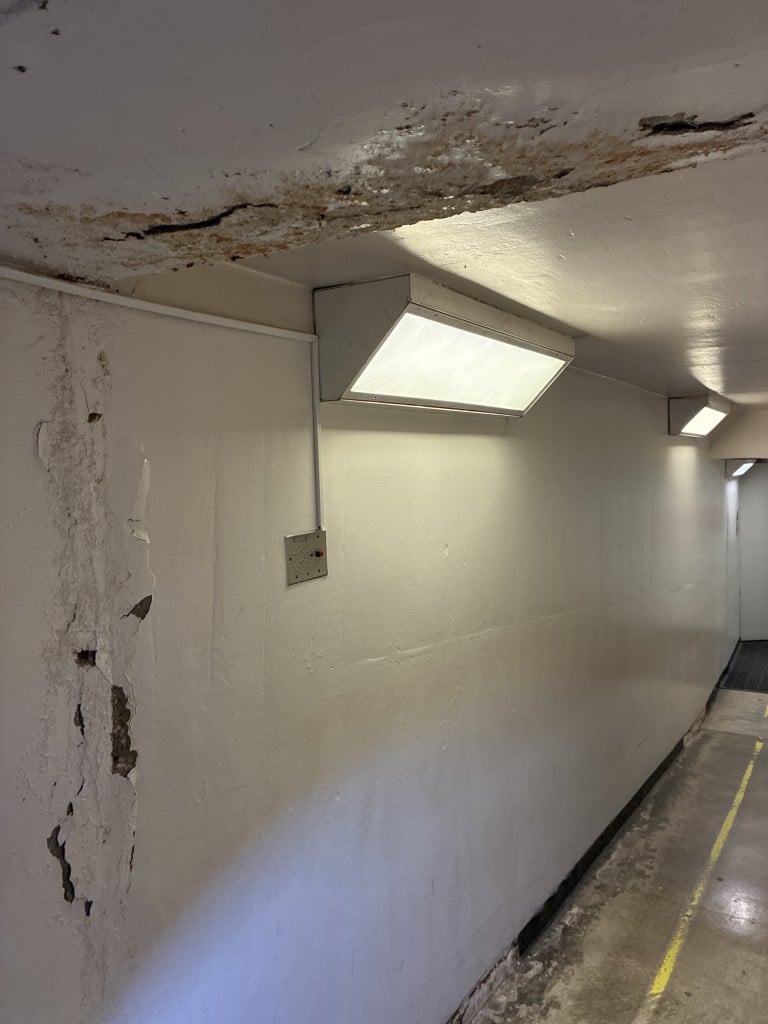
To those who work in the Columbus courts system, the Franklin County Municipal Courthouse is a moldy, smelly, derelict excuse of a government building that has been in desperate need of replacement for the past 20-odd years.
Those descriptors are taken from quotes of people who work in the building. So, when the city of Columbus announced in 2020 that it was planning to replace this 50-year-old swamp, everyone got super excited.
But that $335 million plan was scrapped in late July after Columbus Mayor Andrew Ginther announced that the city would no longer construct a new building due to ballooning costs. Instead, the money allocated for a replacement would go towards a renovation of the existing courthouse.
A donation powers the future of local, independent news in Columbus.
Support Matter News
The Court is not happy about this at all, and broadly, the people who work within it do not think a renovation would make the building safe. Or even dry. Just this month, amid record rain and thunderstorms, the courthouse experienced a series of structural leaks.
“Last week’s severe storms caused leaks throughout the Municipal Courthouse, including in the Court’s Self-Help Center on the 16th floor – a space that serves more than 100 walk-in visitors a day,” a Franklin County Municipal Court spokesperson and public information officer wrote to Matter News. “The Self-Help Center is staffed with attorneys who help people find legal resources, understand legal information, and know what to expect in their cases.”
Flooding has been a recurring issue for the building, the spokesperson said, pointing to an 11-page statement released by the Court earlier this month in response to the mayor’s announcement. Judge Jarrod B. Skinner posted on Facebook that this is an “unprecedented step for the Court,” which generally refrains from issuing public statements on anything.
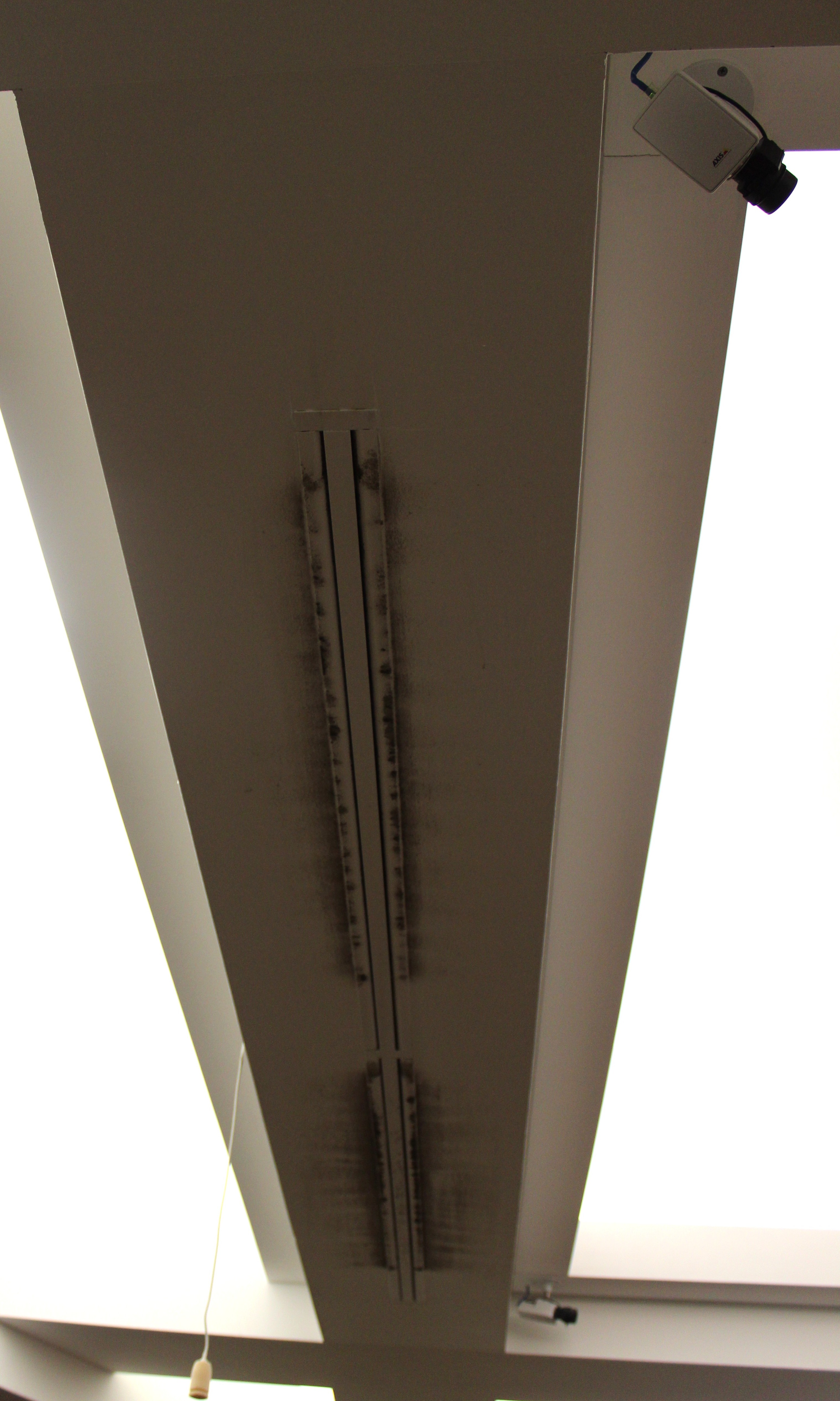
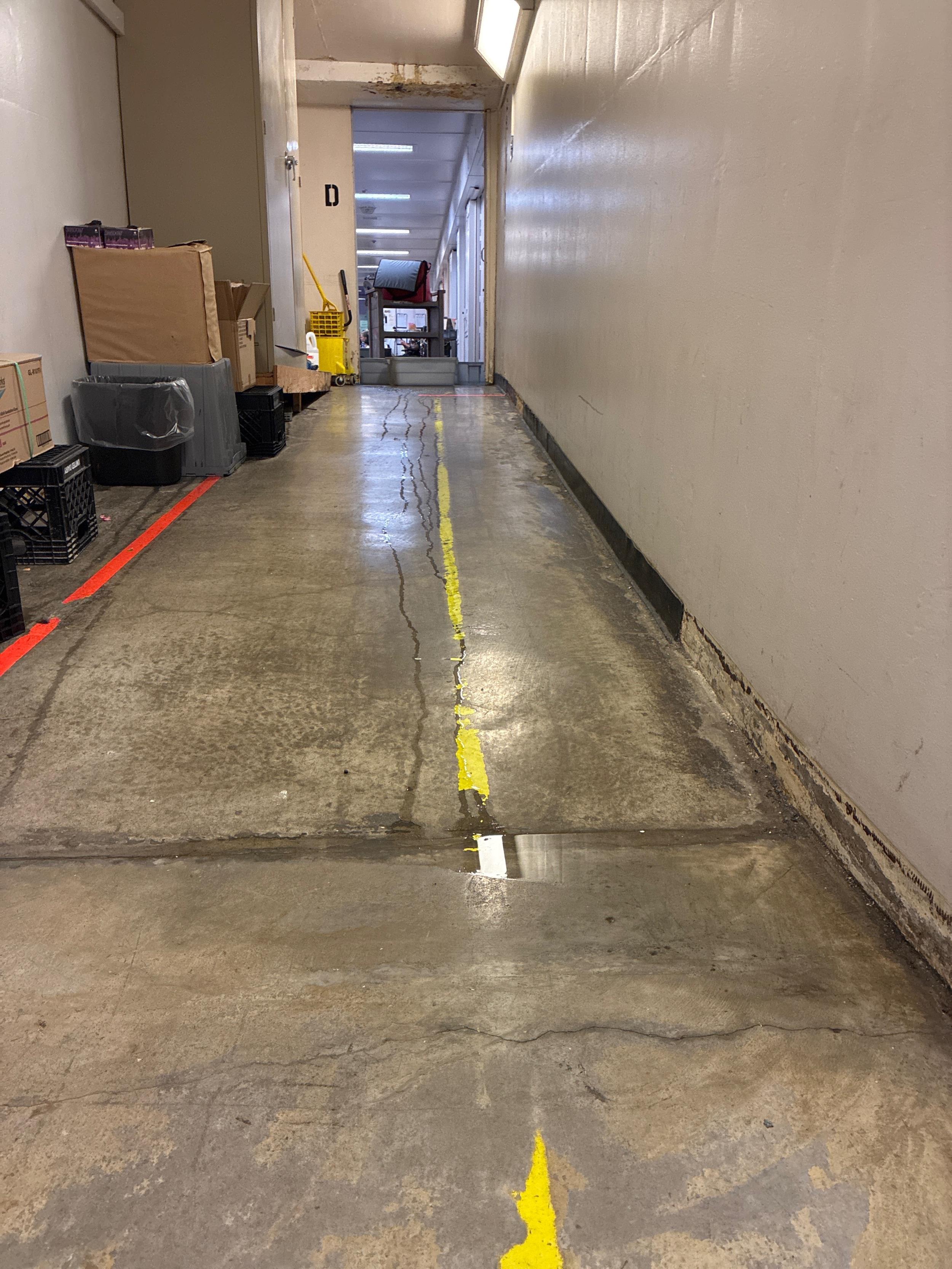
Photos accompanying that statement show wet carpets, moldy vents, sagging ceiling tiles, and water pooling on concrete floors. Nearly 600 people are employed at the courthouse, not counting all the lawyers who go there to represent individuals; a total of 517,000 people visit the building every year.


Chris Junga, a criminal defense and trial lawyer running for Probate Court Judge this election cycle, has been working in the Municipal Court since he began his career 26 years ago. He said in a phone call that flooding has, throughout that time, been a regular problem.
“There’s been a number of times that the building has flooded through water main breaks or just plumbing issues. I’m literally talking water pouring down the walls, destroying a bunch of files,” Junga said. “Each time this happened, court shut down for a couple days. Everybody’s case was continued. People were sloshing through water in their offices. It was ankle-deep or deeper water. And the response was kind of comical. I know bailiffs and secretaries were back in the judge’s chambers, bringing in those cheap white floor fans just to dry their rugs. The place is very bubblegum and duct tape.”
The Court said it was not consulted about the decision to scrap the new construction project. Its spokesperson said that after the announcement, the Court met with city officials on August 11 and “raised numerous questions.” The city’s response was to ask for them in writing. So the Court submitted a list of 24 questions about the decision, which its spokesperson said haven’t been answered yet.
Both the Court and the city have conducted partial inspections of the courthouse, on three floors, as well as the roof, basement, and loading dock.
The city’s report references the persistent water leakage as well as exposed electrical wiring in some of these places. It also notes that there is “evidence of water and exposed rebar” in the dock area. But it found “no Unsafe Conditions or Serious Hazards,” and determined that because there wasn’t visible cracking around the exposed structural rebar, there was no need for a structural engineer evaluation.
The Court’s inspection disagrees.
“Per a Fire Division partial inspection report dated August 7, 2026, this repeated water intrusion is damaging the concrete along the building’s ceilings and walls,” the Court spokesperson wrote. “The report notes that rusted rebar allows further moisture intrusion, which causes the rebar to expand; that expansion can extend further into the concrete, leading to spalling and potentially structural damage or falling concrete.”
The Court expressly asked the city about this disagreement in its list of questions.
“At the Mayor’s press conference, City officials stated that no code violations were identified at the building,” it wrote. “The Columbus Fire Department’s report identifies numerous fire code violations. Please reconcile this discrepancy and confirm whether the City intends to issue a public correction of that statement.”
There are other issues with the current courthouse, too. Beyond the basic infrastructural problems of actual holes in the wall, the Court’s statement pointed to a number of design issues, one of which is that there is “no safe way” to hold someone in custody in the building.

“In-custody defendants, awaiting trial, are escorted through the same halls used by judges, staff, and attorneys,” the statement said. “Two inmates have escaped because of the security deficiencies outlined in this release — one in 2013 and another in 2018.”
Also, there’s nowhere for judges to park securely, which has led to “one judge being surveilled and followed from their vehicle into the courthouse by a stalker, and another being stalked and
threatened, along with other public officials, by an individual now in federal custody as a result
of those crimes,” the statement said.
Junga noted that the adjacent parking garage looks like the set of a zombie apocalypse movie. “You could film ‘The Last of Us’ there,” he said. “It looks like nature’s kind of taken back an old parking garage, an old city. It’s not even safe.”
Funding for the project was first allocated in a 2020 bond package approved by voters, with an initial sum of $130 million. In 2024, the city included another $150 million for it in the capital budget. The next year, voters approved another bond package with an additional $100 million allocated. Because of this ongoing progress towards funding construction, and therefore the general expectation that a new building was coming soon, Junga said people have started explicitly treating the current court building as temporary.
“It’s been old and decrepit for so long, but then everybody started changing things with the hope that we were going to get a new building,” Junga said. “So everything is a temporary entrance, or a temporary shift. It’s like if you walk to your gate at the airport and a certain area of it is under construction, you’ll go through the boarded-up hall and the narrow pathways. That’s the feel [the courthouse] has. And with this shift, who knows how long that’s going to be? I feel like these temporary, under-construction things are going to last pretty long, and that’s frustrating.”
Originally, the new courthouse was slated to open in 2030, but the city’s timeline for the completion of the renovation project has it starting to reopen in 2034.
“Why is renovation planned to begin more than five years from now, given that the City
already occupies the 375 building [the Municipal Courthouse] and owns the 410 building?” another question from the Court reads. The “410 building” refers to the James A. Karnes Building across the street, which would also be renovated under the new plan.
Of its $335 million projected cost, the city had already invested $26 million into constructing a new building, but Ginther told the Columbus Dispatch that $14.5 million of that was transferable to a renovation. The other $11.5 million is a “sunk cost,” the Dispatch wrote. Since a renovation project is expected to only cost $260 million, Ginther also said that this switch would free up $75 million “that can go into our neighborhoods” for community projects.
A city spokesperson said that the newly free $75 million falls under the city’s Capital Budget, which is for longer-term infrastructure improvements. “[The funds] may be invested into physical infrastructure, such as sidewalks, parks, recreation centers, safe streets and police and fire equipment – investments that will help make residents safer, healthier and more connected to our community,” the spokesperson wrote. “The allocation of these savings will be announced in Mayor Ginther’s Capital Budget proposal this fall.”
The Municipal Court spokesperson said the Court didn’t know if it would be consulted on where the money originally allocated to it is going.
“Having a good municipal court isn’t the sexiest thing for a city,” Junga said. “You’ve got new hotels, you’ve got good restaurants, you’ve got sports teams, you’ve got this kind of stuff that attracts people. But these infrastructure things, it’s kind of like replacing the hot water tank in your house. Nobody drives by your house and says, ‘Oh, that really improved the curb appeal.’ But you need hot water.”
Correction: This column initially referred to the James A. Karnes Building as the James A. Karnes Corrections Facility.
Related Articles

If you start from a place of love, you can’t go wrong
A vigil for an unhoused community member who recently died in Newark served as a call to not look away.

On Development: Rapid-transit is moving slowly. Maybe we need a new model
Our policies suggest a willingness to spend any amount to add lanes and bigger (towering!) interchanges for major highways, while transit spending is too often regarded as frivolous.

Opinion: Flock cameras won’t make us safer. Here’s what will
Flock Safety, the company behind the cameras, obstructs any attempt to establish guardrails, accountability, or transparency. Amazon is no one’s model for corporate responsibility, and even it cut ties with Flock.