
Andrea Myers comes full-circle with progressive mural at the Line
The Columbus artist once took drawing classes in the building that now houses the new restaurant and hospitality training center founded by Service!
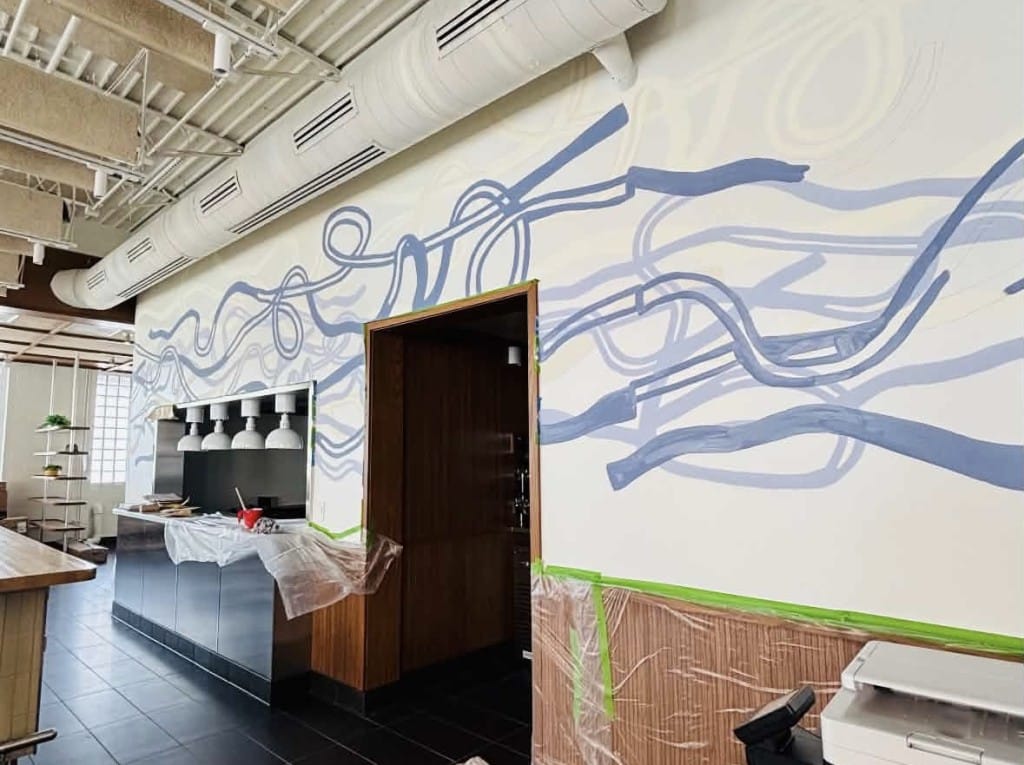
Andrea Myers spent a year in high school taking Saturday morning drawing classes at CCAD’s Circle Hall in the 1990s.
Three decades later, the Columbus artist has returned to the site, now home to the Line, a restaurant and hospitality training center founded and operated by the nonprofit Service!, where in recent weeks she has been working on a mural expected to stretch across nearly 70 feet of wall space inside the revamped building.
“It’s been cool to have this full-circle feeling, and acknowledging, too, that this has been a creative space for a long time,” said the Brandt Gallery-represented Myers, who later in our conversation returned to the idea that the creativity once exhibited by artists within the building could now be the purview of the restaurant’s kitchen staff. “Maybe you’re making a special. Maybe you ran out of something. There’s an ability to improvise in the kitchen that I feel overlaps with art.”
A donation powers the future of local, independent news in Columbus.
Support Matter News
This ability will serve Myers well in the creation of the mural, which is expected to be completed in stages over the course of the next year or so as Service! continues to secure funding for operations at the Line – an artistic version of one of those thermometers designed to visually track charitable gifts to an organization. (Donors will also have the opportunity to sign their names into the mural during the third annual Service! Gala & Masquerade Ball, which takes place at the Line starting at 7 p.m. on Saturday, Oct. 24.)
“And I think what we’ve decided on is that there will a color indicating, okay, this level of donation was given, and the next tier up would be this color, almost like we’re color coding for the donation amounts,” said the artist, who in designing the mural was tasked with creating a piece that could pass for complete even in these early stages of incompletion. “I’ve done projects before … where I have to be comfortable with it in-progress and feel like it can stand on its own for a while, even though it’s not complete. … And I think that takes some confidence and vision that, yeah, it can start with this simple gesture. But I wanted to make sure I was incorporating the idea of linework, and how it is the foundation for art, where you start with sketching and then go into the final piece. And so, when people are coming back a few times, they’re watching something change, and there’s kind of this visual interest that develops.”
In conceptualizing the mural, Myers started by making a number of digital renderings, homing in on an approach before shifting into the space, where after operating hours she began to project the mural onto the wall, painting one layer at a time and then projecting the next layer to see how it interacted with the work she had completed. “And, more often than not, I allowed some space to play and react with what was there,” she said. “So, there was still some improvisation that happened.”
Myers’ mural work tends to serve as a blown-up interpretation of the intricately collaged pieces she crafts in her daily practice – an approach she gravitated toward owing to a long-held fascination with color, form, and patterning. The artist said she also appreciates the adaptability of the medium, where things can be sewn down, cut up, and then repurposed, as well as the communal interplay possible, with Myers occasionally sourcing garments and/or inviting others to paint on fabrics before incorporating these materials in her collages.
“And it becomes this co-authoring with the public, where it’s almost breaking down the hierarchy or demystifying the artist,” she said. “I’m here in the space with them, and they’re painting over top of one another’s work, and it all becomes this nice, big mix of mark-making.”
Myers traced the discovery of her artistic voice to the mentorship she received while enrolled in graduate school at the School of the Art Institute of Chicago, recalling how one professor would consistently ask her to consider the emotional intent behind the work, which forced her to dial in on precisely what it was she wanted a piece to convey.
“And the questions I was getting at the time really helped grow my confidence in my own voice,” said the artist, who is able to see these fingerprints existent in even her most abstracted collages. “And sometimes I don’t even need that much hindsight to see it. And sometimes it’s very coded, where I know what it represents. And I don’t need to tell an audience or anyone else what it means, but I know it helped me work through something.”
Author
Related Articles
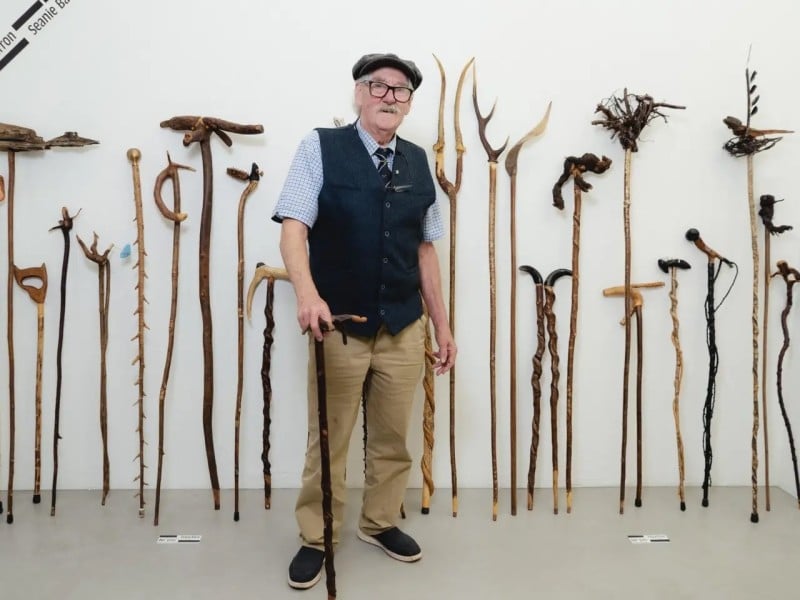
Take a leisurely stroll through the woods with Seanie Barron
The Irish artist’s new exhibition of hand-carved walking sticks kicks off at No Place Gallery with an opening reception today (Friday, Oct. 16).
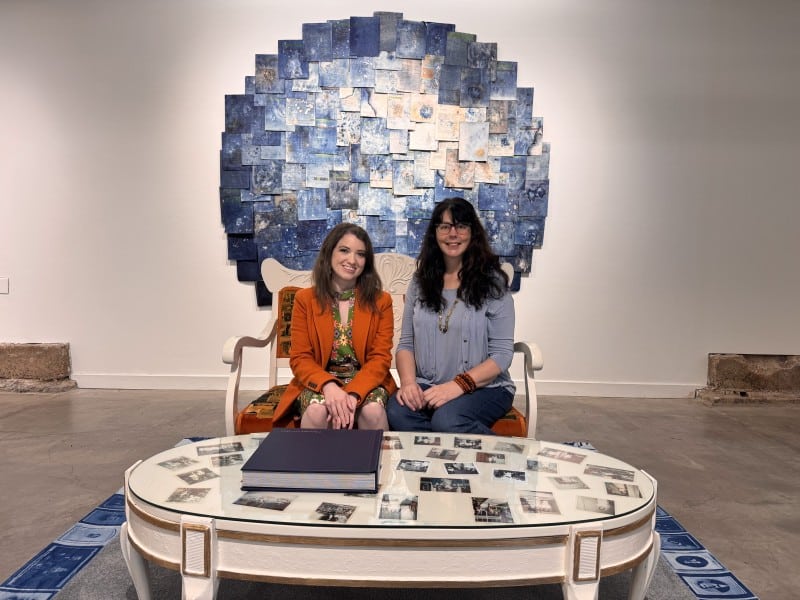
New Urban Arts Space exhibition opens up a conversation about death
‘Spirit & Dust,’ co-curated by Diane Callahan and Michelle Burdine, explores grief, loss, and the weight of mortality from a wealth of perspectives.
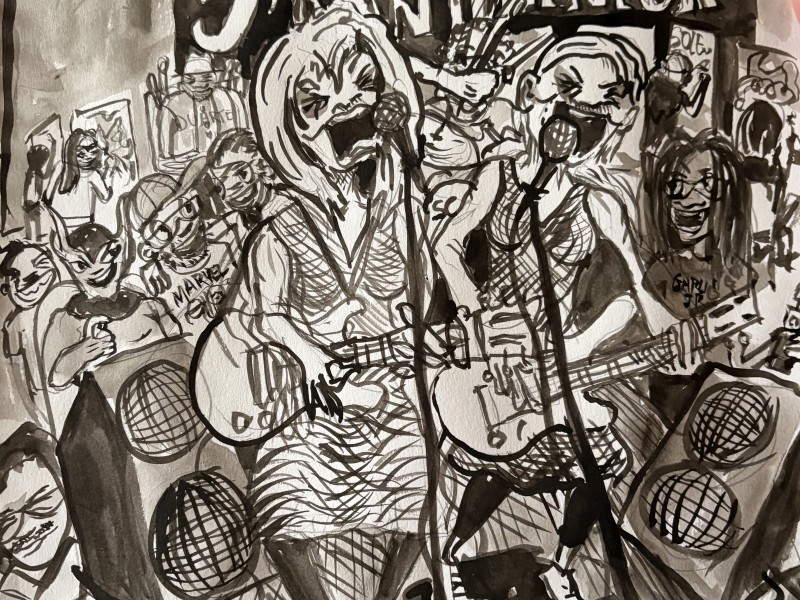
Scrawl meets Scrawl
Marcy Mays and Sue Harshe recently joined pioneering Urban Scrawl artist Dan Gerdeman for a conversation ahead of the band’s performance at the Franklinton art event that has been a longtime source of confusion for some of their fans.