
Refugee stories: Narges derives strength from dedication
While it’s not quite Hawaii, the Afghan refugee said she has found a sense of peace in Columbus, which she calls her ‘dream city.’
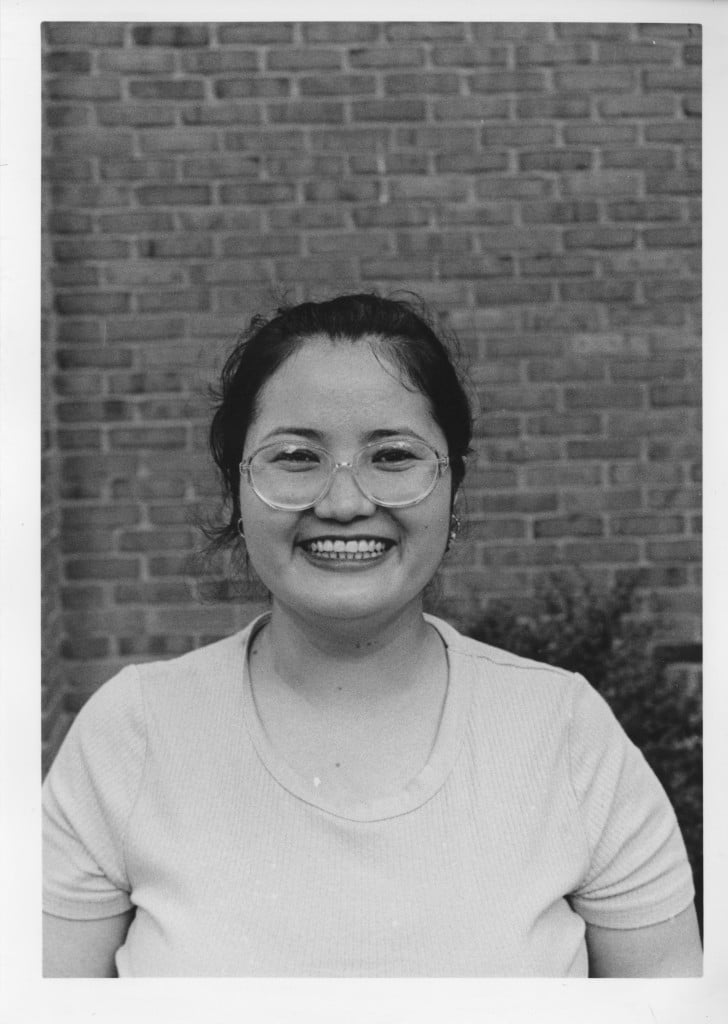
Narges had been dreaming about going back to Afghanistan. Soon to graduate from a university in Morocco with a bachelors of business administration, a concentration in marketing, and a minor in human resource management, she knew exactly how she was going to put her education to use. “The initial plan was that we go back to Afghanistan to serve young ladies – to help especially women there, to help them to study, to help them to get to their goals,” she said. “Unfortunately, there were some unexpected things that happened.”
In August 2021, the Afghan government fell to the Taliban. Unable to return to her country, Narges came to the United States as a refugee. As she looks back on her past, viewing the time that has passed since she was “the young lady who came through those alleys in Herat” until now, one word comes to mind: dedication.
“It is what makes me strong and resilient today,” she said.
A donation powers the future of local, independent news in Columbus.
Support Matter News
When Narges first learned that she had received the U.S. Embassy scholarship to attend university in Morocco, she recalled her family being skeptical. “In Afghanistan, even people don’t know where Morocco is located,” she said, describing the North African country as a big unknown. “When I went there, the language, the environment, being away from my family at a very young age, the American system university, all were the challenges that I was not ready [for].”
As Narges navigated the challenges of being abroad for the first time, she began to thrive. Soon she was working as a residential advisor and as an assistant at the student counseling center, sharing the strength and resilience she had gained with her peers.
Narges said these experiences are crucial to the person she is today. “I call Morocco my second home, because I learned a lot from there,” she said. “I’ve gone through moments where I was crying. I’ve gone through moments where I was laughing the loudest. I have gone through the moments that made my life.”
When the phone call came, bringing with it news of where she would be resettled in the U.S., Narges said she didn’t care where she ended up. Owing to a bad phone connection, Narges said she initially heard “Hawaii,” but when she shared the news with her Moroccan professors, they were surprised. “Then I was doubtful, skeptical,” said Narges, who phoned immigration officials for confirmation and learned she would actually be settling in Ohio. When she shared the update with her professors, they were unimpressed. “They tell me, ‘Columbus? You’re going there? What a boring city,’” she said.
Narges arrived in Columbus in the dead of night. Driving from the airport through the city, she looked out the window of the car and was surprised at how quiet it was. “Because in the movies, it is very crowded,” she said. “The fact that it’s calm, it’s a place to concentrate, to focus on goals, that’s what I liked about it. … This is my dream city.”
Already familiar with the experience of moving to a new country, Narges acclimated to life in the U.S. rapidly. But while she quickly found her feet here, she still feels herself longing for Afghanistan. “It is really hard to leave your country, to never see your people again,” she said. “To never try that food, or something that is originally from your country. It is difficult.”
Narges manages her longing for home by watching Afghan movies, dressing up in traditional attire for Afghan celebrations, and in particular through food. “Actually, I make it with my friend,” she said. “So, together we shop [and] we try to find the ingredients. Of course, products from one country to another are different in color and taste. But we make it.”
Narges has come to view her resettlement in the U.S. as a detour rather than an obstacle preventing her from the ambitious goals she has set. Perhaps, the experience could even turn out to be a shortcut. “I knew that eventually I would end up here,” she said. “I wanted to come here to do my Masters, to do my PhD.”
Narges also believes that her story can help combat the disempowering narratives about refugees often found in the media. “There are a lot of stereotypes about the process, about the reasons, and that sometimes they are not valid,” she said. “If someone comes and shares their own story, how they evolved, how they strived to get to a point, that is really inspiring.”
Telling her story is also a reaffirmation of her ability to succeed, as well as a way to process the trauma of her past. “Sometimes at night when I am sleeping, I feel like there is an explosion or something happened. …. And then I think, ‘I am not in Afghanistan. I am not in Morocco. I am in the U.S. I am in Columbus,’” she said. “It’s like a shadow sometimes. It’s just coming with you.”
This is one in a series of stories collected for a project that was funded by the Baker-Nord Center for Humanities, the Case Western Reserve University Department of English, and supported by both the United States Committee for Refugees office in Cleveland and the Community Refugee and Immigration Services in Columbus.
Related Articles
Ripped to Shreds is ready to hit the runway
The new resale shop, created in partnership between artist and musician Courtney L. Hall and Used Kids owner Greg Hall (no relation), will celebrate its grand opening on Sunday, Oct. 11.
Community Pride returns with a new urgency
Now in its ninth year, the volunteer-run festival takes place at Mayme Moore Park on Saturday, Oct. 10.
Two Dollar Radio HQ reopens with an expanded ownership group and a similarly expanded vision for the future
‘I think a big part from opening was to give authorship of the space to people with good ideas, to open the doors to people to try different things.’