
Mike Olenick constructs a puzzle with the surreal ‘Cat and Mouse’
The Columbus filmmaker’s new short will premiere at the Wexner Center for the Arts on Thursday and Friday, Nov. 19 and 20, screening before a new restoration of the animated film ‘Gandahar.’
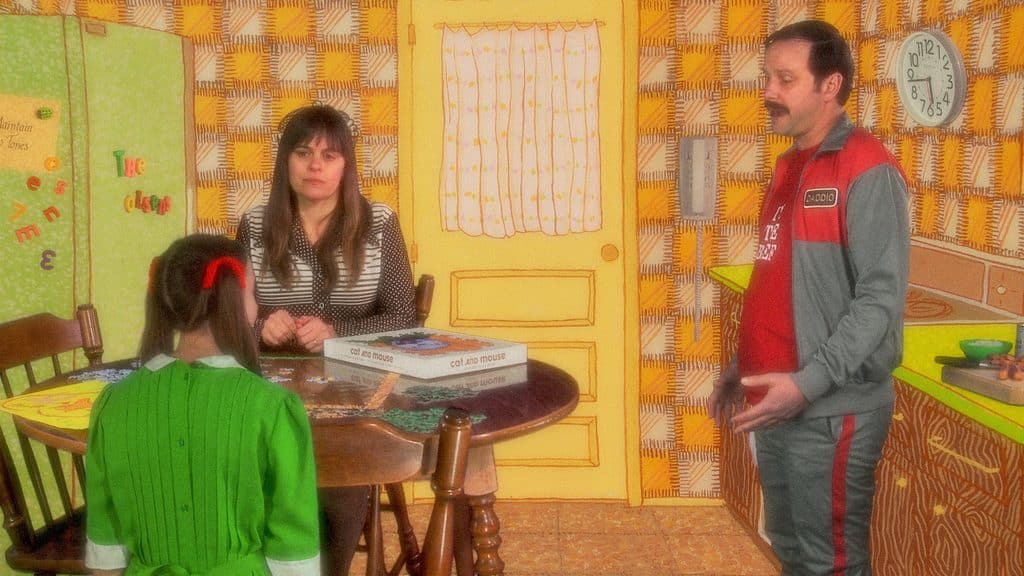
“Cat and Mouse,” the new film from Mike Olenick, is big, whimsical, surreal, and at times unsettling short that hinges on the Columbus’ filmmaker’s careful attention to the smallest details, right down to the tone and inflection with which the actors deliver their lines.
“Everyone was filmed entirely separately [on bluescreen] and they were never in the room at the same time. So, there was a lot of me performing as the other person, and a lot where it was me saying, okay, can you say that again but a little louder? Or I want you to be meaner. Or think about a time you had to scold one of your children. … Or I’d say, make it bigger, or make it smaller, or do one where you’re a little less sure,” said Olenick, whose “Cat and Mouse” will premiere at the Wexner Center for the Arts on Thursday and Friday, Nov. 19 and 20, screening before a new restoration of the animated film “Gandahar.” “And that approach definitely gave me a lot of options in the editing room.”
At one point in the film, Blake Turner turns to actress Kate Shannon (the two portray the dad and the mom, respectively) and says, “Let’s order a pizza,” a line of dialogue that Olenick said he made Turner repeat “probably 100 times.”
A donation powers the future of local, independent news in Columbus.
Support Matter News
“I knew it was the end of the scene, but I wasn’t quite sure how to punctuate the scene or the joke, and then also capture the dread of the moment,” Olenick continued. “And I had to tell [Turner], ‘This has nothing to do with you. It’s me.’”
Owing to this, Olenick emerged from filming with hundreds of pieces and parts that he then had to assemble puzzle-like – an approach that mirrors a central action within the short, as Shannon spends the bulk of her time onscreen piecing together a cat and mouse jigsaw puzzle.
“For me, making movies is a lot like putting together a puzzle where you don’t have a picture on the box but you know its theme,” Olenick said. “So, you’re like, okay, I’m putting together this puzzle called ‘Cat and Mouse,’ and I know what it’s going to look like in the end, but I don’t know all the details.”
The filmmaker traced the genesis of the film to early 2020, when a friend reached out at the behest of a production company that was looking to create a series of two- to three-minute Halloween shorts. In a span of three weeks following this conversation, Olenick brainstormed a trio of ideas, one of which involved a little girl whose parents refuse her request for a cat, and which concluded with giant felines terrorizing the neighborhood in increasingly bloody fashion. Compelled by this concept, Olenick began drafting a script in late February 2020, only to have the world shut down just weeks later with the arrival of Covid. “And then we never talked about it again,” he said.
After receiving a GCAC Artists Project grant in 2024, however, Olenick revived and expanded on the idea, which in this revisitation began to take on a more personal tone, the filmmaker describing it as “in some ways the most autobiographical film I’ve ever made, or maybe the only autobiographical film.”
Many of the details included in the colorful backdrops hand-painted by Olenick, for instance, are pulled directly from his youth, with the action taking place in a house modeled explicitly on his childhood home. Elsewhere, the beanies and weenies suggest the kinds of 1980s foods the filmmaker recalled loathing, while a picture colored by movie daughter Sarah (portrayed by Emma Kindall) echoes a drawing the filmmaker did as a child, and which he rediscovered in the research process.
“I went through this folder of my childhood drawings and found this letter that was like, ‘Dear mom and dad, thanks for the cat,’ with a little drawing of a cat,” he said. “And I looked at it and was like, ‘You didn’t realize it but you’ve been making this film for decades in your mind.’ … In a way, it’s a film about things I remember as a kid growing up in the ‘80s.”
Some of these details are more purposeful (the kitchen wallpaper was designed to have a similar vibe to that from his childhood home) while others were more incidental, including daughter Sarah’s passing resemblance to a onetime neighbor. “I showed my mom a shot of Emma, and she said, ‘She looks just like Brienne,’ who was the girl who lived next door to me growing up,” Olenick said. “And I hadn’t realized it until she said it, but then I was like, ‘Brienne would have totally worn a dress like this. And this is totally how she would have done her hair.’
Even the sounds of barking dogs that surface in the short can be traced to resurfaced memories, with Olenick recalling the time when his brother was nearly attacked by a Doberman that had gotten loose in the neighborhood – an incident that helped to inform everything from the short’s sound design to its gory climax. “Someone picked him up and saved him from getting mauled by this dog, and I definitely thought about that as I was making this,” said Olenick, whose short further benefits from the tension-inducing score composed by A.E. Paterra.
Surveying his growing filmography, Olenick said he sees in his work a throughline exploring the concept of loss, which exists in his aesthetic choices (he misses the wild designs and decor of the 1970s and ’80s and has embraced this palette as a backbone in his productions) and in more personal ways he continues to unpack and which surface most cleanly within “Cat and Mouse.”
“To be honest, we moved from that house when I was a kid, when I was 14. And it wasn’t traumatic, like, ‘I’m never going to survive this new school,’ but there was this thing where we’d moved three-quarters of the way through the school year, and then I just didn’t go back. And decades after I moved away, I would have dreams about the kids I went to school with, or dreams about what happened in that neighborhood,” Olenick said. “And I feel like I’m in a psychoanalysis session now, but I think that’s probably where a lot of my interest in loss comes from, because if you lose something or it disappears, you have to imagine what is there. And imagination can be a scary thing. We can imagine all kinds of scenarios in the world, and we can imagine good and bad scenarios. … And I think as a filmmaker my imagination is activated, but I also want to activate the imaginations of people who watch my movies, too.”
Author

Related Articles
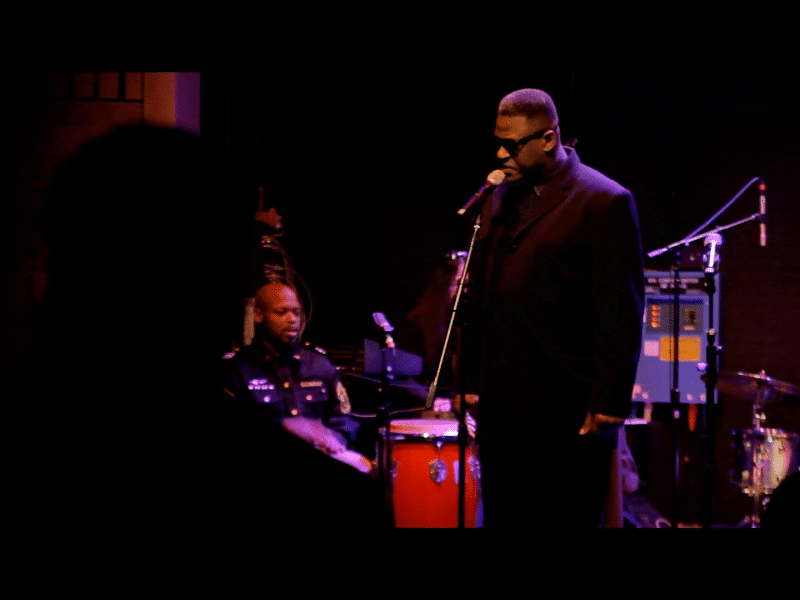
David Maurice Bailey documents the rise and fall and rise of the Lincoln Theatre
The local filmmaker will be on hand when his new documentary, ‘Columbus Backstage: Melodies & Moments,’ screens free at the Lincoln Theatre on Thursday, Nov. 12.
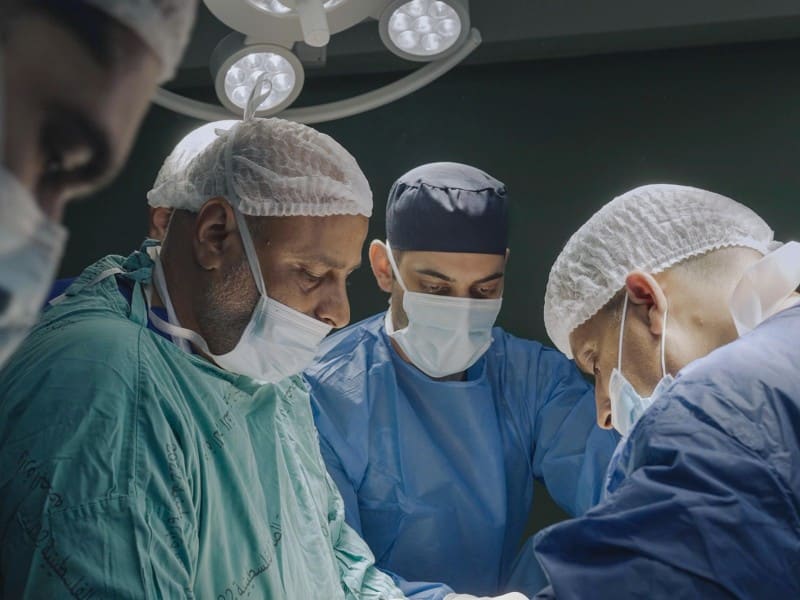
‘American Doctor’ asks viewers to not look away
The gut-wrenching documentary from director Poh Si Teng, who will be on hand when the film screens at the Wexner Center this weekend as part of ‘Unorthodocs,’ takes viewers inside Nasser Hospital in Gaza.
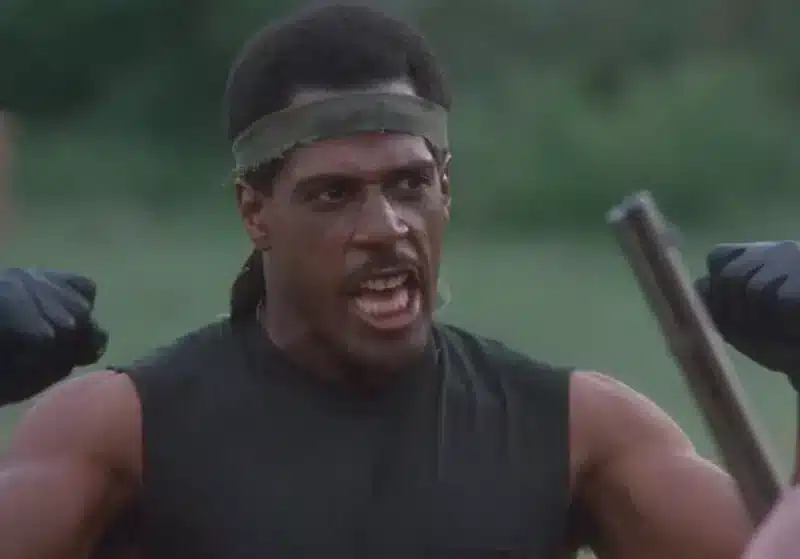
A newly restored ‘Riverbend’ finds fresh resonance in the modern era
A series of unlikely events collided to give new life to the 1989 film, which will screen at the Wexner Center for the Arts on Friday, Oct. 2.