
Deapscufa crawls out of the shadows with ‘Eternal Tranquility’
With the symphonic black metal band’s new album, Hilliard resident Nick Hadley is set to deliver an extreme music masterstroke that’s at once more atmospheric and more epic than its predecessor.
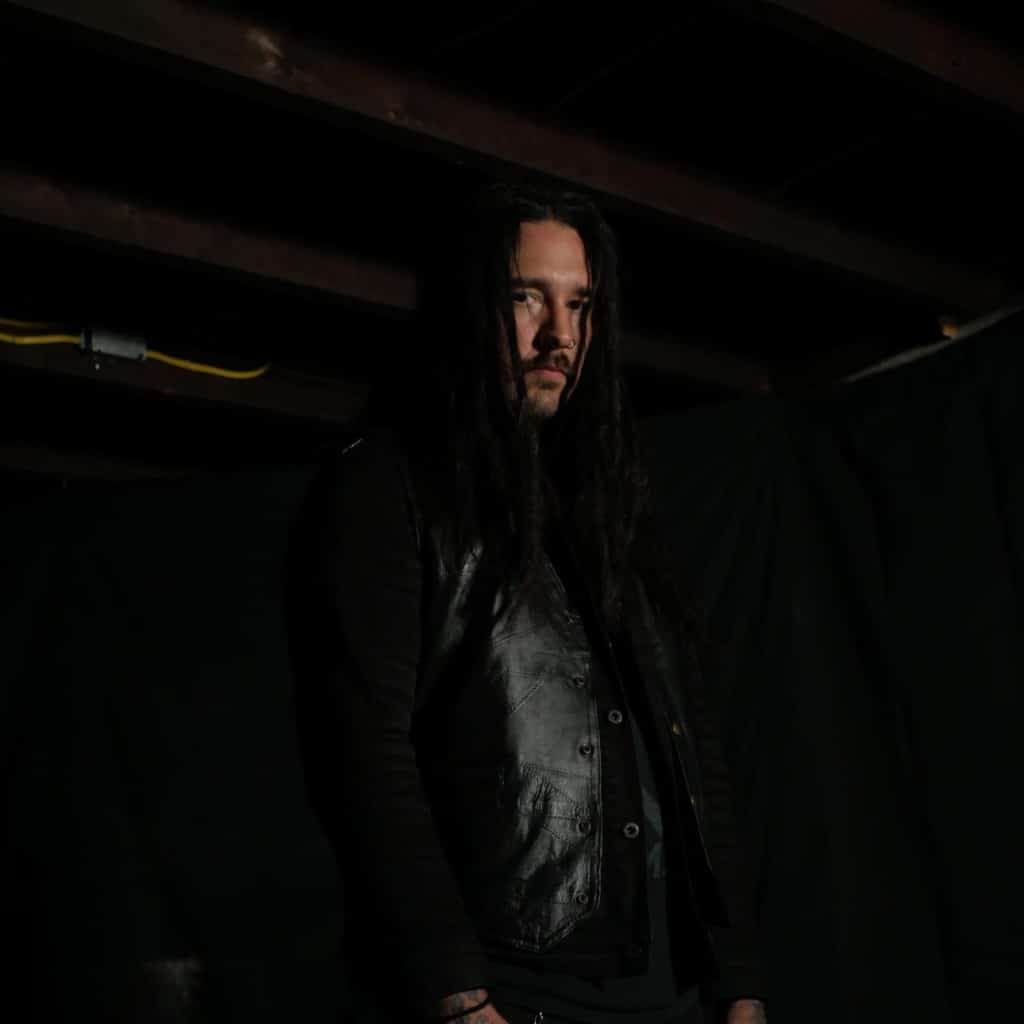
Nick Hadley is one of the busiest people in Ohio’s small but formidable black metal scene.
Earlier this year, he joined the long-running Cleveland band Burial Oath under the pseudonym Mor Grish, stepping into the dual role of lyricist and vocalist. He’s also a founding member of Ofstingan, where he gets to play what he calls “true, real, aggressive black metal.” (Burial Oath and Ofstingan will team up this fall for the Territorial Damnation Tour, with Hadley pulling double duty.) But the Hilliard resident’s most personal project will likely always be Deapscufa, the symphonic black metal project he started in 2013, when he was still living in Kentucky.
“Deapscufa is based on growing up with ADHD, depression, anxiety,” Hadley said. “That’s what it means [in Old English], ‘shadows of death.’ It means anxiety.”
A donation powers the future of local, independent news in Columbus.
Support Matter News
Hadley’s initial steps with Deapscufa were tentative. He had a full-band lineup, made up mostly of future members of the Louisville band Volcandra. But while he was already interested in symphonic black metal, he wasn’t yet sure how to pull off the orchestral and choral sounds that he loved in bands such as Dimmu Borgir and Emperor.
“I was afraid to jump into that, so I wanted to touch on melodic things with my debut EP [from 2016], which is its own thing, for sure,” Hadley said. “I think I really found what I was looking for when I came out with [2022’s] Beyond a Dying Horizon. That was my first full-length, and after all that time, I finally found where I think my direction should be.”
If Beyond a Dying Horizon established the Deapscufa blueprint, this year’s Eternal Tranquility (Fiadh Productions) builds on it. It’s more symphonic, more atmospheric, more epic, and more confident in its ability to communicate all of these qualities. Songs such as “The Obsidian Blade on the Forest Floor” and “When Silver Fades to Dust” show a greater command of dynamics and musical world-building than anything on earlier Deapscufa releases. And the production – while still confrontationally raw – gives the instruments, both organic and programmed, ample room to breathe. “Kevin Tolliver at Daily Grind Studios here in Columbus did it, and he nailed it,” Hadley said. “It couldn’t be better.”
For all its relative musical sophistication, Eternal Tranquility still has the unpolished, instinctual feel that black metal should have. These aspects are familiar to Hadley, who embraces a certain rawness in the more orchestral elements of Deapscufa, sharing that he’ll often compose intricate passages built from a single guitar riff, only to forget them as soon as he completes them.
Even so, Deapscufa works best as a solo endeavor, with Hadley embracing the project as a kind of musical learning lab. “Everything I learned was out of necessity, essentially,” said Hadley, who taught himself how to program drums and began playing guitar solos following the departures of a drummer and a guitarist, respectively.
Working solo also means the lyrics, themes, and iconography – all crucial aspects of the Deapscufa experience – are Hadley’s alone to develop. Eternal Tranquility is a concept album rooted in what Hadley semi-jokingly calls “magical nerd shit.” Before this record, he co-wrote another one, “about these black knights who are immortal,” alongside a keyboardist who ended up ghosting him. (“I can’t release those songs, because he’s still on it,” Hadley lamented.) As a means of self-preservation, Hadley decided he needed to write the story for the new album on his own.
“I like to joke around and say I don’t write any of my music, my subconscious does,” says Hadley, who drew inspiration for Eternal Tranquility from 1980s sword-and-sorcery movies, especially John Boorman’s “Excalibur.” “Because I’ll play a riff, and I don’t feel it. But then I’ll play a certain riff, and I’ll get the chills and my heart starts racing.”
Even though Eternal Tranquility tells a fictional story, there are still trace elements of autobiography in its narrative, with Hadley describing Deapscufa as an ongoing vehicle in which he can process personal trauma and mental health issues. On “The Expedition,” for instance, the song’s protagonist is “still and silent, one with the black,” trapped in “infinite loneliness, forever.”
“I’ve definitely healed a lot since [2013],” Hadley said. “But life happens, always, so there’s always something to write about. A lot of old metal people are like, ‘Yeah, we just calmed down. There’s nothing to scream about anymore.’ I don’t think that’s true.”
Related Articles

The Orphan the Poet the Block Party
The Columbus band will join pals Joey Aich and Liteweight Champion for an outdoor concert on Walnut Street this weekend.
Chlorine’s Joseph Mangum lets his memories bleed through the page
The Kentucky band joins a stacked lineup at Rambling House on Thursday, Oct. 15, performing alongside the Dolphins, Son of Dribble, and Calico Boy.
Villagerrr’s Mark Scott would gladly hop off the industry ‘Carousel’
“I was getting a little frustrated with feeling responsible for promoting the album, because putting yourself out there, it’s not the most comfortable thing for a lot of people, and it definitely wasn’t for me.”