
Rose Zinnia stays soft with ‘Togethering’
The Cleveland poet will celebrate the release of their new book at the Glen Echo bird tunnel today (Friday, Oct. 4), joined by writers Mandy Shunnarah and Sappho Stanley, along with musicians Zac Little of Saintseneca and Superviolet’s Steve Ciolek.
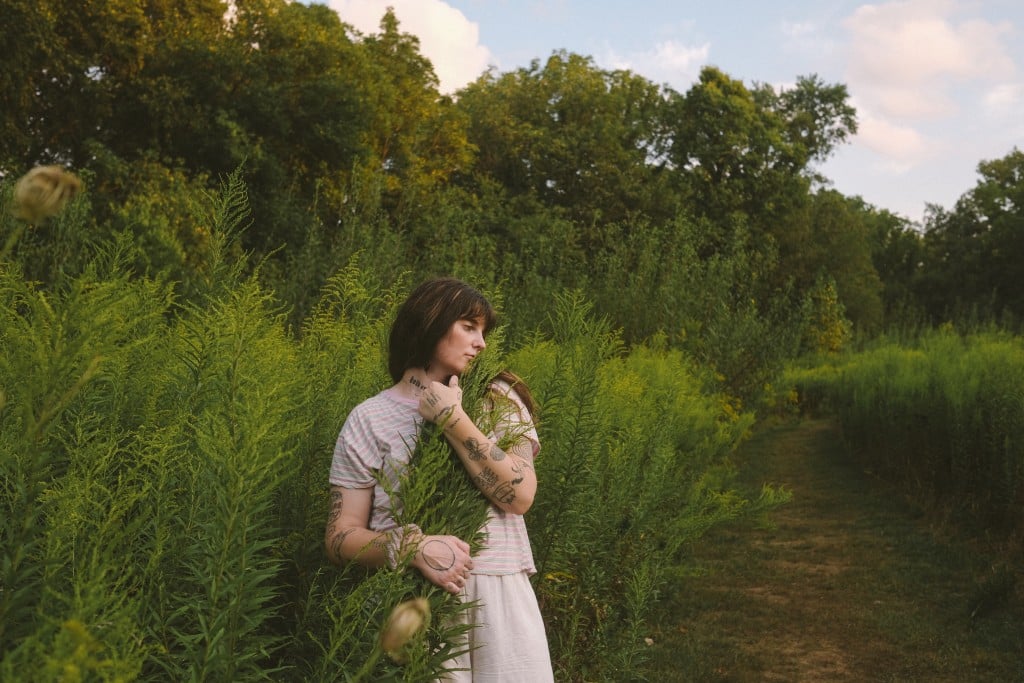
The idea of community so central to Rose Zinnia’s new poetry and lyric essay collection, Togethering, is something the writer first began to connect with coming up in Cleveland’s house music scene.
“I was around the Soggy Dog house in Lakewood and Tower 2012 and a lot of other DIY spaces, and it was something I had never encountered,” said Zinnia, who will celebrate the release of their new book at the Glen Echo bird tunnel (2702 Indianola Ave.) at 5:30 p.m. today (Friday, Oct. 4). The event also features readings from Mandy Shunnarah and Sappho Stanley, along with musical performances by Zac Little of Saintseneca and Superviolet’s Steve Ciolek. “And once I encountered that, it opened a lot of portals in my brain to be like, okay, we don’t have to do just what is prescribed.”
The importance of community was further reinforced by the isolation of the early pandemic, which leaves its thumbprints on Togethering, particularly when Zinnia writes of the shifting perspectives that can emerge in the work during those moments “when we don’t or can’t look at each other.”
A donation powers the future of local, independent news in Columbus.
Support Matter News
And yet, Zinnia still feels some tenderness for those early Covid months, a point in time when they said a real sense of community swelled in spite of social distancing, pointing to a revived insistence toward care driven by the realization that we were all in some way connected.
“I think that idea was really laser-focused at that time. And now, I don’t know. Maybe people are amnesia-ing out of it,” Zinnia said. “I’m always trying to remind people that our hurt is each other’s. And if we recognize the Earth and one another as parts of the same body, then we really shouldn’t be treating each other the way we do.”
Zinnia culled the pieces in Togethering from writing done over the last decade, with the earliest poem dating to around 2015 and work on the lyric essay having taken place as recently as last year. “There’s something to be said for letting a poem sit and marinate in the ether,” said Zinnia, who frequently found themself returning to older poems, sharpening and revising the verses with skills developed in the intervening years. “It’s almost like when you master a song and put that final touch on it. It’s like, okay, this is a poem that I wrote back then, and it’s now been mastered by the 2024 version of me.”
This growth is further evidenced in the ways Zinnia writes about their younger self, who struggled with addiction and alcoholism, and who the writer now views with a more grace than they might have in years prior. “I’ve been sober for 11 years now, and through that process I’ve come to a greater understanding of myself, seeing my child self as someone who was fractured and splintered by various traumas and inheritances,” they said. “I definitely did a lot of work in therapy and elsewhere to learn to love that child self, that dysphoric self, that little girl who was kind of paved over by cis-ness and cisheteronormativity. … I definitely have cultivated a greater sense of compassion, and I think that’s been vital in how I’ve moved forward and integrated those parts of me that were wounded back into myself.”
Other parts of the book serve more as “an excavation of silence,” Zinnia said, including passages in which she confronts the long-ignored mental health issues in her family, such as her grandmother’s bipolar disorder. “There’s a lot of that history that is lost to me, and I think it’s like that for a lot of people, where things are erased and quieted until they fade away,” they said. “And the family stuff is scary to talk about and to write about, but ultimately these are conversations that need to be had.”
Whether unpacking their personal history or turning an eye toward the community that continues to serve as both a steadying and motivating force, Zinnia writes with disarming rawness and vulnerability, as though even their pen is somehow made of soft tissue. This reality bubbles to the surface when Zinnia writes about having a poem shared via email by a major poetry site – a breakthrough that, as these things tend to do, also drew out a handful of trolls and naysayers.
“I received this comment, not to mention several e-mails instructing me to PLEASE STOP using multiple pronouns in my author bio, because it was “confusing & misleading”: What a self-indulgent, breathless rant signifying intellectual failure,” Zinnia writes. “Virtually unreadable.”
And yet, the poet responds to the harsh words not by buckling or walling themselves off, but rather by leaning into the criticisms and embracing the moment as reason to become somehow softer and even more open to the possibilities that surround. “I want to love everything before I go,” Zinnia writes in closing the passage.
Zinnia said this inherent softness has long been embedded in their character – “I’ve always been a mushy mush pile,” they said, and laughed – and has served as needed ballast while navigating a world so prone toward violence.
“Even doing this book tour right now, it just started, but I’m having these amazing experiences and I’m in these classrooms with students who are wonderful and saying the coolest things. And then I’m hearing about these horrible things in the world, and there’s this juxtaposition, which I think is relatable to many people, where sorrow and joy coexist,” they said. “So, I’ve just been trying to let the feelings happen and to be present with it all. But like my friend and mentor, Ross Gay, I want to focus on the joy and the things that sorrow brings into focus. … Our attention, as Mary Oliver says, is the beginning of devotion. And I’m thinking a lot about what I’m devoting myself to in my life. And for me, it’s love, and it’s wonder, and it’s our togetherness.”
Author

Related Articles

Edward Julian Sr. embraces poetry as a means to release and reflect
Ohio’s poet laureate features at Urban Arts Space tonight (Thursday, Sept. 24), appearing as part of the Poetry Festival, which continues through the weekend at Thurber House and the Grange Insurance Audubon Center.
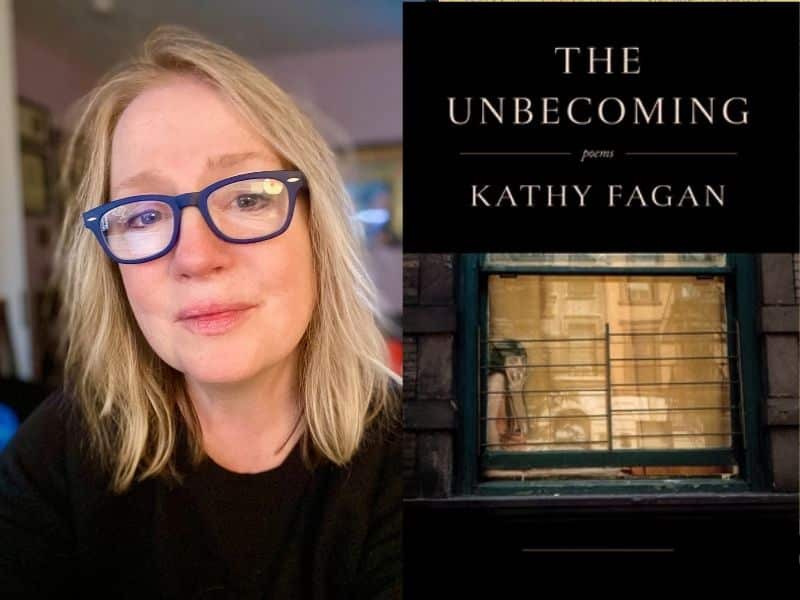
Kathy Fagan takes stock with ‘The Unbecoming’
The poet will celebrate the release of her new collection with a reading at Gramercy Books on Thursday, Sept. 24.
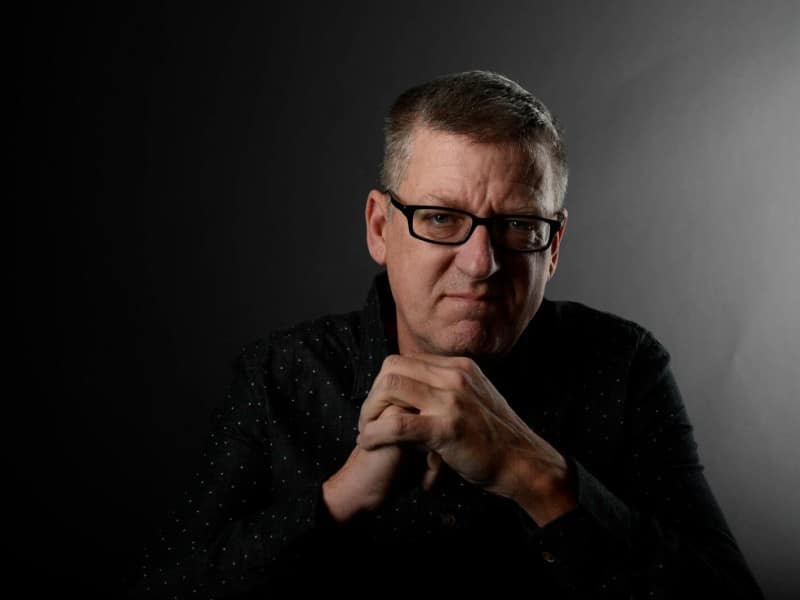
Derf Backderf delves into the past, finds lessons for the present with ‘The Dissidents’
The Cleveland cartoonist will celebrate the release of his sprawling, deeply engaging new book with an appearance at the Wexner Center for the Arts on Wednesday, Sept. 23.