
On Development: The cloud is made of concrete
Things happen one by one by one over the months and years, and we don’t see it happening until we’re overwhelmed.
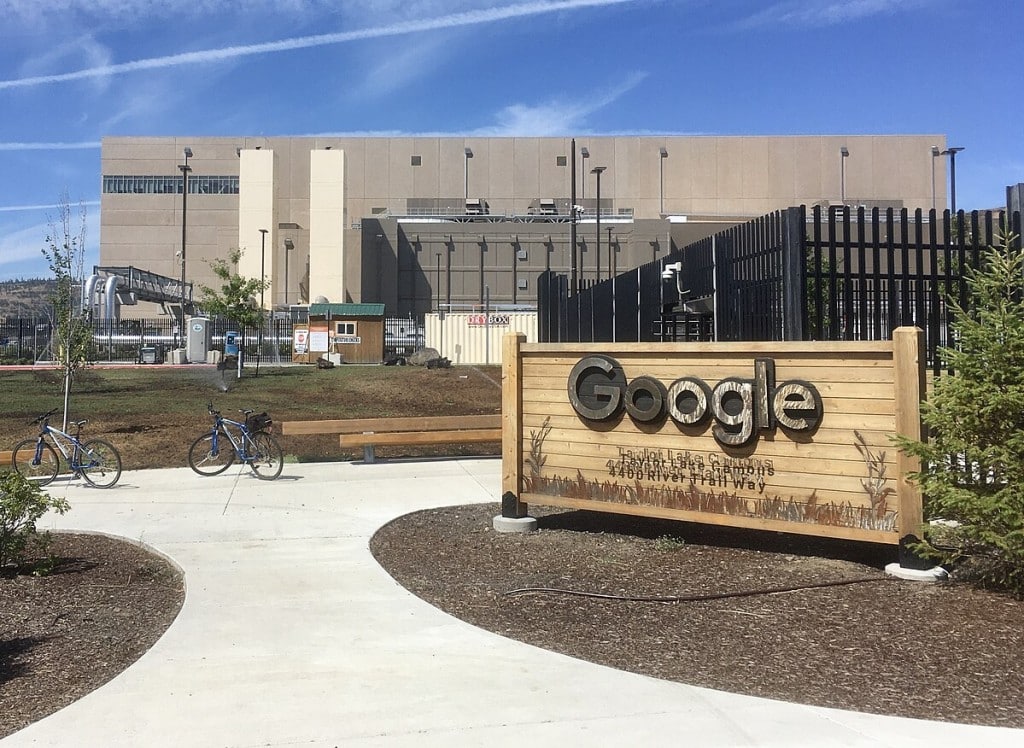
Sometimes technology and commerce get a little ahead of themselves. We proceed based not on what we need but on what we are able to do. We set off in new directions before we have thought them through. Before we have even raised the relevant questions: Why are we doing this? What are the implications? Are there long-term costs?
Is an advertising brochure written by artificial intelligence more important than farmland? Are one-day shipping and fast-fashion clothes more beautiful than a mountain gorge cut by a mighty river? Do we need a massive new infrastructure to store our cat videos and uninformed political screeds?
America is being taken over by giant concrete boxes.
A donation powers the future of local, independent news in Columbus.
Support Matter News
Things happen one by one by one over the months and years, and we don’t see it happening until we’re overwhelmed. Put a frog in a pot of boiling water and it will leap out right away, says the old trope. But put a frog in tepid water and slowly bring it to a boil and the frog won’t notice the rising heat until it’s too late.
Construction of warehouses and data centers seem to be dominating the economy. Warehouses are on the fringes of cities and metropolitan areas. These low-rise concrete boxes stretch for hundreds of feet and require hundreds of people to shuttle boxes and containers from dock to dock – in areas far from housing and not served by transit.
In recent months, the New York Times has looked at the proliferation of huge warehouses and distribution centers along I-78 in the Allentown/Bethlehem area; backlash against a proposed data center in tiny Peculiar, Mo. (20 miles south of Kansas City); and multiple data centers along the breathtaking Columbia River Gorge amid the sagebrush and vast apple orchards of central Washington state.
The biggest concentration of warehouses in central Ohio is around Rickenbacker Airport. It’s one of the region’s biggest employment centers but is designed for cars and trucks and not conducive to transit. While the area is getting a new transit center – where COTA routes will connect with a network of shuttles to carry workers to their warehouse jobs – it’s been a long time coming, and warehouse operators have been slow to pony up a contribution for the shuttles.
Ohio State University’s Fisher College of Business has a respected program in logistics. Right across the street is OSU’s Knowlton School of Architecture. It seems that if the experts on either side put their heads together, they might be able to create a new multi-story warehouse model that could work effectively in more urbanized places – closer to where workers live and without taking up hundreds of acres of farmland. Actually, a dozen or so years ago I talked to people in both programs but found little interest.
The way warehouses and data centers sprawl across the exurban landscape comes through individual decisions by private corporations, built on the assumption that the government will provide the roadway expansions to accommodate workers and trucks. And they often get big tax breaks. Warehouses create jobs, but typically not the kinds of jobs that turn into careers, or that have the kind of organizational and political power that unionized steel mills once had.
Data centers create high-paying temporary jobs for out-of-town electricians and send tax dollars for new schools, but poverty remains in the communities. Once the construction and electrical work is complete and all those data centers take over farms and scenic countryside, they don’t create many jobs.
In Central Washington, above the deep, steep, orchard-lined slopes of the Wenatchee Valley and the Columbia River Gorge, the high-desert topography surrounds the Grand Coulee Dam for miles and miles. Downstream, some 50 data centers there are harnessing hydroelectric power from the Columbia to fuel the future of A.I.
Ohio has 172 data centers. The Columbus area has at least 104 – more than twice as many as Cleveland and Cincinnati combined. Half of the Columbus-area centers are for Amazon. Thirty are clustered north and east of New Albany. Central Ohio may lack the majesty of the Wenatchee and Columbia valleys, but the former farmland of Plain Township and western Licking County is not enhanced by concrete clouds. And that’s without getting into the demand these data centers place on the electric grid, which is expected to put central Ohio on par with Manhattan in terms of energy usage as early as 2030, according to AEP, the costs of which will inevitably be absorbed by residents.
It sounds so simple to have all of our electronic devices and magically store our photos and information “in the cloud.” But they are not fluffy, bunny-shaped wisps across the sky. They are concrete. And there are hundreds of them with thousands more to come – giant concrete boxes erupting beneath our spacious skies. I don’t know what we need to do about it, but we can’t find the right answers until we ask the right questions.
Brian Williams is a semi-retired reporter and planner.
Related Articles
The billionaire-backed think tank that wants to change harm reduction and homeless policy
Joe Lonsdale’s Cicero Institute contends that we can arrest our way out of the housing crisis, and that states must enforce laws ‘prohibiting open drug use, urban squatting, camping, and loitering.’
Opinion: You can’t talk about Issues 8 and 9 without race
A problem with the discourse around these issues is that it isn’t being completely honest when it comes to race. Not publicly, anyway.
Opinion: Trifectas are only good for racing and the lottery
The legacy of Ohio’s Republican Party is corruption, scandal, and culture wars. Our votes could put an end to their occupation of state government.