
Opinion: The politics of abandonment and the future of district representation in Columbus
At-large voting has produced a culture of auto-pilot governance by electeds who acquiesce to the demands of the donor class instead of their constituents, the most recent example of which is the handover of McCoy Park to the Haslam Sports Group.
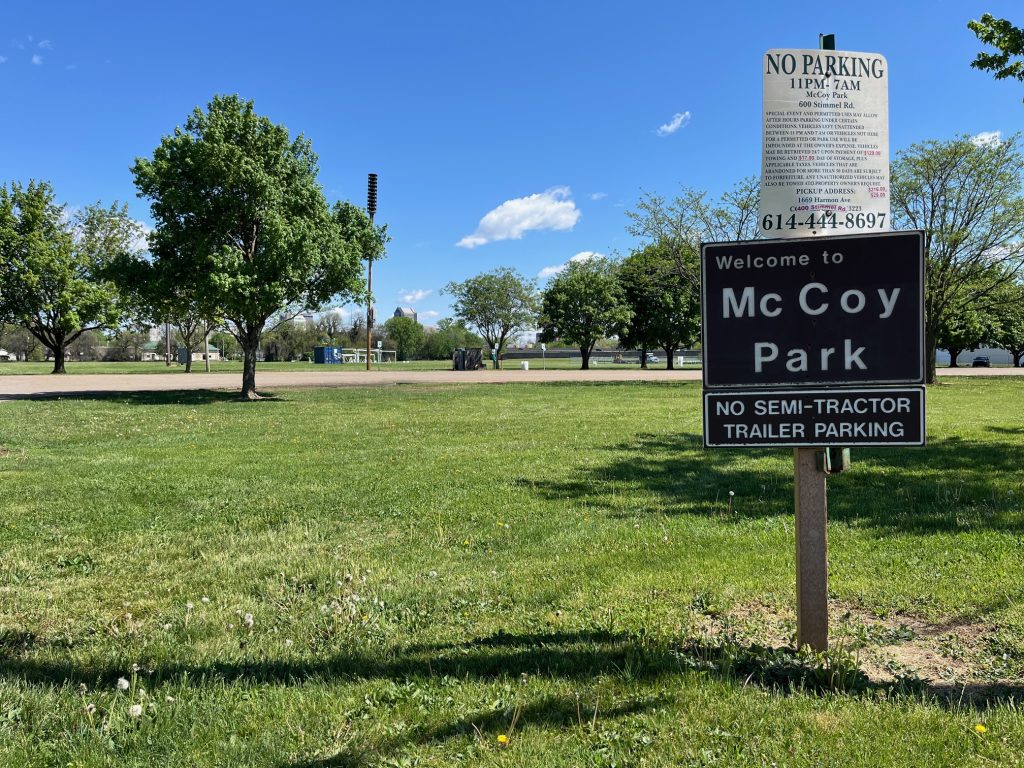
Two events have galvanized Columbus city politics in recent months: the results of last November’s race for a city council seat between Tiara Ross and Jesse Vogel, and the shameful decision by city and Franklin County officials to gift McCoy Park and $50 million in public subsidies to the Haslam Sports Group. It is no coincidence that their common denominator is District 7.
I live in Franklinton, one of the neighborhoods in District 7. Like other low income and working-poor sections in Columbus, Franklinton serves as a laboratory for real estate vulture-picking and parasitic public/private partnerships. But history has rarely been kind to the place once called The Bottoms. Hit by two historic floods; redlined by banks; and suffering from the effects of the late-20th-century economic downturn that led to white flight, the crack and opioid epidemics, and stalled growth and investments from which other areas of the city benefitted, Franklinton has become the perfect template for how the failures of neoliberalism and organized abandonment can transform themselves into blank slate “revitalization.”
Despite years of threadbare promises, the present prognosis is grim. The neighborhood has become and remains a food desert. Entities such as PNC Bank, CVS, and Planned Parenthood have closed up shop just within the last five years. Landlords price gouge tenants and keep retail storefronts shuttered while real estate giants like Pizzuti Companies hold sizable plots of barren land captive. Columbus City Schools faces a serious budget crisis, continued layoffs, and a decline in enrollment due to families either being displaced from the district or seeking charter schools as alternatives. Programs are proposed to address the growing homelessness crisis amid continued camp sweeps. There are high rates of addiction, and in South Franklinton (where McCoy Park is located), there is an average life expectancy of 60-years-old.
A donation powers the future of local, independent news in Columbus.
Support Matter News
Even more glaring than West Broad Street’s vacant storefronts is the absence of any elected city council representation or leadership. These systemic conditions are byproducts of our at-large voting system.
An at-large system allows candidates running to represent a district to be elected by a plurality of voters citywide, as opposed to a district-based (or ward) system, where a candidate is elected only by the voters who reside strictly within that district. Here in Columbus, at-large voting has produced a culture of auto-pilot governance by electeds who acquiesce to the demands of the donor class instead of their constituents. Our consolation prize as voters is an “everyone and no one represents us” cognitive dissonance and no authentic district representation.
Much has been said about the Ross-Vogel race – most notably, that when it came to veritable democratic results in both the primary and the general, Vogel won District 7 both times. Vogel’s loss reignited a long-standing dissatisfaction with both Columbus’ at-large system and how our city council has traditionally operated, with candidates handpicked by sitting leadership, lobbyists, and powerbrokers have the highest chances of winning races.
This inconsistency in electoral logic reared its ugly head again on April 20. The city council meeting that decided the fate of McCoy Park was emotionally fraught and high in tension, due in no small part to the reality that conversations between Mayor Andrew Ginther, Director of Recreation and Parks Bernita Reese, Franklin County Commissioners, and the Haslam Sports Group had taken place six months prior and without the public’s knowledge. After remaining quiet during the time allocated to McCoy Park, council member Ross finally weighed in, grilling Director of the Department of Development Mike Stevens and expressing clear and warranted disapproval at how Ginther and his cabinet negotiated the deal.
“The administration should be ashamed of itself, of the blatant disregard of the people of this community. What would have been a wholesale ignoring of one of the most underserved communities in our city can now serve as an opportunity to rebuild trust,” said Ross, who in spite of her words pivoted to join a majority of council members in voting yes on the deal prenegotiated by Ginther and the Haslams.
Ross’ yes vote could serve as a case study of how our at-large voting system has become civically corrosive.
To be sure, a district-based system is not without its critics. At a May 5 Council Rules and Policy Committee hearing on Columbus’ voting system, Ohio State University political science professor Vladimir Kogan downplayed a 2017 NAACP Legal Defense Fund report that originally stated, “Courts and other decision-makers long have recognized that discriminatory methods of election, like at-large voting, enhance the discrimination that communities of color experience because of socio-economic and other disparities in life opportunities between Black and white communities.”
“Shifting from at-large to by-district or ward elections will almost certainly reduce the ability of African-American voters to elect their candidates of their choice,” Kogan said. “This is the opposite of the argument that advocates of ward elections have been making for nearly a decade, including a 2017 letter written by the NAACP Legal and Education Fund. But in every contested city-wide election since then, the victorious candidate has always performed best in the city’s most heavily African-American precincts, ensuring the election of Black-preferred candidates in every one of those races.” Kogan then cited Ross’ city council win as proof.
Election law and voting rights attorney Katy Shanahan dispelled Kogan’s claim later in the same meeting. “[Kogan’s testimony] is demonstrably and historically false about why at-large structures were installed in cities including Columbus and across the country,” Shanahan said. “He named the NAACLD, which actually rose to its current status and acclaim battling at-large structures specifically under the now-gutted Section Two of the Voting Rights Act, because they specifically undermine the political power of Black voters in those places. And moving toward districts is actually what allows those Black voters to have a real pathway to political power.”
Later, Shanahan returned to the April 29 Supreme Court ruling in Louisiana v. Callais that eliminated Section 2 of the landmark 1964 Voting Rights Act. “You’re all going hard in the paint to defend a system that we now no longer have legal recourse to rectify,” she said, “instead of going to bat for a system that would actually empower those communities to elect representatives of their choosing.”
The more protracted threat to the electoral landscape of Columbus’ Black residents comes not from a district-based system, but rather housing and affordability. In April, I attended a Columbus City Schools townhall at East High School billed “How a Changing City is Impacting CCS.” The presentation by Michael Wilkos, United Way’s vice president of community engagement, detailed the city’s rapidly changing racial and socio-economic composition in relation to lack of affordability.
“What’s happening on the Near East Side is an opposite experience of what’s happening across the city, where the white population in this neighborhood is surging from 19 percent [in 2010] to 37 percent [in 2020] and the Black population plummeted from 75 to 58 percent [in the same time frame],” said Wilkos, who documented an even steeper decline in Franklinton, where over the same stretch the Black population has fallen by 61 percent.
The claim that an at-large system would negatively impact Columbus’s overall housing market has turned into a manufactured area of contention. A recent Columbus Dispatch op-ed cited a 2020 MIT study that “found a decline in housing production” following the switch from at-large to district-based systems. But in the study, author Evan Mast clarifies, “I emphasize two caveats. First, I do not measure potential welfare gains from more decentralized control, whether through housing markets or elsewhere (such as increased minority representation from ward voting). Second, while the forces underlying my proposed mechanism are quite general, I study a specific policy, and results may not generalize to every situation. Most proposed reforms consider decreasing local control, and applying my findings to this setting requires a symmetry assumption. Similarly, towns within a region are a parallel setting, but more research is needed to determine the effect of decentralization at that level of government.”
At the May 4 city council meeting, Hilltop resident (and occasional Matter News contributor) Rachel Wenning elaborated on other problems with that MIT study. [The study] deals with cities that had a median population of only 35,000 people in 1980, when we had over half a million. It looked at changes only through 2003, which was over 20 years ago. And the real reduction in housing units that the study showed, even with all its estimates and exclusions, was five – five less housing units,” Wenning said. “We have many more concerns than just building housing units. Can people actually afford to live in them? Can they actually get to and from their jobs when they live in those units? We can’t look at one extremely narrow statistic – housing units – and act like if that number goes down, we don’t deserve democracy.”
In this sense, anxieties over any adverse effects on the housing market from a district-based voting system are red herrings. It is highly unlikely a district-based system would disturb a mutually beneficial financial ecosystem predicated on the continual inflation of property values from which Columbus politicians benefit. Such concern for the city’s housing market is real estate PR masquerading as housing policy. It obfuscates the reality that without implementing consequential regulation on tax abatements and the real estate industry as a whole – the dictates of the free market and the supply side model will continue to suppress any true affordability in housing and attempts at lowering the cost of living.
What’s at stake in changing Columbus’ voting system is more than just mere logistics. It’s about confronting power and how that power is reproduced. This is occurring during a climate of fasttracked anti-democratic legislation buttressed by court rulings at the state and federal level. John Roberts’ long crusade chiseling away at the Voting Rights Act has arrived at Louisiana v. Callais. In March, Ohio joined 18 other states in legislatively barring our opportunity to have rank-choice voting. And GOP-dominated statehouses across the country hold their blue districts hostage with levels of austerity not seen since the Reagan and Clinton administrations.
In their unethical maneuvering to give away McCoy Park, Columbus City Council and other power players embraced a similarly anti-democratic approach, further eroding the public’s trust in the political process. This is where “Blue No Matter Who” logic goes to die. Where cynical, ladder-climbing power grabs masquerade as a democratic process. Where there is no hesitancy divesting from an entire racially and ethnically diverse community who are chronically immiserated and marked for premature death.
To paraphrase Adolph Reed, Jr., if elected Democrats refuse to give honest explanations of why people are suffering, and to offer credible routes out of that suffering, then much more dangerous forces in American politics will do it instead.
And it doesn’t have to be this way.
Voting is just one way we participate in the political process. Genuine change begins with grassroots efforts led by people, by our neighbors, and in our communities – efforts that generate seismic shifts in mass consciousness. Here in District 7, people are tired of being crossed off a ledger and dismissed as surplus collateral. At-large voting undermines voter power and viability. With the Our City Our Say ballot initiative, we have a chance to undo this anti-democratic system by voting for a proposed charter amendment that reforms our city council elections. Moving from an at-large to a district-based system has the potential to alter the way we meaningfully engage with the democratic process.
There has always been a schism between what Columbus is and what the city professes it wants to be. Do we double down on branding and hype and fabricating urban authenticity? Or do we invest in people and bolster the democratic process? In the face of open right-wing authoritarianism, we can’t afford to lose whatever remains of our democratic institutions.
After all, as people who work, have families, and want to live with dignity, we must ask ourselves: Who should have the right to live and thrive in Columbus?
Related Articles

If you start from a place of love, you can’t go wrong
A vigil for an unhoused community member who recently died in Newark served as a call to not look away.

On Development: Rapid-transit is moving slowly. Maybe we need a new model
Our policies suggest a willingness to spend any amount to add lanes and bigger (towering!) interchanges for major highways, while transit spending is too often regarded as frivolous.

Local Politics: Drain the swampy Municipal Courthouse
Columbus wants to renovate the Franklin County Municipal Courthouse instead of replacing it. The people who work there say this very wet “derelict” building is beyond repair.