
On Development: Progressive tax policy in Ohio?!? Maybe
It’s very easy for owners to pay low taxes on decaying properties while waiting for somebody else to begin a resurgence. A proposed move to a land tax would make it harder for these squatters to wait.
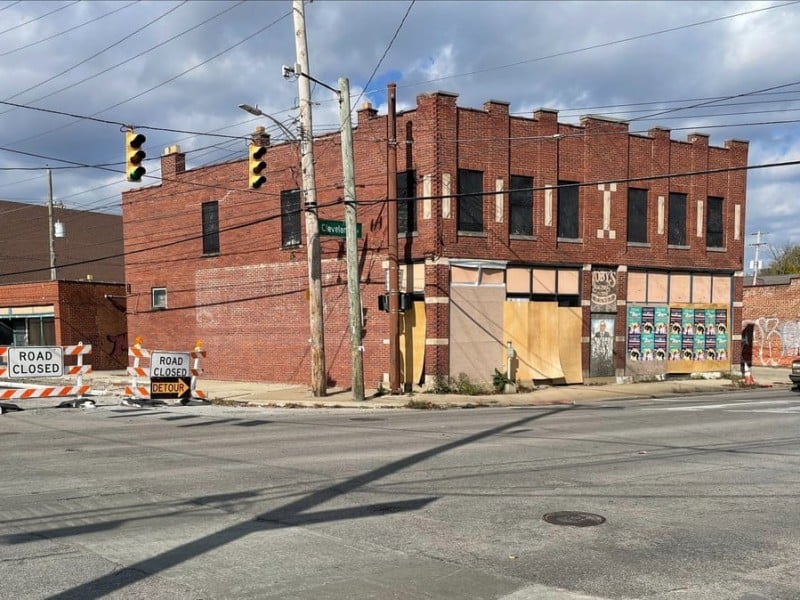
Cleveland Avenue between 11th Avenue and Weber Road has got to be one of the most depressing former-commercial urban thoroughfares in the country. It used to be a primarily commercial corridor for that entire length, but the sites of former businesses are now overwhelmingly abandoned buildings and vacant lots.
What used to be a gap-toothed streetscape became a gaping maw with a scattering of bicuspids.
For a long time, it was a slow decline from a vibrant downtown Linden with banks, movie theaters, grocers, restaurants, drug stores, and other shops. It accelerated in recent decades – including the city’s demolition a few years ago of a century-old, two-story storefront on the northwest corner of Cleveland Avenue and Hudson Street to accommodate a wider turning circle for cars.
A donation powers the future of local, independent news in Columbus.
Support Matter News
How did we as a community let this happen? How do we fix it? There are no easy answers, but plenty of contributing factors: the advent of interstate highways; flight to suburbs; racial issues; schools and busing; retail consolidation and suburban malls; and property-tax policy, to name a few.
That last factor – taxes – is less commonly cited as a cause of urban decay but is worth consideration.
It’s very easy for property owners to pay low taxes on decaying properties while waiting for somebody else to begin a resurgence. Maybe it shouldn’t be so easy to wait.
Property tax is based on two things: the value of the land and the value of any structures on the land. If you build an addition or make any other improvements, you add value and your tax assessment will increase. A cynic might say you’re being punished for making improvements. Conversely, if you raze a building on your property, or just let the building decay, your property value – and assessment – goes down. And the cynic says you’re being rewarded for creating an eyesore.
The cynic is Henry George, who 150 years ago began to push the “land-value tax” (sometimes called the “single tax”), which assessed the underlying land but not the improvements that generate profits. His 1879 book, “Progress and Poverty,” was a late 1800s best seller. Because landowners would be taxed on the full value of their land, it would be very costly to keep the property vacant. But they would have leeway to generate profits on their use of that land. And while other forms of wealth can flee across the sea to tax havens, land can’t be moved.
George’s ideas on land-value taxes resonated with a lot of people who lauded his theories – but not enough to adopt them. His socialist tendencies kept his ideas from taking root.
Today, however, his ideas have the blessing of Ohio Sen. Louis W. “Bill” Blessing III, a Republican from suburban Cincinnati.
Blessing has proposed a resolution to allow Ohio communities to adopt land-value taxation. Ohio Senate Joint Resolution 7 was introduced late in 2025. Because the resolution would amend Ohio’s constitution, it’s not a simple up-or-down vote. It needs a three-fifths majority in the Senate and the House. It’s currently in the Senate General Government Committee – the first step after introduction.
There are economists and elected officials who raise questions about the land tax, but nobody seems to be actively defending the status quo property tax, with all its unintended consequences.
A land-value tax could:
- Limit homeowners’ burdensome rise in property taxes amid skyrocketing housing prices
- Stabilize, or even increase, the tax base in communities
- Limit or end the constant flurry of levy renewals and increases for schools, zoos, children’s services and other issues on ballots
- Push owners of vacant or deteriorating properties to redevelop them rather than “flipping” them to other investors
Still, there is greater conceptual support for the land tax than political momentum. Blessing’s proposal would not be a statewide edict if it passes. Instead, it would allow communities and taxing districts to adopt it.
That is the case in Pennsylvania which, for more than a century, has allowed municipalities to adopt land-value taxation. Pittsburgh and Scranton did so in 1913. In more-recent decades, Harrisburg (1982) and Allentown (1996) have followed. The Pennsylvania model is not a single tax, but a two-rate hybrid – a modest building tax and a land-value tax that is about four times higher.
Twenty years after Harrisburg adopted the land-value tax, the number of vacant buildings plummeted from about 4,200 to fewer than 500, and the number of businesses on the tax roll more than quadrupled to 8,864. In Allentown, nearly three-fourths of homeowners saw a decline in taxes on their land, while new construction and capital improvements zoomed.
If you’re excited about a land-value tax in Ohio, don’t hold your breath. But it is nonetheless refreshing to actually hear thoughtful and progressive ideas coming out of the Ohio Statehouse.
Brian Williams is a semi-retired journalist and planner
Related Articles

On Development: More local voices needed
The city needs to find ways to support economic development and build more housing without so readily awarding tax breaks, and that means bringing in new perspectives.

Local Politics: The small-time data center resistance
A petition to ban data centers statewide won’t be going to the ballot this year. So organizers are working locally instead.

Opinion: Maybe it’s time for participatory government, Columbus-style.
Tired of politicians doing things that you disagree with? The answer might be more citizen involvement.