
‘He was going to change the world’: Friends and family remember the life of Tomás Pacheco
The Columbus writer, who died on June 16 at age 24, leaves behind a legacy that those interviewed said will endure long after his passing.
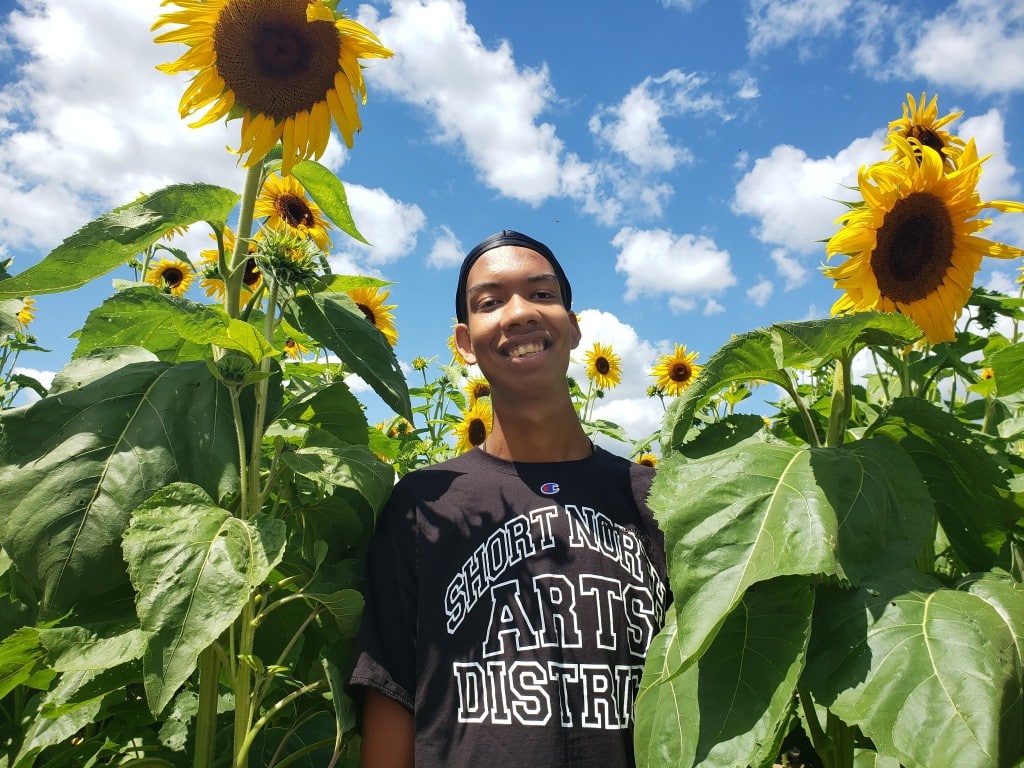
As an incoming freshman at Columbus Alternative High School (CAHS), Tomás Pacheco already stood nearly as tall as his humanities teacher, Dr. Sidney Jones Jr. Within a couple of semesters, the teenager would rocket past him, surpassing the educator in physical stature and then eventually, Jones said, in his talents with the pen.
“From the get-go, you noticed a difference not only in how he was writing, but in the things he was saying,” said Jones, who taught Pacheco in two classes in addition to leading the high school poetry slam team on which the youngster eventually served as the anchor. “He later probably gave me too much credit, because I swear to you that he was writing better than me if not that first year, then certainly by the time he graduated.”
Jones repeated these sentiments from the outdoor stage at Streetlight Guild on Sunday when he spoke to open a memorial for Pacheco, who died on June 16 at age 24.
A donation powers the future of local, independent news in Columbus.
Support Matter News
Held on what would have been Pacheco’s 25th birthday, the memorial stretched for nearly two hours, attracting a couple hundred mourners who listened as family members, friends, and former classmates took to the microphone to hail Pacheco’s gentle nature, his well-developed sense of empathy, his curiosity about the world, and the ways in which he took advantage of his limited time to carve out a legacy that those who spoke said will endure long after his passing.
“He was going to change the world,” poet, author, and Streetlight Guild founder Scott Woods said near the close of the evening, pausing briefly as he looked over the large crowd still gathered. “And one thing I’ve realized is he already has. His legacy is secure.”
Travis McClerking met Pacheco so long ago that he said it was impossible to pin down precisely when the two first crossed paths, eventually tracing it back to sometime in middle school, when the two attended rival institutions, with McClerking enrolled at Ridgeview Middle School and Pacheco taking classes at nearby Dominion Middle School. In high school, the two connected more deeply, developing a friendship as they dissected the virtues (or not) of rappers like Lil Uzi Vert, the film “Ghost Dog,” and Japanese anime cartoons. The two would also hold court more literally in frequent 1-on-1 pickup basketball games at Indianola Park, which McClerking said fell heavily in his favor in spite of Pacheco’s clear height advantage.
“And he hated to lose so much,” McClerking said. “But it was because he felt like he could master anything.”
Friend Larada Lee-Wallace said Pacheco came by this confidence naturally, describing him as a Renaissance man, of sorts, who as a high schooler performed Chopin in his final piano recital, wrote poetry, and played chess, while also serving as a member of the In the Know academic quiz team. “He just had an overall thirst for knowledge,” said Lee-Wallace, who laughed when recalling the way this self-assurance surfaced in him when the two met at CAHS. “The first thing I said to him was, ‘Damn, how tall are you?’ And then the second was, ‘Do you have a girlfriend?’ And he was like, ‘I don’t, but if I’m ever in need of one, I’ll let you know.’”
Born to Maria Miriti and Manoel Pacheco in Port Jefferson, New York on June 28, 2001, Pacheco moved to Columbus with his family at 6 months old. From a young age, Pacheco showed a natural interest in writing, with friend Mattie Barnett recalling how his mom told the story of her son asking for 10 spiral-bound notebooks on his eighth or ninth birthday. “And then he filled up every one of them,” Barnett said, “and he asked her for more.”
This desire to put pen to paper appeared to extend at least in part from Pacheco’s need to continuously process his surroundings, Barnett said, describing him as “an observer of life” whose brain remained in perpetual motion.
It’s a trait that routinely surfaced in his poetry, with Scott Woods recalling how the verses Pacheco wrote beginning in high school wrangled with the nature of whatever it was he happened to be addressing within his prose. “Every poem I can recall was a wrestling match,” Woods said. “It was wrestling with the nature of the thing, like, ‘Yes, I see this thing, but why is this thing like that?’”
Frequently, these explorations would center on the concept of home, with multiple people interviewed crediting these thematic threads to Pacheco having established connections with communities in Brazil (where he still has family), California, New York, and Chicago, in addition to Columbus. “He really emphasized community, and he made sure he built community wherever he went,” Barnett said. “And I think that comes from the things we all feel insecure about as kids, like the way we look and the way that we’re perceived, and he never wanted anybody to feel that way.”
At the memorial, one friend spoke of how Pacheco held an “almost aggressive belief in the people around him.” And in a late June phone interview, the Columbus poet, author, and cultural critic Hanif Abdurraqib said that to be around Pacheco meant at all times to feel included. “He was so invested in making sure no one around him felt excluded or left out,” Abdurraqib said. “And it felt to me like even if you did not know him, you were perhaps drawn to him. And he did it without being super loud or boisterous, but through a real warmth that permeated and put people at ease.”
Pacheco, for his part, repeatedly lauded the role of community in shaping and sustaining his practice during a 2024 Matter News interview at Upper Cup on Parsons Avenue.
“All of these spaces that were formative to me – the open mic at Kafe Kerouac, the CCS poetry slams – they all came about because there was an effort made to create a community space for Black artists in Columbus where there was none,” Pacheco said. “And my story, I feel, starts there. It’s not just the story of my life. As a writer, and someone who wants to do this work, that’s the appeal of community. You come together and you make something that can last after you’re gone.”
In a late-June Substack post, writer (and Matter News board member) Alex Lewis hailed Pacheco’s place within this larger artistic continuum, noting that even though the two were close in age, Pacheco’s pursuits had in many ways paved the way for his own. “Columbus artists like Tomás have taught me what it means to be rooted in a city and have a responsibility to the people there,” he wrote.
Multiple people interviewed said that despite his tender age, Pacheco moved with an inherent awareness of legacy, attributing this to a combination of his own chronic health struggles and the lingering effect of having lost his father, Manoel, and his older brother, Daniel, both of whom died young. “It did seem like he had an urgency that no one else felt,” McClerking said. “He had this desire to be known, but to be known for the right things, to be known for the way he saw the world. … And I do think it was informed by his health. But I think he also knew what he could provide. He just needed to know how to do it. And I would argue now that he did.”
Pacheco was imbued with a hunger for knowledge that Woods described as “voracious,” recalling the time that he was tasked with introducing a film at Wexner Center for the Arts when he heard what sounded to him like “horses coming down the hallway,” as he explained it. “And it was Tomás and his friend Travis [McClerking], and they were running to get into the theater so they could hear what I was going to say,” Woods said. “And I’ve always perceived that as his thirst for knowledge being so consuming that he didn’t want to miss any of it.”
Relayed Woods’ story later the same day, McClerking laughed, blaming the pair’s tardiness on Pacheco’s consistently loose relationship to time. “We were always late to things, but it was never my fault,” he said. “I’d be outside his house, like, ‘I’m here!’ And then he’d be on the phone, or trying to find an outfit, when he was just going to put on the same shoes he always wears.”
Those interviewed said that Pacheco flashed in high school many of the virtuous traits that would come to define him in young adulthood, though there were numerous ways he had not yet fully come into his own.
“He did not have a sense of style, he did not know how to talk to a girl, he did not know how to walk, he did not know anything,” Barnett said, and laughed, going on to recall the transformation that took place in Pacheco during his first year of college at the University of Chicago, where he majored in English Language and Literature with an emphasis on Poetry. “And when he came back to Columbus, he got his swag, you know? He got some varsity jackets and velvet durags. He started getting his hair braided. He started wearing cologne and holding his head high.”
Abdurraqib witnessed a similar growth, sharing how Pacheco spoke of being plagued by uncertainty not long after he moved to Chicago, expressing his anxieties related to the move and the expectations his teachers might have of him. “And then something happened to him after that first year where he really came out of his shell and came into his personality,” Abdurraqib said. “And his personality was so magnetic, and he was such a funny dude with such a wide range of interests.”
This growth extended into his writing, with Pacheco recalling the way the college course “Poetry and the Human” cracked open for him what the form could be. “We studied sonnets and haiku and all the different forms from around the world, and I immediately got super hooked on it. And it turned out there’s so much more to poetry than slams, and not everyone just writes three-minute poems,” said Pacheco, who quickly became a dedicated student of form, finding particular comfort in the different variations of sonnets, which McClerking attributed in part to Pacheco and the form sharing both an earnestness and a fondness for professions of love.
While Pacheco’s writing could take many shapes – he was both an essayist and a journalist – he repeatedly returned to poetry as a means to interrogate his surroundings, which Lee-Wallace attributed to the sense of comfort he felt within the form, and the way it could serve at times as a needed pressure release. “People will tell you what an empathetic person he was, and how caring he was. And the flipside of that, which people don’t talk about, is that people with a high capacity for empathy also carry a lot,” she said. “And you have to do something to channel those emotions, and I think poetry was that release for him.”
This idea resonates throughout Bloodless Movies, an unreleased collection of poems by Pacheco currently in the possession of A.D. Detrick of Fading Neon Press. Witness the poem “One Should Consider Himself as Dead,” which has taken on unforeseen connotations in light of Pacheco’s passing.
In it, he writes:
Sharpening the edge
of a raincloud. Pyramids
below the streetlights
hold still even while crying.
Waves of relief fall
from a sieve shaking around.
The shape is gone now.
Relief is gone. It is loud.
Has it finally arrived?
While there are no immediate plans to release Bloodless Movies – Detrick said he would gladly issue the collection via Fading Neon but wanted to give the family the opportunity to take it to larger publishers for consideration – those interviewed expressed certainty that it would surface at some point, allowing readers to experience firsthand Pacheco’s ample talents, which had already grown to such a level that Woods said without hesitation that the poet was “well on his way … to being one of the best writers to ever come out of this city.”
Detrick witnessed firsthand Pacheco’s eye for detail, recalling how the poet would consider each suggested edit on its own merits, which he described as a rare trait, particularly among younger writers. “Most of them will go one way or the other, right? They will take all of your feedback and completely change the poem, or they’ll throw it all out because they don’t know where to start,” he said. “But he would weigh every decision. … And as I would get the poems, I would look through the changes, and sometimes it would be as simple as one line or a single word.”
Abdurraqib recounted a similar experience in editing a trio of poems that Pacheco published in the now-defunct alt-weekly Columbus Alive in 2018, and in particular the poem “For Main & Wilson.”
“And I remember when he sent that one to me and he asked me what I thought from an editorial standpoint, and I gave him a note about the ending, where I said, ‘I think the poem actually ends here,’ but then you have all of these other lines after it,’” Abdurraqib said. “But the way he took the note wasn’t just to cut the poem off there. The way he took it was, ‘I think I can write a stronger ending than the one I have.’ And he did it. And I was so interested in the confidence he had in his abilities, which felt like something far beyond his years.”
This trait also had a way of elevating those around him. Barnett said no one in her life expressed an interest in her writing as frequently as Pacheco did, and it was normal for him to reach out to see what she was working on, and to ask if she could send him a draft. And though he started off as a mentor, Abdurraqib said that Pacheco imploded for him the idea of how that relationship could function, the dynamic coming full circle in February when Abdurraqib read new work at the Poetry Project in New York City and then made an immediate beeline to where Pacheco was seated in the front row, as eager to hear his feedback as the youngster had once been to solicit his advice via email years earlier.
“And the funny thing about that challenge is that it’s self-inflicted,” Woods said. “All of a sudden, you realize that you’re dealing with someone who is brilliant, and who cares greatly about you and what you think. And that raises the bar. And not just for your writing, but for your existence.”
Before Pacheco passed away, at one of the times he was living away from Columbus, McClerking wrote a poem dedicated to his friend in which he unpacked the sense of grief he felt in the distance then existent between the two. “I think grieving is only a reflection of how much you love someone,” he said. “And that poem was created in a moment of grief but also with intense anticipation of the love I would receive as soon as he returned.”
McClerking then recalled how he and Barnett recently traded a series of text messages in which they discussed the 1959 film “Black Orpheus,” and in particular the scene where a child calls out to his friends, urging them to lay eyes on Orpheus, whose guitar playing leads the sun to climb higher in the sky.
“And as Orpehus plays, the girl dances, and all the boys dance, and they all go off into the city dancing,” he said. “And I feel like that was us. Whenever Tomás would do something, it felt like we were watching the sun rise.”
Author
Related Articles
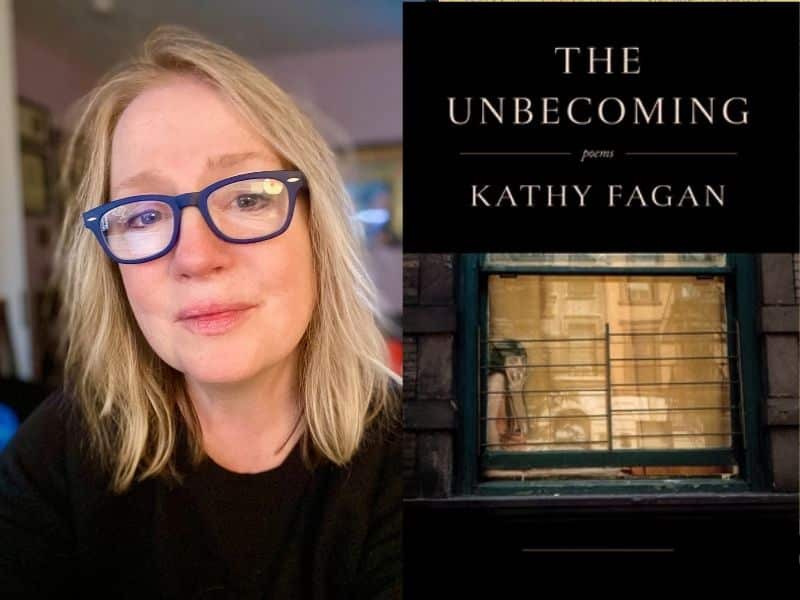
Kathy Fagan takes stock with ‘The Unbecoming’
The poet will celebrate the release of her new collection with a reading at Gramercy Books on Thursday, Sept. 24.
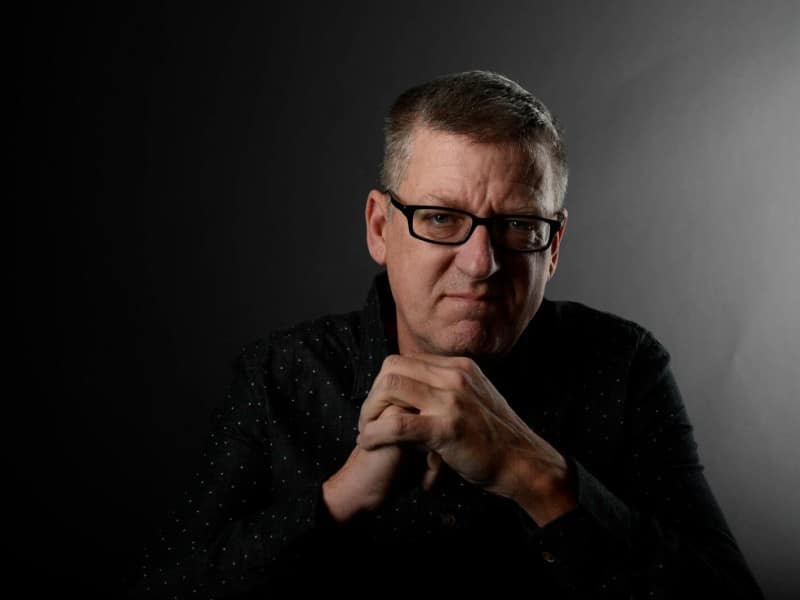
Derf Backderf delves into the past, finds lessons for the present with ‘The Dissidents’
The Cleveland cartoonist will celebrate the release of his sprawling, deeply engaging new book with an appearance at the Wexner Center for the Arts on Wednesday, Sept. 23.

Barbara Fant returns to Columbus ready to leave her mark on Thurber House
The poet and newly minted executive director of the literary nonprofit will take part in a community reception welcoming her to the role on Thursday, Sept. 17.