
Abortion Fund of Ohio takes stock of challenging post-election landscape
In Ohio, Democrats have essentially been erased from power, while the return of President-elect Donald Trump has resuscitated talk of a national abortion ban among some Republicans.
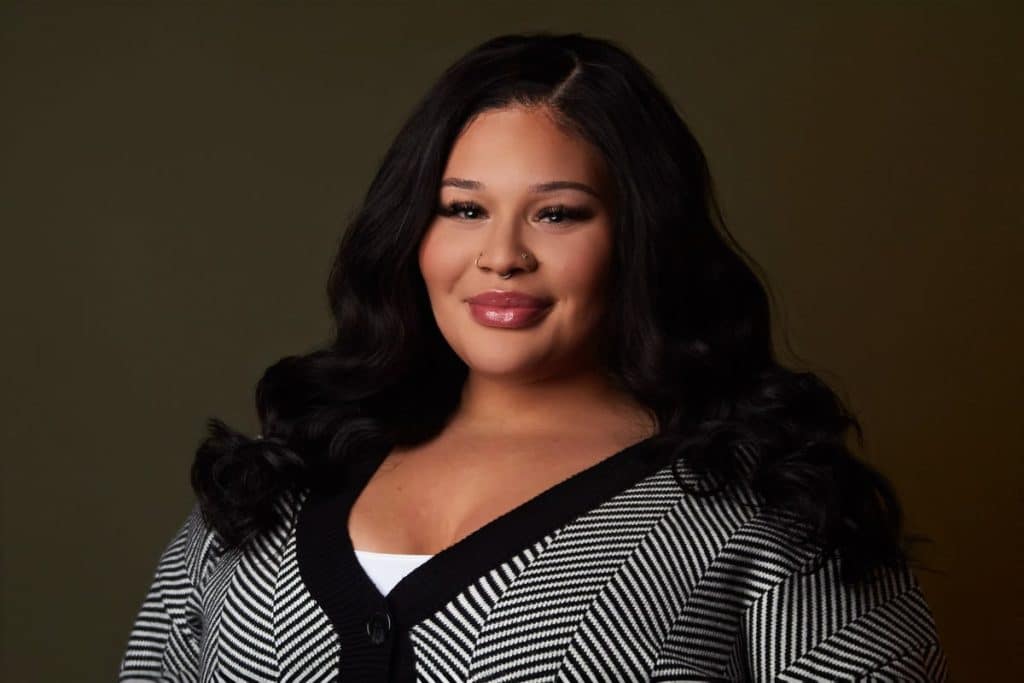
The past year has been a challenging one for Abortion Fund of Ohio (AFO), which has seen demand for its support services increase even as donations have decreased by nearly 50 percent – the slowdown attributable at least in part to Ohio voters approving a constitutional amendment in November 2023 guaranteeing the right to an abortion.
“I do think when abortions are deemed ‘good,’ the donations are less,” said AFO executive director Lexis Dotson-Dufault, who further traced the decrease to the economic reality that the majority of the abortion fund’s donors aren’t economically advantaged. “A lot of the people who support us are the same people who need our services. … It’s hard to rely on our grassroots donors, because we’re not millionaires like that, and when people are struggling with basic needs like rent, gas and food, it’s hard to throw $5 to the side. And those $1 a month, $5 a month, $100 a month [donations], those are valuable, and they are necessary for our organization. But I’m not going to act like it’s feasible for everyone, because for a lot of people it’s not.”
As a result, Dotson-Dufault said AFO has been more intentional over the last year in building relationships with institutional donors, hoping to tap into larger, more sustainable streams of revenue. The fund also paused its direct patient funding from mid-December 2023 through February 1, 2024 – a difficult but necessary decision that enabled AFO to dedicate more resources to people in Ohio who needed abortion assistance the rest of the year.
A donation powers the future of local, independent news in Columbus.
Support Matter News
“Because what is $100 to someone who has a $1,500 [abortion] cost and is telling you they don’t have money to eat?” Dotson-Dufault said. “People don’t understand the impacts of poverty. There are people who don’t have credit cards. There are people who don’t have bank accounts. There are even people who don’t have a phone to get on the internet or call and schedule an appointment with a clinic. … Abortion bans, restrictions, barriers, they’re violent crimes against poor people, against people of color, against immigrants, against young people.”
Following last week’s election, the abortion rights landscape has only gotten more challenging. This is true both within Ohio, where Democrats have essentially been erased from power, and nationwide, with the return of President-elect Donald Trump resuscitating talk of a national abortion ban among some Republicans.
Waking up the morning after the election, Dotson-Dufault said her thoughts first turned to the Ohio Supreme Court, where a 4-3 Republican edge now sits at 6-1, fueling questions about how the state’s highest court might interpret any pending legislation related to abortion. “We passed Issue 1, but we still have 30-plus restrictions in place that are up to be determined by the courts, which is scary,” said Dotson-Dufault, who also expressed concern that in light of the even more favorable court, Republicans could move to introduce new legislation meant to rollback abortion access and blunt the impact of the voter-approved constitutional amendment. “I don’t even know what they might have up their sleeves, but even them appealing the injunction for the 24-hour waiting period would be devastating to us.”
On the national level, Dotson-Dufault said that she, like most people, doesn’t have a firm understanding of how Trump might approach abortion rights in his second term. More recently, Trump has said he won’t sign a national abortion ban, but this follows earlier interviews in which he signaled support for such legislation. Meanwhile, incoming vice president JD Vance has spoken in favor of a national law limiting abortion. Vance also signed on to a GOP letter urging the Department of Justice to enforce the Comstock Act, a long-defunct 1873 law that bars the mailing of “obscene” materials used in abortions, and the revival of which would effectively amount to a nationwide abortion ban.
The Heritage Foundation’s Project 2025, for one, touts use of the Comstock Act to ban medication abortion – a method that accounts for more than 60 percent of all abortions, according to research by the Guttmacher Institute. And Jonathan Mitchell, one of Trump’s personal attorneys, told the New York Times that “we don’t need a national ban with Comstock on the books.” In addition to halting access to medication abortion, the Comstock Act could also bar medical equipment such as ultrasound machines from being shipped to abortion providers.
Beyond the revival of the Comstock Act, Project 2025 also touts expanded abortion surveillance, pushing a requirement that states monitor abortions and send sensitive data to the Centers for Disease Control and Prevention (CDC). And in the wake of the election, Dotson-Dufault said she has seen more people post online about the need to avoid using applications such as period trackers as a means of guarding against any potential surveillance. “I got online immediately after the election and saw people posting, ‘Stop tracking your periods immediately!’” she said. “Do not do that. There are apps that are safe, with solid security, and tracking your period is one of the best ways to find out about a pregnancy quickly.”
Dotson-Dufault did recommend abortion seekers take other steps to safeguard their privacy, though, deleting search engine histories and clearing caches, using apps such as Signal to message with friends or family, and tapping in with the Digital Defense Fund for more information. “Part of what we can do as abortion advocates is not give in to fear,” she said. “There are bad things that can happen, but there are ways we can protect ourselves and still access abortion care.”
While Dotson-Dufault views AFO’s mission as essentially unchanged by the election, she stressed the importance of mutual aid and of building on the community that exists outside of the world of nonprofits, “which could be impacted by the things Trump may or may not do.”
“We need to be building … with community health workers, doulas, activists and other community networks that will be in place giving us abortions no matter what,” she said. “I promise you; your neighbor has abortion pills. There are doulas out there that will give you abortion pills. And abortion funds will still be in place, giving people resources and trying our best under any [legal pressures]. That’s the thing about community: People are willing to do illegal things for the people they love, to make sure they get the care that they need. And that’s why I need to emphasize our community can and should involve nonprofits, but it also has to exist outside of them. So, yes, organize with nonprofits that are doing this work. But then also organize in your own community with others.”
Author

Related Articles
Care is a verb: Lessons in building supportive community from lifelong advocate Vince Engel
Times of uncertainty and fear can foster societies of care.

Opinion: To meet climate goals, Columbus leaders must address data centers
With the City Council presenting its draft proposal for municipal data center policy this week, residents must seize the moment to demand meaningful safeguards that will actually minimize the climate impacts of data centers.

Notes on a cross-country Amtrak
With Ohio considering expanding train access, our columnist reports on a summer spent riding the rails.