
On Development: A market on the corner – not a corner on the market
Rethinking the corner grocery store for modern day Columbus.
In recent years, Columbus planners have pushed developers to include ground-floor shops and restaurants in new apartment buildings. But the newly adopted Columbus zoning code along major bus routes and commercial/mixed-use streets takes a step away from those street-level retail goals.
They are hard to fill
OSU Campus Gateway, envisioned as a student retail mecca, has retained its wonderful film center. But offices and other Ohio State-related uses dominate the rest of the plaza. The area might as well have revolving doors to accommodate the coming and going of retailers. Maybe it’s the rent costs. Maybe students are more mobile and get their kicks and consumer goods from beyond High Street – or in cardboard cartons dropped on porches.
A donation powers the future of local, independent news in Columbus.
Support Matter News
Whatever the reason, the ground floors there and in many new buildings around the city look pretty sad: a lot of spacious street-level rental offices with fake plants and uncomfortable-looking chairs. It’s so dull that an Amazon cardboard-recycling center might liven things up.
But what we really need is a lot of corner groceries all over the city. Decades ago, of course, there were corner groceries all over Columbus. But they have mostly devolved into seedy centers of beer, wine, cigarettes and vaping paraphernalia.
There were about a dozen such neighborhood groceries in my childhood hometown. As decades wore on, all but one disappeared – and it remained a mainstay for my father until his death a few years ago. The big supermarkets were too much bother for him. But the corner market soldiered on, thanks to its butcher shop, deli counter and array of prepared meals.
It was perfect for an old guy living alone – not just for the food, but for social sustenance as a “third place” for friendly banter with butchers and clerks.
But this is not about small-town nostalgia and easy meals for retirees. Next-generation corner stores would update a timeless concept and add vitality and jobs to modern urban neighborhoods. If we reimagine the old corner grocer with heat-and-eat meals a short walk from home, it can serve not just senior citizens but young couples with busy lives and harried parents needing a quick meal.
Economically, however, it could be difficult for every little corner store to make and market its own ready-to-eat meals. Starting a food-service operation is subject to licensing and regulations, which, combined with uncertain initial demand, would pose a challenge for a modest neighborhood shop.
Existing restaurants or food truck operators, however, might see the model as an opportunity. It would make more sense – and dollars – for them to prepare (and brand) their own packaged meals for sale at many corner groceries. It could result in vibrant stores and new food-related jobs in neighborhoods.
Japan has already figured it out. Cheap, healthful, ready-made meals – morning, noon and night – are available at 7-Eleven, Lawson and every other convenience store across the Tokyo megalopolis. Modern versions of traditional “bento” boxes.
The practice even has an Ohio connection. Lawson’s Dairy franchises were once ubiquitous in Ohio after a humble beginning in Cuyahoga Falls in 1939. But the company’s brand served as a plaything through several corporate transitions and then disappeared – except in Japan, where it is the country’s third-largest convenience-store chain with 1,400 Tokyo-area stores. (In Japan, the name is simply “Lawson.”)
Japan shows that quick meals can be plentiful in franchise markets in virtually any neighborhood. The meals are part of the stores’ brands, and the chains make deliveries to stores three times a day.
The Japanese model has a cornucopia of products for consumers. But, ideally, a Columbus corner-store model could provide opportunities for neighborhoods. Stores could be independently owned rather than franchises or part of a chain. Meals might be prepared by local businesses – with a supply chain of food and ingredients sourced from Central Ohio farms.
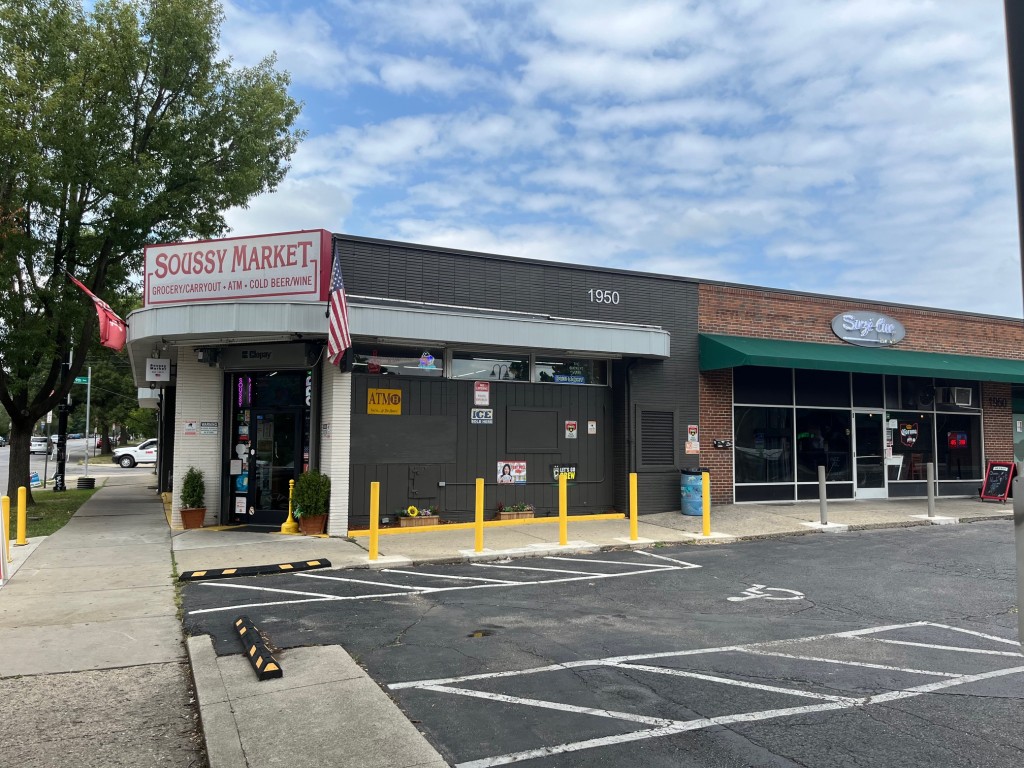
Soussy Market, located on Fourth Street at 19th Avenue, might already be the most comprehensive corner store in the area. It offers beer and cigarettes, yes. But the store also offers fresh produce, kitty litter, pet food, cleaning supplies, toiletries, baking needs, canned goods, lunch meats, frozen foods, paper towels, toilet paper, noodles, rice, condiments, duct tape, needles and thread, skillets, and ping-pong balls.
And it’s all stacked high in narrow aisles like a good Brooklyn bodega.
If anybody can make room for heat-and-eat meals, it’s those guys.
Who knows? Maybe vibrant, thriving corner groceries might liven up the neighborhoods and get more residents out and about – and in time get some businesses into those vacant storefronts.
Brian Williams is a consultant and freelance writer. A former Columbus Dispatch reporter, he is retired from the Mid-Ohio Regional Planning Commission.
Related Articles
The Coming Out Party for the Country’s Largest Gas Power Plant (Serving the Largest Data Center) Was Surprisingly Quiet
A developer hosted the first open house for a gigantic Ohio project, with no signs of organized resistance.
On Development: The cloud is still made of concrete
The ongoing data center construction boom has our columnist asking himself some questions.
Opinion: To meet climate goals, Columbus leaders must address data centers
With the City Council presenting its draft proposal for municipal data center policy this week, residents must seize the moment to demand meaningful safeguards that will actually minimize the climate impacts of data centers.