
Foster youths aim to break the cycle
Adam Hassan will join other current and former foster youths this week in a Statehouse Advocacy Day aimed at pushing for legislation such as the Foster-to-College Scholarship Act, which would create a higher education scholarship fund to cover existing tuition gaps.
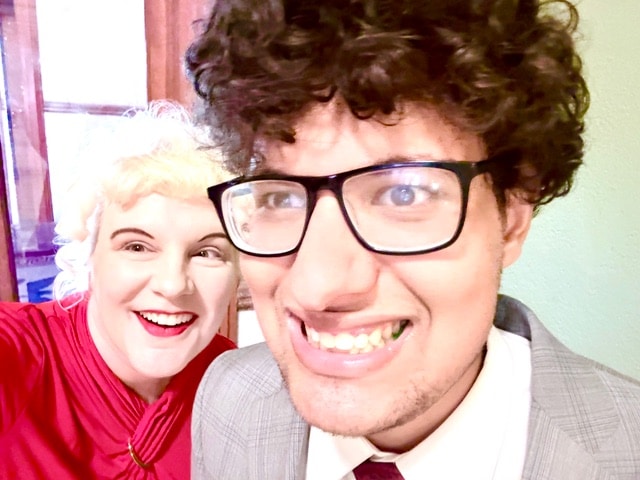
Adam Hassan wore out the soles of his shoes walking countless miles to and from classes at Columbus State Community College over the last couple of years.
“I used to walk around five miles to Columbus State, and then five miles back,” said Hassan, 20, who finally saved up enough to purchase a 2016 Nissan Altima two months ago. “And I did this four days a week, sometimes five. And if I had class at 9 a.m., I had to be up at 6:30 so I could get ready and begin walking. And sometimes my classes would end at 9 p.m., and I’d have to walk back home at night through downtown Columbus.”
Hassan, who grew up in the foster care system, said his daily treks were done out of necessity, dictated by a strict budget that left him with little financial flexibility. Most months, his food budget would be capped at $250, and he said he hasn’t gone shopping for new clothes the entire time he’s been in college, directing most of the money he earned working at Kroger to cover rent on his apartment and those education-related costs that fell outside of the grants he received, in addition to saving slowly for a car. Living under these restrictions, even modest unexpected bills could send him reeling, such as the time his financial aid didn’t cover one of the college courses required of his business major, forcing him to pay out of pocket.
A donation powers the future of local, independent news in Columbus.
Support Matter News
“And that set me back quite a while,” said Hassan, who will take part in a Statehouse Advocacy Day organized by ACTION Ohio (Alumni of Care Together Improving Outcomes Now) on Thursday, May 15, during which current and former foster youths will lobby lawmakers in support of a number of foster-centered causes. These include the proposed Foster-to-College Scholarship Act, which would create a scholarship fund to cover tuition, fees, and other education expenses not covered by existing federal or state financial aid. The program would be available to any Ohioan who was in foster care beyond age 13.
This legislation would serve as welcome relief to someone like Hassan, whose financial challenges are magnified by those gaps that exist between current available loans and the actual costs associated with attending college. “When I think about what it may do for me, where I don’t have to worry about tuition, I can spend more time studying, I can better afford transportation,” he said. “A lot of people in my situation, they have to take gaps, and they may wait a year or two to [save up and] cover the costs [of higher education]. But once that snowball starts, a lot of people never come back to it.”
People in the foster care system currently struggle with educational outcomes. According to the National Foster Youth Institute, roughly 50 percent of the children in foster care will graduate high school, with only 3-4 percent going on to on to receive a four-year college degree. In Ohio, these issues are intensified by the structure of the foster care system, said ACTION Ohio communications chair Lisa Dickson, who described the current state-run, county-administered system as “fractured.”
“If you’re the state and you want to get the county to do something, you need to have the carrot or the stick, and you either have to bribe the county to do it, or you have to threaten to take away money if they don’t,” Dickson said. “And so, with child welfare, we have 88 inconsistencies between counties and the state, and the way Montgomery County handles foster care is different from how Hamilton County does foster care, which is different from how Franklin County does foster care. It’s not a safety net we’re offering our youth; it’s a patchwork quilt.”
While not a cure-all, the Foster-to-College Scholarship Act could ease the burden on those who do pursue technical or four-year degrees, with Dickson pointing to various gaps unique to those who have emerged from the foster care system. If a student is housed in a college dorm, for instance, they might not have anywhere to sleep when the school closes over the holidays. And if they rent an apartment, they might not have an available cosigner after aging out of foster care, leaving them vulnerable to unscrupulous landlords. Dickson recalled one former foster youth whose landlord leased to them absent a cosigner but then refused to make any repairs to the property.
“So, you’re not going to get a really great place, right?” said Dickson, who also pointed to areas such as transportation and groceries as areas in which former foster youths most pressingly feel these financial strains. “And Adam Hassan has experienced that himself, where he’s gone without food, where he walked miles to get anywhere, walked holes in his shoes. In addition, he’s also worked with other former fosters and seen how $500 here, $250 there, while not a lot of money in the grand scheme of things, can have a huge impact on college retention. We don’t have to have a 3 percent college rate. We just don’t have the support.”
Hassan said the money he put toward tuition exacerbated the challenges he had in locating both stable housing (he now lives of Joyce Road in Linden) and reliable transportation. With more financial aid available to cover existing gaps, both could have been settled issues much earlier in his college career.
“The challenges we face – housing, transportation, clothing and food shortages – these things accumulate on you like a big pile of rocks,” said Hassan, who hopes to impress on state legislators in his meetings this week that a small investment into former foster care youth can have a massive benefit. “Oftentimes, they’ll look at individual cases and be like, ‘Oh, is it worth it to invest state money, taxpayer money? Is it worth it to invest time, people, resources?’ And what I want to remind them is, hey, we’re trying to help former foster youth develop, get them into higher education, and get them better job opportunities so that they can really progress in life. What we’re trying to do here is break the cycle.”
Author

Related Articles

The age of Damon Zex
Remembrances flow for the video provocateur and free speech champion, who passed away June 21, and for the Columbus DIY scene from which he emerged.
On Development: More local voices needed
The city needs to find ways to support economic development and build more housing without so readily awarding tax breaks, and that means bringing in new perspectives.
Need healthcare, will travel: Mobile clinics provide free dental, vision and medical care
After journeying 376 miles by bus and train to Michigan to have a painful tooth filled, the author offers advice for those planning to travel to Cincinnati for the next Remote Area Medical pop-up clinic on Saturday, July 11.