
Enormity, intimacy of AIDS Memorial Quilt both resonate at Beeler Gallery
‘Stitching Community: Selections from the AIDS Memorial Quilt,’ an exhibition brainstormed by CCAD student Rachael Morbitzer, opens on Thursday, Nov. 19.
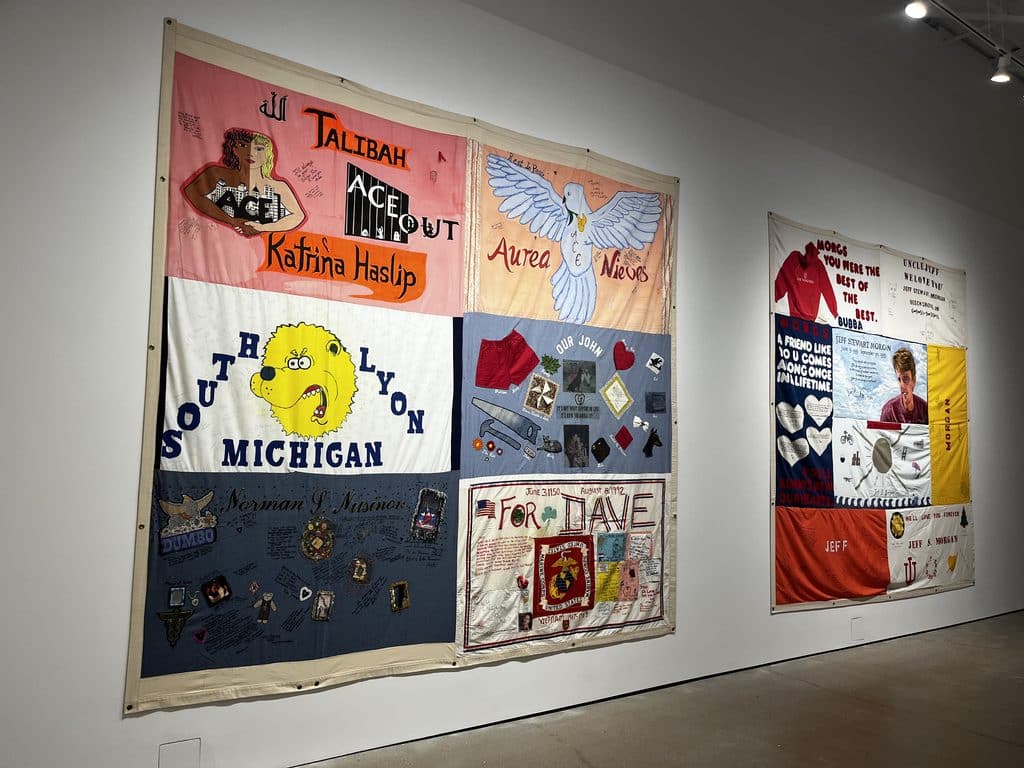
The process of bringing 20 blocks from the AIDS Memorial Quilt to the Beeler Gallery at CCAD began inauspiciously more than three years ago when graphic design major Rachael Morbitzer enrolled in an online art history class during her freshman year.
“And our final project in the course was to write a research paper on a work of public art. And we were given a list to choose from, and … I saw the AIDS Memorial Quilt and was like, oh, this is interesting,” Morbitzer said in mid-November at Beeler Gallery, where “Stitching Community: Selections from the AIDS Memorial Quilt” opens on Thursday, Nov. 19.
Morbitzer traced her initial interest to having grown up within the German Village LGBTQ+ community, along with the influence of her gay uncles Tommy Morbitzer and Goil Amornvivat, who cofounded the NYC design studio AMMOR Architecture and have been instrumental in fostering the CCAD junior’s pursuit of art. “Growing up so much in that community,” she said, “I wanted to do something that supported it, as well.”
A donation powers the future of local, independent news in Columbus.
Support Matter News
In grading her paper, Morbitzer said that Professor Joanna Kesten included a note that read something to the effect of “you should see if you can bring the AIDS Memorial Quilt to Columbus.” A series of meetings followed, Morbitzer communing with Kesten and then later Beeler Faculty Director of Galleries Tim Reitenbach, who not only embraced the idea but pressed Morbitzer to expand upon it. “Originally I proposed doing 10 [blocks], and he was like, ‘Let’s do 20,’” she said.
After receiving confirmation from Beeler, Morbitzer placed her request via the National AIDS Memorial Quilt website, which allows hosts to select specific panels from the still-growing quilt, the scale of which is evident in archival photos depicting it stretched across the National Mall in Washington D.C. in 1987 and again in 1996.
Both the magnitude and the intimacy of the quilts struck me immediately upon setting foot in Beeler Gallery earlier this week, each 12-foot by 12-foot block consisting of a series of eight 3-foot by 6-foot panels memorializing someone who died of AIDS.
“Each individual panel on the block is meant to be the size of a burial plot, so it’s almost like you’re walking into a graveyard,” Morbitzer said. “But instead of a headstone, it’s something that celebrates the life that the person lived.”
So, while it’s true that the emotional impact of standing before these quilts can be overwhelming – a panel stitched with the words “Goodbye Dad” hit like a punch to the gut – there also exists within the space a sense of joy and a celebration of lives spent well-loved. Panels include personal tributes from family members, sewn patches denoting hobbies or passions, and references to nicknames and in-jokes that help to restore the humanity of people who were often stripped of this by society, particularly in the early days of the AIDS crisis.
“This one, Jeff Stewart Morgan, you can [read the panels and] see he was someone’s uncle, someone’s son, someone’s Bubba,” Morbitzer said. “And then you have his portrait, and it really puts a face to this. It’s not some boogeyman disease. … I think this helped to dismantle that stigma and show these were just regular people.”
Morbitzer was part of a four- or five-person crew who wore gallerist gloves to unpack the quilts, which arrived packed four to a box. The mood, she said, was somber, the small crew working in relative silence, fully aware of the weight carried by the artifacts. “It’s like reopening someone’s death, because you’re looking at a memorial that you assume someone made not long after the person passed away,” she said.
In selecting the blocks, Morbitzer leaned into those panels that celebrated people who made their career in the arts, with musicians, painters, theater performers, fashion designers, and filmmakers represented. “I wanted to pick some panels that related to majors on campus,” she said.
While many of the panels are vibrant – tropical birds feature on a couple and rainbow hues abound – there exists within every block a stark reminder of what has been lost. The birth and death dates listed on many panels rarely extend beyond 40 years, and several panels bear direct witness to a person’s final days.
Witness one shattering contribution that features black letters sewn onto a white backdrop, and which reads: “My name is Duane Kearns Puryear. I was born on December 20, 1964. I was diagnosed with AIDS on September 7, 1987 at 4:45 PM. I was 22 years old. Sometimes it makes me very sad. I made this panel myself. If you are reading it I am dead.”
Still other panels are embedded with political statements meant to call attention to the silence with which then-President Ronald Reagan treated the epidemic, with a pin on one advocating people to “Vote for Jackson in ‘88/Vote for action on AIDS.”
In that way, Morbitzer acknowledged that the exhibition could have renewed relevancy in this era, arriving at a point when those tasked with that nation’s health have cast doubt on the work of scientists, leading to sharp spikes in diseases such as measles, which came close to regional elimination in America thanks to the vaccines on which current Secretary of Health and Human Services Robert Kennedy has long cast skepticism.
“People quit vaccinating their children for measles, and now people are dying,” said Morbitzer, who in the quilt also sees a call to attention. “Death and tragedy happen when you ignore science, when you ignore treatments, and when you push people aside and think you don’t have to do anything.”
Author
Related Articles
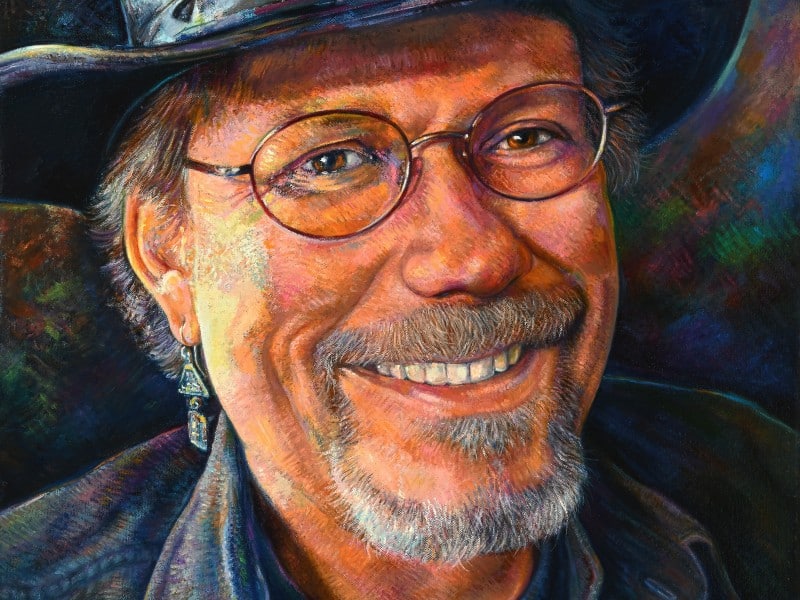
Suzanne Shea Gallagher uncovers resilience within ‘Smile Lines’
The Columbus artist is holding a fundraiser for her ongoing project centered on U.S. military members at the Hey Hey Bar and Grill from 3-7 p.m. on Saturday, Nov. 14.
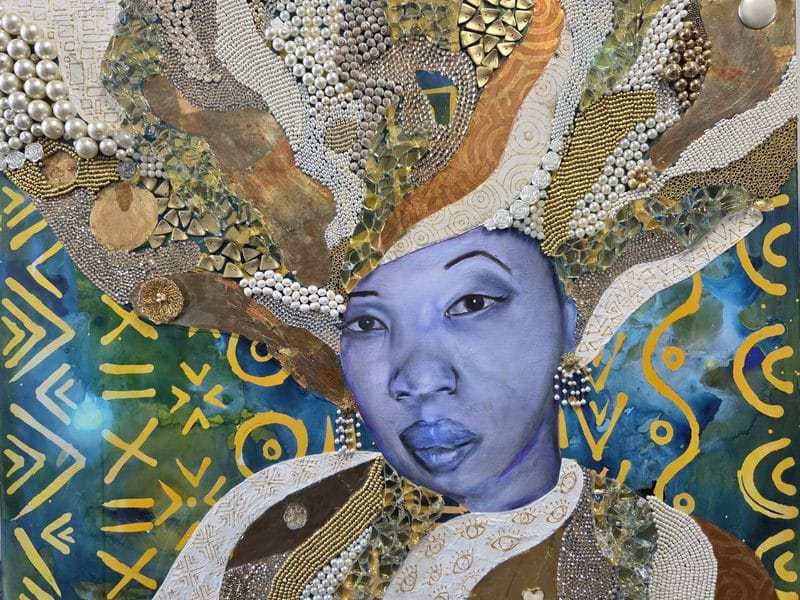
April Sunami is learning to take up space
The Columbus artist will be on hand when her new exhibition, ‘Living Mythologies,’ opens at Lindsay Gallery tonight (Friday, Nov. 6).
Community takes center stage in Shelbi Toone’s ‘A Village Folk Artist’
The Columbus artist will celebrate the long-delayed opening of her new, career-spanning solo exhibition beginning with a reception from 6-8 p.m. on Thursday, Nov. 5.