
Jeff Hazelden presents different views of adulthood
For his new book, ‘these are adults,’ the Columbus photographer surveyed six locals on what it means to grow up, embracing the project as ‘a celebration of the different ways we navigate life.’
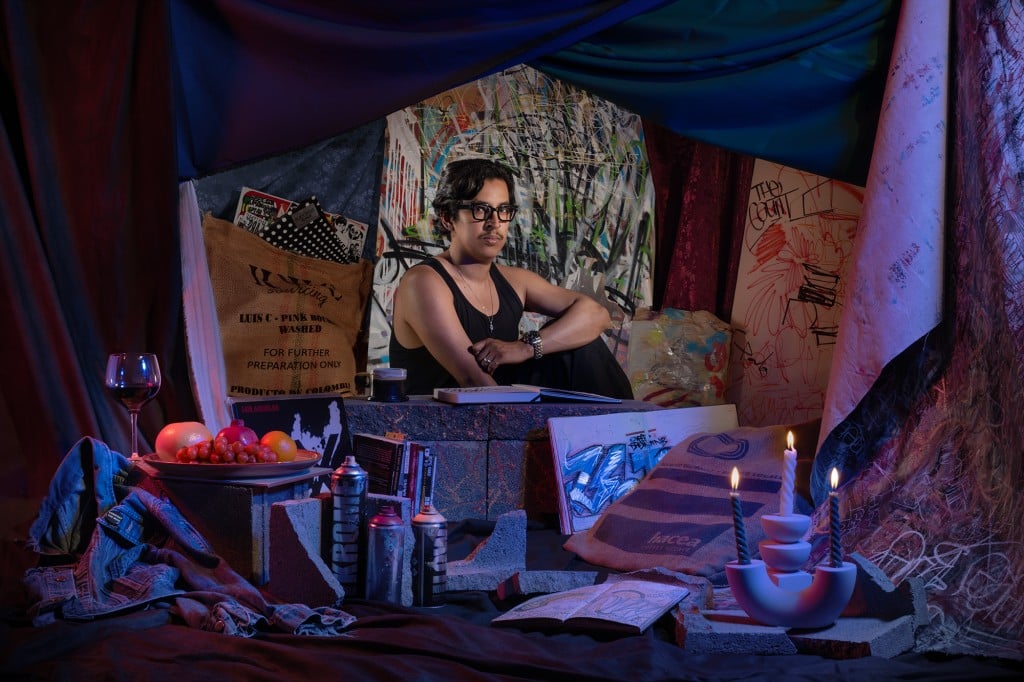
For his new book, these are adults, photographer Jeff Hazelden surveyed six Columbus residents on the meaning of adulthood, asking each to respond to a series of prompts, including how they’ve come to define success, what life milestones they have and haven’t reached, and how the city specifically has shaped this journey. Hazelden then took portraits of each person seated next to objects they chose to represent themselves, compiling all of this material in a book that he plans to distribute free at select locations around the city beginning with Palomino today (Friday, Sept. 4), with details about this and future drops available both on the artist’s official website and at Instagram.
“I think this book is more of a celebration of the different ways we navigate life,” said Hazelden, whose subjects include experimental filmmaker Mike Olenick, Palomino cofounder Marco Colmenares Aguilar, West Kyle of Bikes for All People, artist Cat Mailloux, bicycle mechanic Addison Lutz, and Thriving Beyond Breast Cancer founder Bess Hagans. “And while most, if not all, of the subjects speak to challenges and adversity, they’re also offering points of optimism, and they’re highlighting how they’re navigating and making do with what they have and the resources that are available.”
This pull toward hope is relatively new to Hazelden’s work, with the photographer describing earlier projects as “more abrasive or designed to make audiences uncomfortable,” much of it exploring the various power dynamics at play in American society. While working toward his M.F.A. at Ohio State University, for one, Hazelden delved into surveillance technologies, attempting to reckon with the ways it could change human behavior, as well as the shrug with which its spread tended to be met, especially in those years.
A donation powers the future of local, independent news in Columbus.
Support Matter News
“The famous line is, ‘I don’t care, I’ve got nothing to hide,’ but I think if you dig into the psychology behind that, it gets frightening,” Hazelden said. “And so, making work that highlighted that uncomfortable experience of being made visible was a big part of my practice for several years.”
Following graduation, the photographer moved to Washington, D.C., which he said one professor aptly described as “the belly of the beast,” his artistic practice evolving as he began to more heavily research American foreign policy, imperialism, and cultural hegemony, his images exploring the divide between the global violence perpetrated by the United States and the remove at which our populace lives from its most horrifying impacts.
With these are adults, Hazelden shifted into domestic spaces while separating from these cruelties, intent on surveying “the challenges and maybe differences we experience versus what we’re told we experience,” as he explained it.
“And that goes into those traditional notions of go to college, get married, have kids, commit to your career – these lifelong choices that are taking people longer to commit to, if we do at all,” Hazelden said. “And a lot of times, or at least with the six people that are in this book, they will disregard some of those in favor of something else. It’s kind of looking at another possibility of leading a fulfilling life without sticking to those traditional milestones.”
Aguilar, for instance, writes how his priorities “weren’t right 10 years back,” recalling how he then believed success to hinge on accruing wealth and maybe driving a nice car. Now, he writes, it is more deeply rooted in being a part of something and having ownership in “what you do, how you do it, and why you do it.”
Similar revelations surface in Hagans’ essay, the nonprofit founder writing that these traditional milestones aren’t necessarily wrong but rather incomplete. “Real adulthood isn’t about checking boxes; it’s about choosing a life of purpose, over and over again, especially when it doesn’t follow the sequence you were promised,” she writes.
Hazelden said the book isn’t meant to be prescriptive, and he didn’t set out to define adulthood for everyone but rather explore how “the sequence of milestones we’re handed was never universal,” as he wrote in a follow-up email.
“It’s recognizing that we all go through the same points in our lives but it looks different for all of us,” said the photographer, who, had he filled out his own survey, would have addressed the life-changing impact of becoming father to two children – a development that helped to draw out the harder kernel of optimism in his artistic practice surfaced within these are adults. “Having kids definitely helps shift perspective quite dramatically. … And I think, yeah, a lot of what I do as an artist and an educator is grounded in social purpose and is grounded in using the camera … to have these conversations that may be challenging, because I do want to make work that maybe can guide [my kids] to have a better awareness of the people around them and of the world around them.”
Author
Related Articles
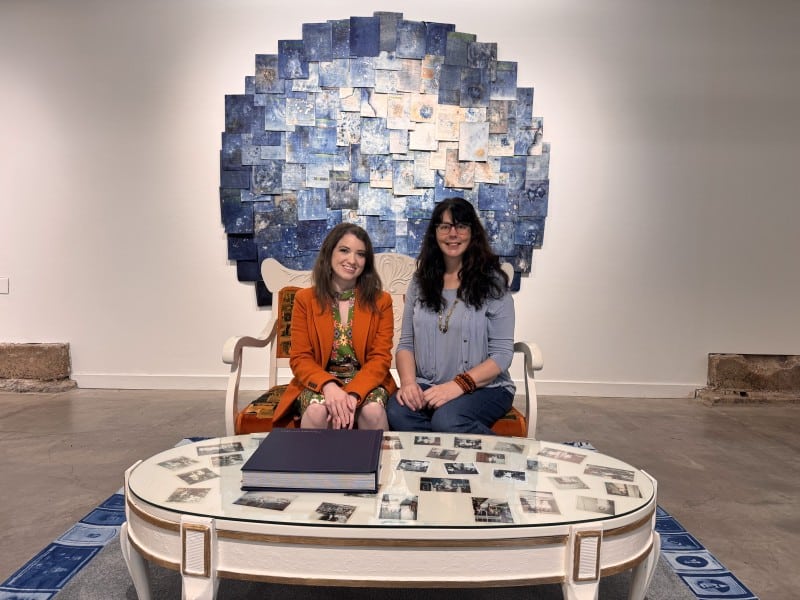
New Urban Arts Space exhibition opens up a conversation about death
‘Spirit & Dust,’ co-curated by Diane Callahan and Michelle Burdine, explores grief, loss, and the weight of mortality from a wealth of perspectives.
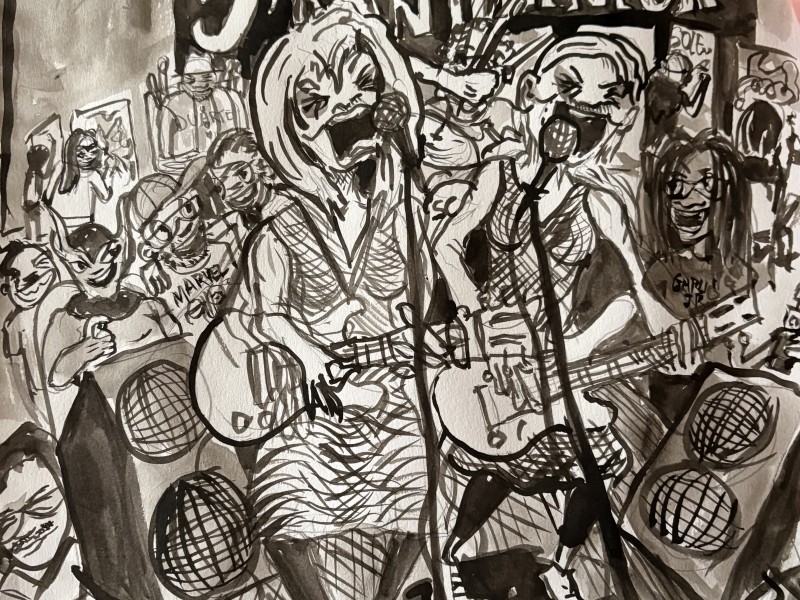
Scrawl meets Scrawl
Marcy Mays and Sue Harshe recently joined pioneering Urban Scrawl artist Dan Gerdeman for a conversation ahead of the band’s performance at the Franklinton art event that has been a longtime source of confusion for some of their fans.
‘Immigration: A Journey of Belonging’ seeks deeper understanding
The new group exhibition, open now at the Losinski Gallery at the Main Library, will host a reception from 2-4 p.m. on Saturday, Oct. 3.