
Andrew Marczak gets a fresh start with Orillia
The musician emerged from the end of a toxic relationship with an altered view of the creative process and a new solo record, which he’ll play in support of at Rambling House on Wednesday, Jan. 29.
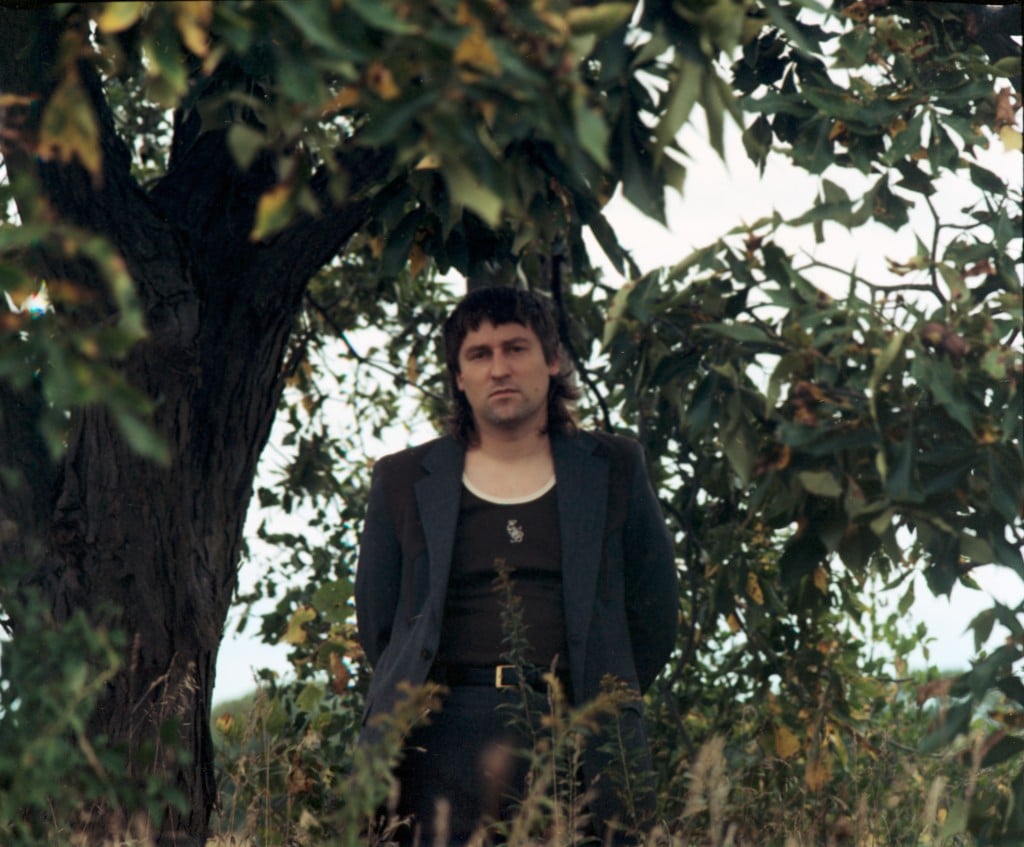
Andrew Marczak’s decision to record a solo album came about a couple of years ago during an intense period of personal transformation. At the time, the musician had just started to regain his footing coming out of a toxic six-year relationship that he said left lingering damage to his sense of self-worth.
“I slept on a twin mattress on my floor for way longer than I needed to [after the breakup]. It was almost like I was punishing myself, like, ‘I don’t know if I deserve a bed right now,’” Marczak said from his parents’ home in Pittsburgh, where the Chicagoan stopped in the midst of his current solo tour as Orillia. (The tour visits Rambling House on Wednesday, Jan. 29, joined by villagerrr and Left Out.) “Now I’m back in a king bed with a frame, which is great. But it definitely took some time for me to figure out who I was and to not see myself as the bad person I was made to feel by my ex.”
While still in the midst of these more-shattered months, Marczak took a trip a hiking trip with friends out west – a setting historically linked with the concept of fresh starts – coming upon the town of Miles City, Montana, which left an impression on the musician that continued to resonate far beyond the relatively limited time he spent there. On the stop, Marczak ate a quick, forgettable lunch at Taco John’s and walked parts of the depressed town, which included what he described as “a strange, reservoir swimming area.”
A donation powers the future of local, independent news in Columbus.
Support Matter News
A year later, the bruised emotions surfaced as Marczak toured Miles City reemerged in “Things,” a lovingly weathered country ballad he wrote in a few minutes, and which in many ways serves as the emotional backbone of the self-titled debut record from Orillia, released in November. “I caught a train to Miles City/And it’s rolling, lifeless hills,” he sings. “An emblem of contrition/Years of Dionysian thrills.”
“I’m a big fan of the landscape out west. There’s just something about the lonesome nature of those spaces that really lends itself to the imagination,” Marczak said. “There was just something about that [trip] that hit me all at once, where I was imagining perhaps myself being there as a way to escape this relationship that I felt stuck in. … I mean, it’s multiple things, but I was clearly writing from the perspective of this character who is trying to get away from something.”
For years leading up to the release of Orillia, Marczak shied from creating on his own, preferring to work alongside collaborators in bands such as Roof Dogs and Toadvine, which he traced to nagging, long-harbored self-doubts. “I’ve always played with other people, and my first experience in bands came [alongside] several other songwriters,” Marczak said. “So, the idea of being able to put together a whole record of my own music seemed really hard. There was also the reality that I didn’t trust my own vision, and that I was worried I wouldn’t have anybody there to guide me if I made the wrong aesthetic decision or something like that. And now I’ve come to a point where I’m okay making those decisions.”
The musician was helped along in the process by a couple of creative pivots that provided a needed shake up to his usual songwriting process. First and foremost, Marczak said, he abandoned the idea that a song had to be pulled from the ether and left untouched.
“I read Neil Young’s autobiography maybe six or seven years ago when I was living in Ohio, and he was always talking about this idea of scaring away the muses if you thought about them too much, and that’s something I took maybe too close to heart,” said Marczak, who used to discard songs if he could detect his fingerprints at any point in the process. “Originally, I wanted everything to come out in one sitting, where … you’re vomiting out this perfect song, essentially. But that’s not the way it always happens, and I think through talking with peers of mine and other songwriters who are more methodical in their approach than I am, I’ve learned I can take more time to write and rewrite parts.”
In addition, Marczak benefited from a songwriting exercise that he initially introduced as a means of generating a little extra income, inviting people to purchase original songs centered loosely on a concept of their choosing. (One patron, for instance, requested a song be written about “a girl with potential who is too afraid to reach it.”) Along with reinforcing the idea that inspiration wasn’t necessarily this sacred ideal, the practice allowed the musician to focus his attentions on something other than the damage wrought by his previous relationship, drawing out different shades in the songwriting and allowing his confidence to grow. Of the dozen or so songs that Marczak wrote in this manner, two made the Orillia album: “Pontoon Boat” and the high and lonesome “Cannery Row,” while a third could appear on the next record.
Moving forward, Marczak said he can see Orillia working in concert with Toadvine, with certain songs resurfacing in comparatively full-throated form courtesy the larger band format. “There are a couple of songs from this Orillia record that we’re recording with Toadvine that will have bigger instrumentation and be more rock and roll,” he said. “I do like the idea of re-exploring songs and doing more covers with this project, because I really do like … that old, country approach where you really see the flow of inspiration in the music, and you can see who has covered this song and how many different versions exist. … There’s also a part of me that is never satisfied with how a track ends up being recorded, or even if I am, it’s nice to be like, ‘I’m not done with this song yet. There are still sides of it left that I could explore.’”
Author

Related Articles
Chlorine’s Joseph Mangum lets his memories bleed through the page
The Kentucky band joins a stacked lineup at Rambling House on Thursday, Oct. 15, performing alongside the Dolphins, Son of Dribble, and Calico Boy.
Villagerrr’s Mark Scott would gladly hop off the industry ‘Carousel’
“I was getting a little frustrated with feeling responsible for promoting the album, because putting yourself out there, it’s not the most comfortable thing for a lot of people, and it definitely wasn’t for me.”
Liteweight Champion survives the fire
The Columbus rock band will celebrate the release of new album ‘Geronimo Hardstyle’ in concert at Dick’s Den on Friday, Oct. 9.