
Matthew Erman explores cults, small town ennui in ‘Loving, Ohio’
The Columbus comics writer will celebrate the release of his supernatural new graphic novel with an appearance at Prologue Bookshop on Saturday, Aug. 3.
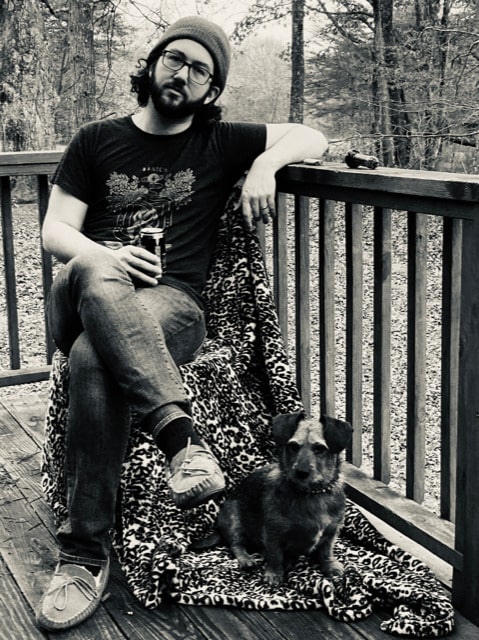
Matthew Erman wrote the first five pages of what would eventually become Loving, Ohio as a standalone around 2018. At the time, there was no artist attached. And he initially didn’t view the short as the introduction to a larger narrative.
“I just remember sitting down and the whole scene came out through the part where the Man in the Afternoon says, ‘Welcome to Loving,’” Erman said in late July from his home in Columbus. “And I remember being proud of the way it was scripted, and the way the language felt, and the way it was insinuating certain things. It was all very ephemeral and dreamlike.”
But over the years, something about the scene continued to draw Erman back, and he eventually embraced it as a way to usher in aspects of his own story, and in particular the years he spent growing up in a cult in Kettering, Ohio.
A donation powers the future of local, independent news in Columbus.
Support Matter News
And yet, for a time Erman resisted the idea. As a fiction writer with a strong interest in horror and the supernatural, he blanched at exploring these more biographical details. But once he stumbled upon a title, he couldn’t escape the reality that his unique upbringing could help to drive and shape the narrative.
“When that title came, that’s when I realized this story needed to be about Ohio, and it needed to be about my love/hate relationship with this place. … And I felt like my experiences growing up in this boring, shitty cult would help color the story in a way where I could push it more into that [horror] genre,” said Erman, who will celebrate the release of Loving, Ohio (Dark Horse Comics) with an appearance at Prologue Bookshop on Saturday, Aug. 3. “As a writer, I tend to balk at the idea of mythologizing myself in any way. … But I started pulling from things I experienced and knew about, and then I kind of branched into learning more about the history of Ohio and the history of cults and also learning more about the cult I was in. As a kid, you’re given this surface-level [information]. But as an adult, I was better able to contextualize growing up within a system of beliefs that doesn’t make sense in this modern world.”
Working in collaboration with Sam Beck, a comic book artist based in Toronto, Canada, Erman embraces the landscape of Loving, Ohio to explore ideas of what it means to grow up in a place you can’t wait to escape, the alternately tight and tenuous sway religion can hold over people, and even the ways our economic system fuels the destruction of small towns, leaving hollowed-out husks of Main Streets that dot the Midwest and elsewhere. The book is both a coming-of-age story and a horror tale, focused on four kids in their senior year of high school who are looking to break free of their small town before it has a chance to swallow them whole. And these fears are generally well-founded; for a while now, kids living in Loving have been going missing under mysterious circumstances. And there’s a shadowy religious group, Chorus Temple, that has taken root in town.
While the disappearances carry a more supernatural air on the page, Erman initially embraced them as a means to explore the way cults can subsume people, making them ghosts to those who knew them prior, and also the reality that many young people leave small town Ohio in the rearview mirror as soon as they’re able.
“I was raised in Kettering, Ohio, and I was very happy to leave,” Erman said. “And sometimes I think that feeling is uniquely Midwest: The idea that there’s much more elsewhere. Whether it’s more people that are like you, or whether it’s more culture or community or opportunity, it seems like the Midwest is often defined by a lack of those things, especially in that larger cultural conversation. … So often the Midwest is mythologized as this place where nobody belongs. You’re supposed to leave. You’re supposed to get out. And so much of that, to me, is the disappearing.”
While Erman worked to build narrative distance between his experiences and the tale that unfolds in Loving, there are aspects drawn directly from his life, including some of the language deployed by the book’s central villain, which the writer pulled almost verbatim from the preachings he heard as a child – including talk of astral projection, cities constructed on Venus, and the potential to live within different planes of reality.
Erman first began to question the cult teachings in the years leading into high school, fueled in part by his dad’s rift with the group, which had its roots in various legal disputes. “And when he saw that, he kind of pulled away a little, and that opened up a path for me to examine my relationship to it,” said Erman, who was further struck by the reality that other people prayed to long-dead deities while he and his kin pined for the protection “of some random guy basically named Steve.” “I couldn’t reconcile that the guy we were praying to was still kicking around, buying groceries somewhere. And it didn’t make sense as a teenager, and it certainly doesn’t make sense as an adult. And it really pushed me to be super skeptical of organized religion and these sorts of ritual bonding groups. Nine times out of 10, people are going to come out of that [cult] experience and be like, ‘That was kind of dumb.’ And that’s how it was for me at the end of it. It was boring and dumb and all kind of half-assed.”
For Erman, getting out meant venturing roughly 75 miles east to Columbus – “I think 17-year-old Matt would have wanted get further away than Columbus, Ohio, but I’m very happy here,” he said, and laughed – and placing needed physical distance between himself and a cult that he’s careful not to name, owing to its litigious nature.
While the word “cult” often carries a weighty connotation, calling to mind the likes of the Manson family and apocalyptic groups such as the Branch Davidians, Erman was more struck more by the mundanity of the world in which he was raised. “People have this idea that it’s all sex cults and murder cults where they’re going to drink the Kool-Aid and there are all of these overblown conspiracies about people getting branded,” he said. “But sometimes it’s just a bunch of white guys siphoning money off of other lower-class white guys, and that’s it. … I mean, you’re in Columbus, I’m in Columbus, and we both know there are other cults here people dwell in that are similarly boring and they exist in society and in the people we talk to in such a rote and mundane way that it becomes almost work to even examine it. … And even when it does come to the surface, it often happens in this routine, undangerous way. Then all of a sudden, you’re living in a group home with 30 people.”
In building Loving, Erman looked both to Kettering and another similar small town in Minnesota, which he said is also ensnared by a cult that has quietly taken over the city like a parasite.
“And the cult has become an unspoken part of its entire fabric, to where you might not even notice if you’re an outsider. But underneath, the cult runs every part of the town,” said Erman, who remains struck by the way cults can take on the personality of a place, and then also vice versa. “When you have any place as blank as Kettering, Ohio … that lack of definition almost allows for an amorphous organization like a cult to come in and co-opt the place. But in a way, it really takes two to tango here.”
Author

Related Articles
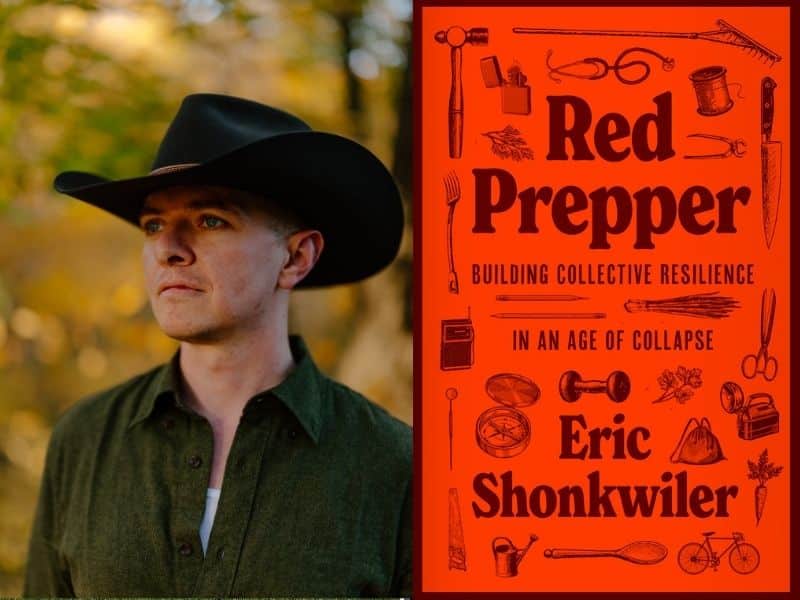
Eric Shonkwiler wants to help you survive societal collapse
The Columbus author will celebrate the release of ‘Red Prepper: Building Collective Resilience in an Age of Collapse’ with an event at Prologue Bookshop on Thursday, Oct. 22.
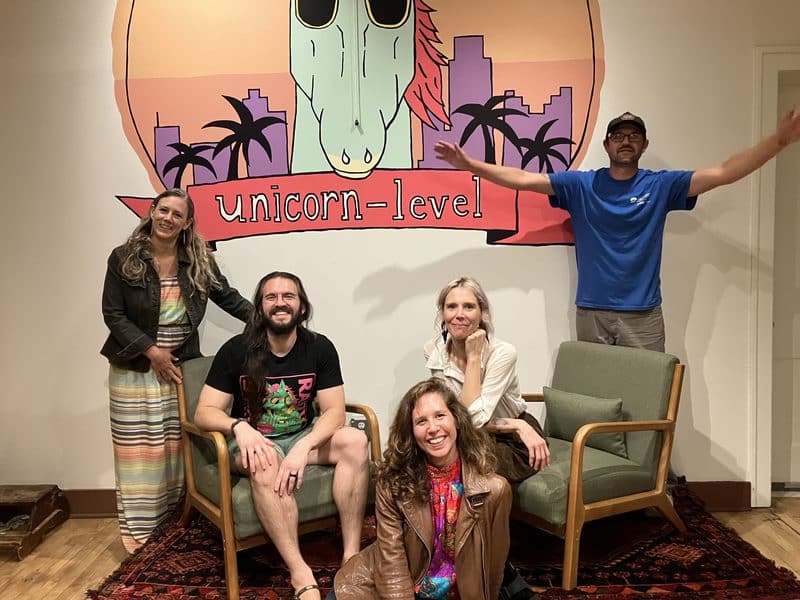
Two Dollar Radio HQ reopens with an expanded ownership group and a similarly expanded vision for the future
‘I think a big part from opening was to give authorship of the space to people with good ideas, to open the doors to people to try different things.’
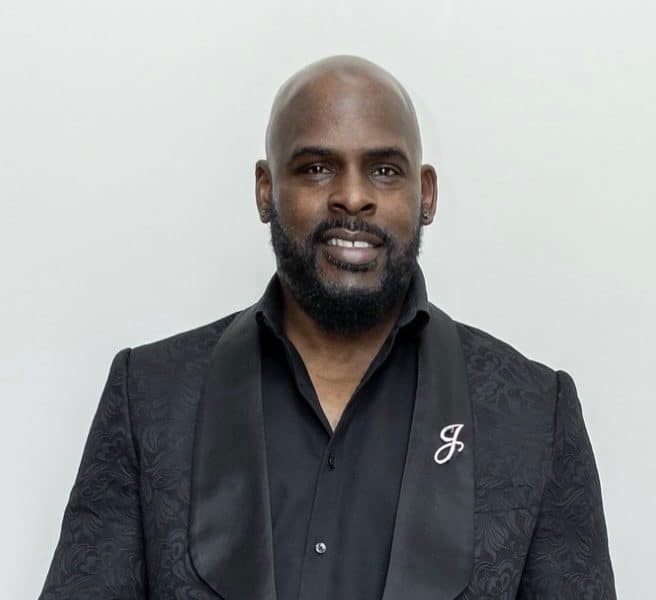
Edward Julian Sr. embraces poetry as a means to release and reflect
Ohio’s poet laureate features at Urban Arts Space tonight (Thursday, Sept. 24), appearing as part of the Poetry Festival, which continues through the weekend at Thurber House and the Grange Insurance Audubon Center.