
Columbus’ Photo Flood: Recent months give rise to trio of local photo books
Themes explored in new photo books from Julie Rae Powers, Colin Martinez and Josh Chaney range from explorations of queer identity in Appalachia to poetic reflections on the Midwest.
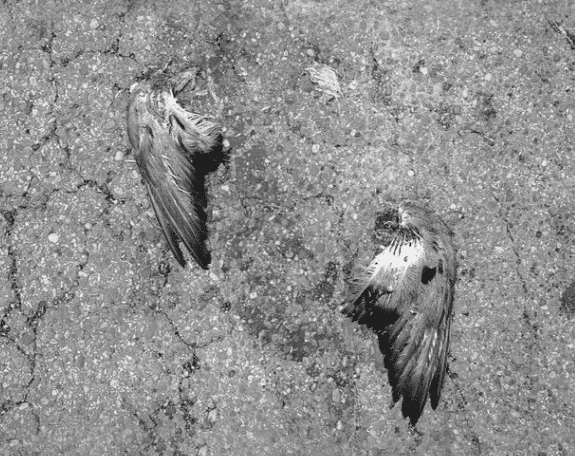
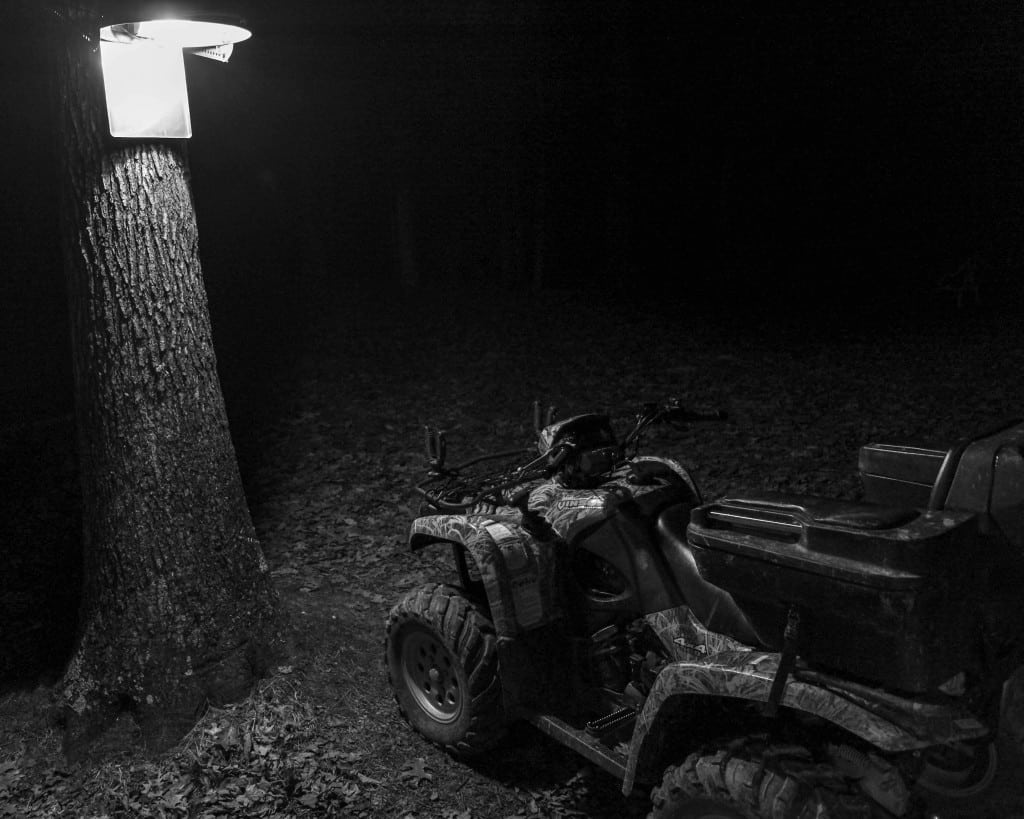
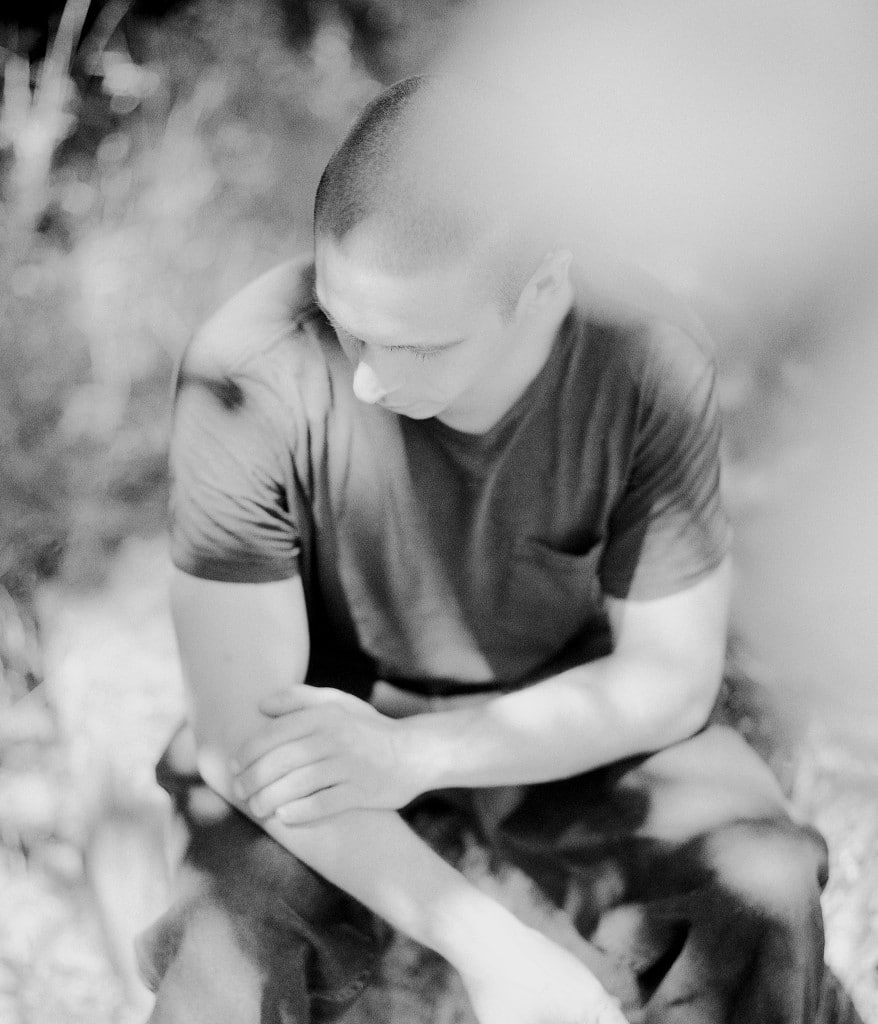
Over the course of a couple of months, half a dozen photo books have been published by Ohio photographers – three alone by Columbus-based artists. And while they each take on their own themes, ranging from explorations of queer identity in Appalachia to poetic reflections on the Midwest, all of them also happen to share a number of characteristics. Each incorporates years’ worth of work and emphasizes the significance of place. And all three also happen to be shot primarily on black-and-white medium format film.
Columbus-based photographer Julie Rae Powers credits this wave of photobooks to a trio of factors: “Fascism, nostalgia, and [the fact that] black and white is significantly cheaper than color film to purchase and develop.” Powers, identifying as a “Queer Appalachian photographer,” recently published Deep Ruts, a book of 165 photographs of Appalachia that reflect on their “outsider status within their family and their own culture.” Their portraits and landscapes balance social documentary photography with something more transcendent and liminal, blurring the notion of what it means to be Appalachian.

Nostalgia has played a big part in the once shrinking economy of film photography. The medium and its varying styles throughout the 20th century have made a notable resurgence this past decade. Film costs have skyrocketed. Film camera prices are soaring. And the once niche film photography influencers are finding a mass audience in the social media age. Following curiously behind film is the form of the photobook and its essential partner, the photo series. And they’re thriving most notably outside the confines of conventional art institutions.
A donation powers the future of local, independent news in Columbus.
Support Matter News
“I don’t think that the fact that most people consume images on Instagram can be ignored in that decision [to shoot on film and publish photo books],” said local photographer Colin Martinez, arguing that the resurgence of film and the prominence of the photobook marks a turn away from the techno-futurist world we live in. Martinez recently published the book Soil, Air, Reverence, which features 47 black-and-white photographs shot in the Midwest and Western U.S. The book also includes eight “notes,” or poems, reflecting on the landscape.
“I think this moment has to do with the rise of bookmaking practices in the photo world and the three of us growing into ourselves over time to create books projects,” local photographer Josh Chaney said. Like Powers’ book, Chaney’s Sassafras Ridge, due to release in the coming months, concentrates on Appalachia. The 55 black-and-white photographs taken along the Ohio River between 2018 and 2023 are less documentary and more about the “personal emotional connection to that place and the atmosphere that I feel when I am there,” he said.
Photographers from elsewhere throughout the state are releasing photo books confronting similar themes tied to the region. Covington-based J.J. Berg is releasing his book Tall as the Grass is Blue this weekend at the Cincinnati Art Book Fair; Kalie Krause, who recently relocated from Cincinnati to Traverse City, will be releasing Eternal Sermon in the near future; earlier this year, Will Sharp published a series of Ohio photographs titled Slow Creek, Sycamore; and Chillicothe-based photographer (and YouTuber) Matt Day just released his book, Surveyor.
In thinking about this wave of photobooks, it’s hard to ignore the historical underpinnings of the form’s earlier history, said Martinez. “You could look at a lot of the archival stuff that Josh digs up [in his archival project, Good River] and look at it as a natural extension of that kind of style, refocusing on a more vernacular style that was often captured by the WPA photogs around that time,” he said. “Columbus’ connectedness to the Rust Belt but also capital driven development is another aspect of this.”
Powers made sure to point out that the wave of photo books isn’t limited to the region. “It’s not really a phenomenon that’s special to Columbus or the Midwest even. It’s been happening across the photo world both editorial and fine art for some time,” they said. The photographers I spoke with found inspiration in a variety of contemporary and historic photographers and artists such as Latoya Ruby-Frasier, Mark McKnight, Rashod Taylor, Bryan Schutmaat and Rahim Fortune.
With the dominance of algorithm-driven social media, fascism’s aesthetic evolution (incorporating photographs like Evan Vucci’s photograph of Trump’s post-shooting fist-pump), and the continuation of recycling 20th century trends, it’s not surprising that local artists are picking up slower, more meditative mediums. And this is especially true when considering what it means to make regional photographs in the Midwest and Appalachia — these bodies of work appear as the antithesis to the street photography of New York City or the commercial portraiture of LA.
Nostalgia, a word that’s 17th century origins originally described a kind of homesickness, wasn’t always tied to time. The term was first coined by the physician Johannes Hofer to describe the feeling Swiss mercenaries felt on long military tours. “Nostalgia originally referred to a longing to return through space, rather than across time; it was the ache of displacement,” Simon Reynolds wrote in his book, Retromania: Pop Culture’s Addiction to Its Own Past. Looking at this wave of photo books as a local phenomenon could signal a nostalgia for the present, a nostalgia for a placeness in a city often derided as lacking an identity.
Related Articles
‘Pulp Stiction’ joins the resistance
A deeply compelling new collage exhibition brainstormed and curated by Emily Morgan opens at Hopkins Hall Gallery on Monday, Oct. 26.

‘American Doctor’ asks viewers to not look away
The gut-wrenching documentary from director Poh Si Teng, who will be on hand when the film screens at the Wexner Center this weekend as part of ‘Unorthodocs,’ takes viewers inside Nasser Hospital in Gaza.
The Orphan the Poet the Block Party
The Columbus band will join pals Joey Aich and Liteweight Champion for an outdoor concert on Walnut Street this weekend.