
NV Gay hopes to build a coalition with ‘The Queer Allies Bible’
The just-released book from the Columbus photographer and author serves as an essential introduction to allyship for those new to the fight for equality.
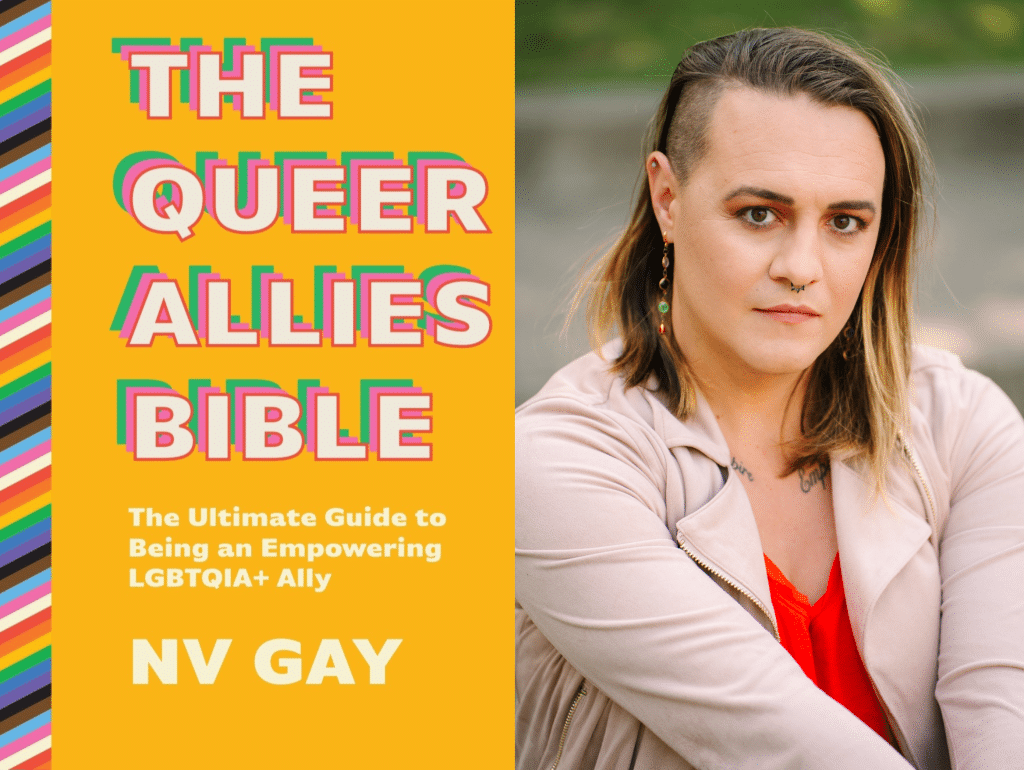
When NV Gay began work on The Queer Allies Bible a couple of years back, she imagined an entirely different kind of rollout for the book.
“I envisioned myself being able to go into schools, providing professional development training for teachers, and that ain’t happening anymore,” said Gay, who acknowledged the horrifying political realities of this moment, in which Republicans, led by President Donald Trump, have rapidly advanced segregationist and anti-LGBTQ+ policies under the guise of rolling back corporatized diversity, equity and inclusion practices. “Really, though, this book was not written for the school, not for the business, not for the hospital, but for the person, because that’s who I want to read it. I’m not saying you need to take it into work and proclaim it to the world. But I want you to read it. I want you to write your notes in it and highlight things. And then I want you to pass it on. It’s called a bible because it’s a book you share with people. And it’s a book meant to widen people’s views and to help teach that notion that we all deserve the same love and respect.”
The concept for the book arose from an interaction Gay shared at Bridgewater College in Virginia while touring her photo exhibition, “This Is Trans,” when an associate professor at the school arrived and inquired about the best ways to support a lifelong family friend who had recently come out as transgender. He expressed his confusion, said he wanted to love and support them, but admitted that in the moment he was struggling with the best ways to do so. “And we just started conversing, and in talking I realized that what he needed was for me to hand him this book,” said Gay, who began the 18-month research and writing process for The Queer Allies Bible, out today (Tuesday, March 25), in the immediate aftermath of the exchange.
A donation powers the future of local, independent news in Columbus.
Support Matter News
Initially, Gay anticipated a book that could counter anti-LGBTQ+ messaging with facts and data. “I was like, let’s attack it with research, let’s attack it with knowledge,” said Gay, whose approach softened as she got further along in the process. “And then I turned my mindset more toward let’s attack it with humanity.”
Deeply researched and conversationally written, the book draws added power from a series of first-person testimonials collected by Gay that center the lived experiences of queer and trans individuals, and which are designed to foster deeper empathy and connection – elements Gay said were sometimes absent in the more numbers-based arguments advanced in recent years by the Democratic Party and some LGBTQ+ organizations.
As a result, legislation that would have been unthinkable as recently as eight years ago – recall when a 2017 North Carolina bill banning transgender people from using bathrooms that aligned with their gender identity was met with wide public derision and economic boycotts that included the NBA withdrawing the All-Star game from Charlotte – has now become commonplace across the United States. In Ohio, for instance, Senate Bill 104 went into effect in February and prohibits transgender students at K-12 schools statewide from using the facilities that align with their gender.
“I hate to say it, but too many Democrats and too many people in our LGBTQ organizations tried to take an approach with education and numbers, and they tried to throw statistics out there, tried to throw research out there. And in turn, it made people feel stupid, made them feel less educated, made them feel like, ‘Oh, you think you’re better than me?’” said Gay, who will celebrate the release of her book at Makers Social from noon to 2 p.m. on Sunday, March 30. “All I’m trying to do with this is take a humanizing approach, saying, ‘I’m a person, and I deserve the opportunity to live, to be myself.’”
Throughout The Queer Allies Bible, Gay displays a knack for meeting people where they are, utilizing language that invites outsiders into the conversation, cognizant of the reality that allies of all stripes are needed to overcome this political moment and advance the cause of queer and trans liberation.
“There aren’t enough of us, and we can’t be the only ones to fight for change,” said Gay, who allowed that her book is primarily geared toward those not already engaged in the push for equality. “We have to remember that coming out as an ally – and it is coming out as an ally – does open people up to ridicule, and it does open people up … to some of the same hatred we get. Now, they’re probably not going to have their rights stripped away. But that simple Facebook post might be a big deal for someone, and I don’t want to minimize that.”
The book opens with a basic introduction to allyship and then walks readers through the terminology, the basics of transitioning and gender affirming care, and the ways to properly respond to anti-LGBTQ+ rhetoric and attitudes, with an acknowledgement that being an ally isn’t something that needs to be built on grand gestures. As one example, Gay cited in our conversation a recent exchange in which Republican U.S. Rep. Keith Self misgendered U.S. Rep. Sarah McBride, a Democrat from Delaware, and was immediately rebuked by her colleague, U.S. Rep. Bill Keating, D-Massachusetts.
“And this old white man, who nobody might assume would do this, stopped everything and said that [Self] was being dishonorable, and he kept using the word ‘decency,’” Gay said. “And I was sitting there going, ‘There it is. This is allyship.’ In those moments, what do you do? Do you walk away and wipe your hands of it, letting someone else handle things? Or do you step in and step up for that person? When you hear someone being misgendered, when you hear someone being dead-named, do you just let it go? Or do you stand up and speak for them?”
Too often, the burden in these cases falls on the trans person, who needs to engage in a bit of mental calculus, considering the potential dangers to which they could be opening themselves in opting to speak in their own defense. Often, Gay said, she’ll find herself in situations in which she has been misgendered, referred to as “sir” or “mister,” and on each occasion she’s forced to weigh any number of factors before choosing whether or not to speak up.
“Every time I have to evaluate things and ask myself, ‘Is it worth it? Am I going to get into an altercation here or is this person going to be respectful?’” she said. “It’s a debate every trans person has to have every single time, and it’s exhausting. It helps if there’s someone there who knows me, and who can step in and say, ‘You mean miss, right?’ That’s what we need. That’s an ally.”
Author
Related Articles
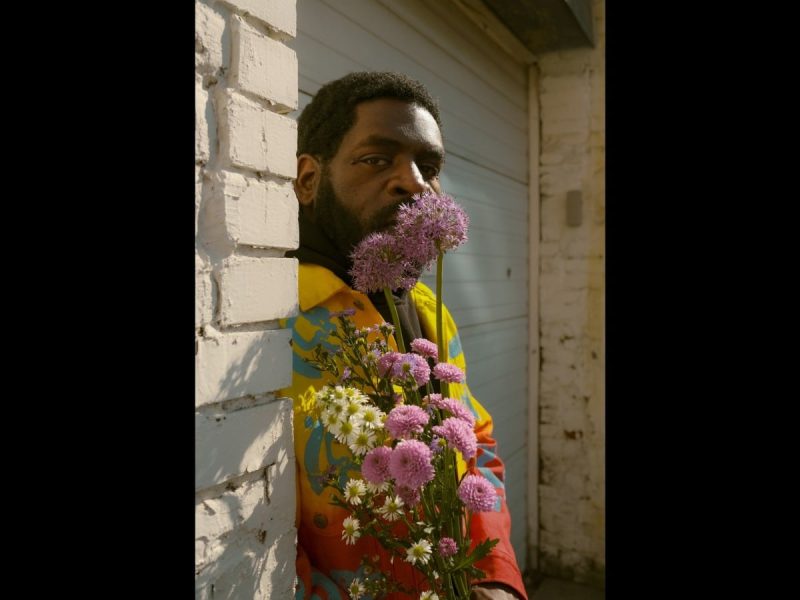
Hanif Abdurraqib named recipient of the 2026 Weston International Award
The celebrated Columbus poet and author is the latest winner of the literary award for nonfiction, given each year by the Writers’ Trust of Canada.
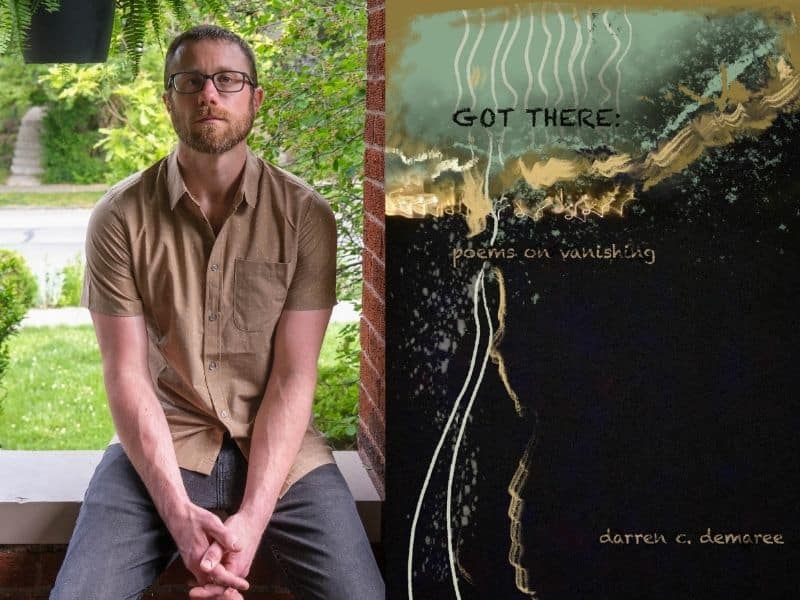
How to disappear temporarily with Darren Demaree
The Columbus poet will celebrate the release of his new collection, ‘Got There: Poems on Vanishing,’ with a reading at Prologue Bookshop on Wednesday, June 10.
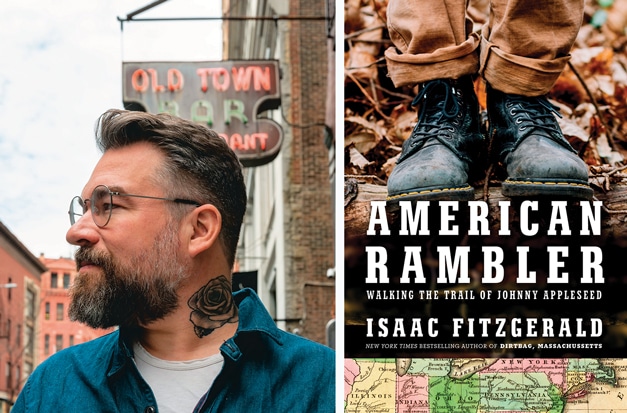
Isaac Fitzgerald finds himself on the trail of Johnny Appleseed
The author will discuss his new book, ‘American Rambler: Walking the Trail of Johnny Appleseed,’ in conversation with the poet Maggie Smith at WOSU Ross Community Studio on Tuesday, May 19.