
Prince Shakur and the lingering impact of James Baldwin
The writer and community organizer will appear alongside Quartez Harris at the Bexley Public Library on Thursday, Aug. 29, for a conversation centered on the life, legacy and work of Baldwin, who would have turned 100 this year.
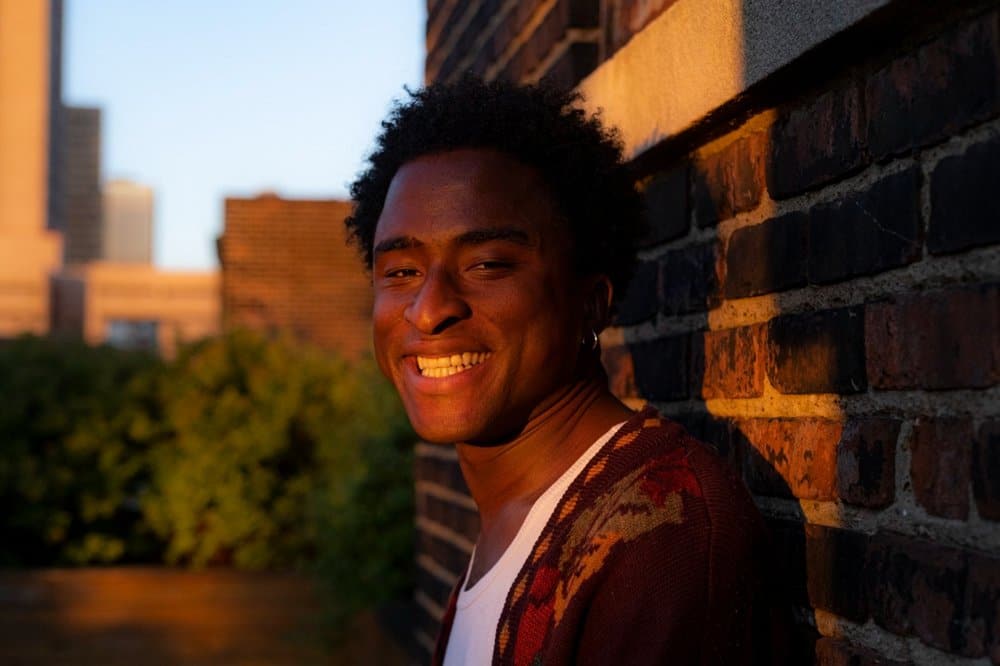
Prince Shakur first discovered James Baldwin in a college African American literature class, recalling how he connected immediately with the writing style even as the material at times felt distant.
“I think I had to go through a few things before I could relate to it more,” said Prince, a writer and community organizer who will appear alongside poet, teacher and author Quartez Harris at the Bexley Public Library on Thursday, Aug. 29. The pair’s conversation will center the life, legacy and work of Baldwin, who would have turned 100 this year. “I think seeing [the 1989 documentary] ‘The Price of the Ticket’ was initially more impactful, because … I started learning about his life. And I was like, oh, a bisexual Black person. And then looking at the questions he was asking himself, I started to realize I was asking myself some of the same questions, too.”
Baldwin has remained a regular companion on Shakur’s journey in the years since, with subsequent revisiting allowing Shakur to draw out evolving meaning in the late author’s work. When Shakur first read Giovanni’s Room, for instance, he said he was more interested in the romantic aspects of the tale and “the chaos of the characters falling in love.”
A donation powers the future of local, independent news in Columbus.
Support Matter News
“And now I see the violence or the fear in the book a lot more,” Shakur said. “To me, it’s a cautionary tale about what happens when you don’t allow yourself to be as much of yourself as you could be.”
For Shakur, Baldwin’s deep catalog exists both as a subject of academic interest – a number of Shakur’s essays on Baldwin are included in his recent collection, Black Reader I: On Searching for Radical Connections – and more importantly as a stabilizing force, offering a place to which he can retreat in those moments when the outside threatens to overwhelm. “I think his work has helped me when I’ve felt messed up by the world or traumatized or fearful,” he said. “There’s something in his writing that brings me back, or kind of helps me reorient myself.”
This proved particularly true during the couple of summers when Shakur worked seasonal jobs in Montana – a stretch that also coincided with the early political rise of Donald Trump and led to the writer experiencing a flood of “weird, racist macro-aggressions” while residing in a place with virtually no other Black people. As a means of coping, Shakur began listening to recordings of Baldwin’s speeches, finding not only needed comfort in his tone and perspective, but also the strength to push back.
Continually interrogating his relationship to Baldwin has also helped Shakur dig more fully into what he views as the core reasons he continues to show up in the world as an activist, an author, and a community organizer.
“I’ve always been aware of anti-Blackness and the level of mortality that Black artistry and Black activism can bring you to confront. … And so, if I look at the world that I live in, and the way Black people can be taken out, and the systems that are against us, and the different forms of political and social repression, I am prepared for anything that can happen,” Shakur said. “If I were to leave this earth early, I want to have given enough and created a body of work to rival my lifetime. And I think that’s something that always compels me toward thinking about what’s next.”
Raised by Jamaican parents who emigrated to the United States before he was born, Shakur said he was brought up with an awareness of anti-Blackness and racism, recalling early talks with his parents, who as a child taught him how to react if approached by the police and cautioned him against wearing headphones or walking with his hoodie up while in public. These ideas began to crystallize further when Shakur’s stepfather was incarcerated, which started the then-teenager on a still-developing activist path.
“There was something about seeing the prison system up close in that way, and not understanding how someone I loved could be considered a criminal – someone who had taken care of me, who had driven me to the bookstore,” said Shakur, who experienced a similar sense of awakening in 2014 when police in Ferguson, Missouri shot and killed Black teenager Michael Brown. “And that was when I really was able to look at my personal experiences and then begin to view them through the lens of what was happening nationally. And then I started to understand more about the prison abolitionist movement and the Black power movement. And that led me to asking a lot of questions about the adult Black person, radical person, and artist that I wanted to be.”
This artist can take myriad shapes, with Shakur embracing the various forms of writing (essays, fiction, screenplays, etc.) as a means to explore a multitude of interests and approaches. In his work as a freelance journalist, for instance, Shakur said he aims to use his life experience as a lens through which to write critically and more humanely about current events. With poetry, in contrast, he said it’s more about utilizing flair and emotion and a very specific approach to language to nudge people in a particular direction. “I think [these forms] all serve different functions in terms of me trying to mine the world in a radical way, or in me trying to mine myself in a radical way,” he said.
Shakur navigates these internal and external realms concurrently in his unflinching memoir, When They Tell You to Be Good, from 2023, which serves as a richly detailed accounting of the challenges the author experienced growing up Black and queer and his gradual turn toward activism. In wrangling with this early inner-self, Shakur said he also began to home in on his outward voice as a writer, recalling a sense that something new was beginning to emerge as he worked on a chapter centered on a 2006 triple murder that involve two of his uncles in Jamaica, which occurred when Shakur was 12 years old.
“And I was writing about the complicated feelings I had around it, related to masculinity and Jamaican-ness and this trajectory of how we live in a world where you can either be safe or you die at an early age, or at least earlier than most people,” Shakur said. “And it was really hard, because I was trying to move through so many deep, emotional things in what felt like a small space. … But gradually I started to figure out the phrases I needed to have this conversation, and then I started to think of different ways of analyzing masculinity, and about the social and political conditions that shaped my family’s island. … And I had never written anything like that before. It was the first thing I wrote where I thought, ‘Only I would really be able to write this in the way that I have.’”
Author

Related Articles
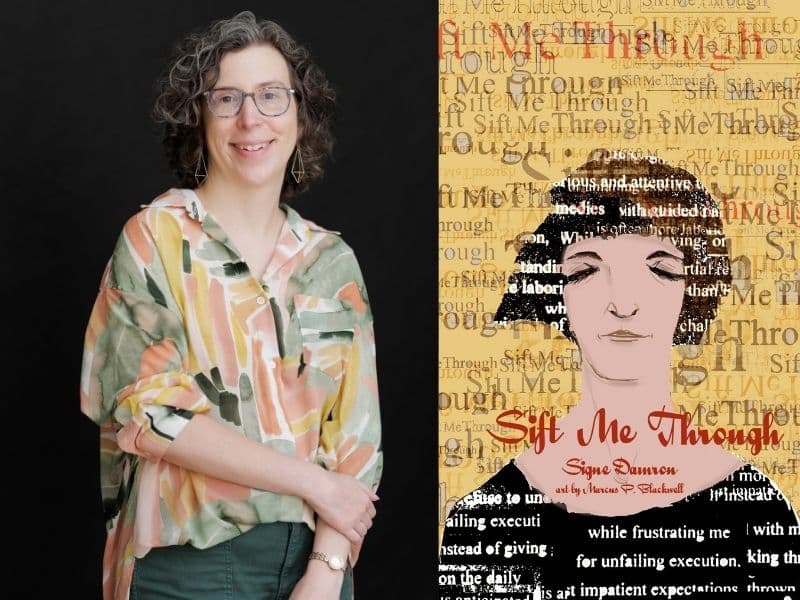
Signe Damron begins to see things more clearly with ‘Sift Me Through’
The Columbus poet said her new collection, illustrated by artist Marcus Blackwell, arrived as she began ‘processing and coming into my own.’
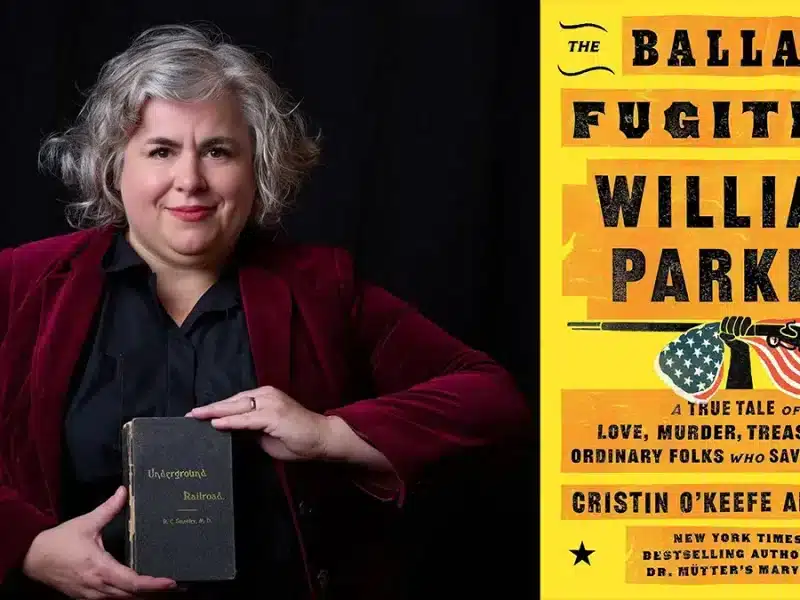
Cristin O’Keefe Aptowicz finds in history lessons for this current moment
The author will celebrate the release of her new work of historical nonfiction, ‘The Ballad of the Fugitive William Parker,’ in conversation with Ernest Cline, Hanif Abdurraqib, and Scott Woods at CCAD this weekend.
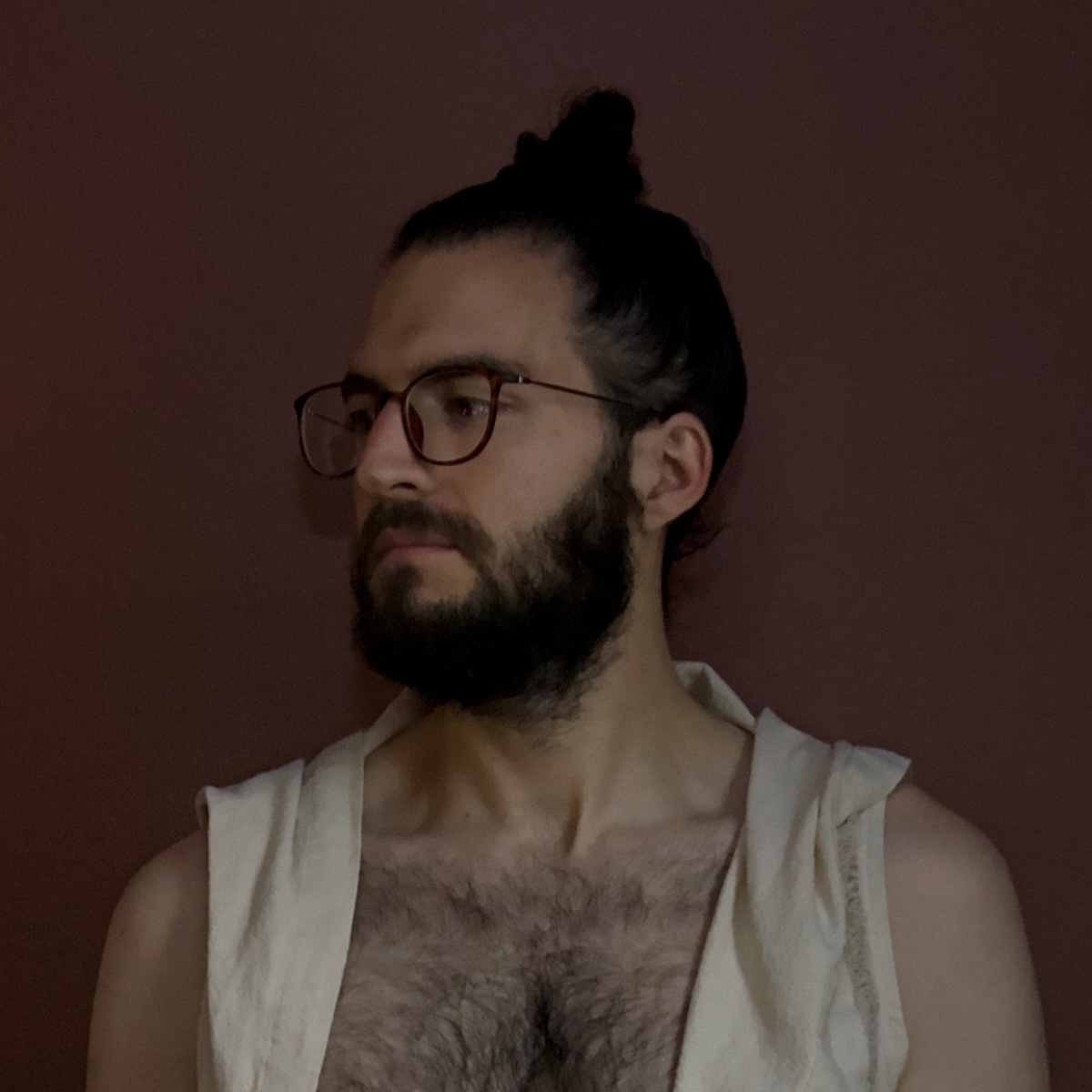
Matthew Ellis reckons with the impacts of religion in ‘Little Heresies’
The Columbus poet will celebrate the release of his debut collection with a reading at Two Dollar Radio Headquarters on Tuesday, Aug. 25.