
WIT Gallery celebrates turning five while keeping an eye on the future
Poet, artist, and gallery founder Larry Robertson will celebrate the Franklinton art space’s anniversary with a sprawling group exhibition opening on Friday, June 12.
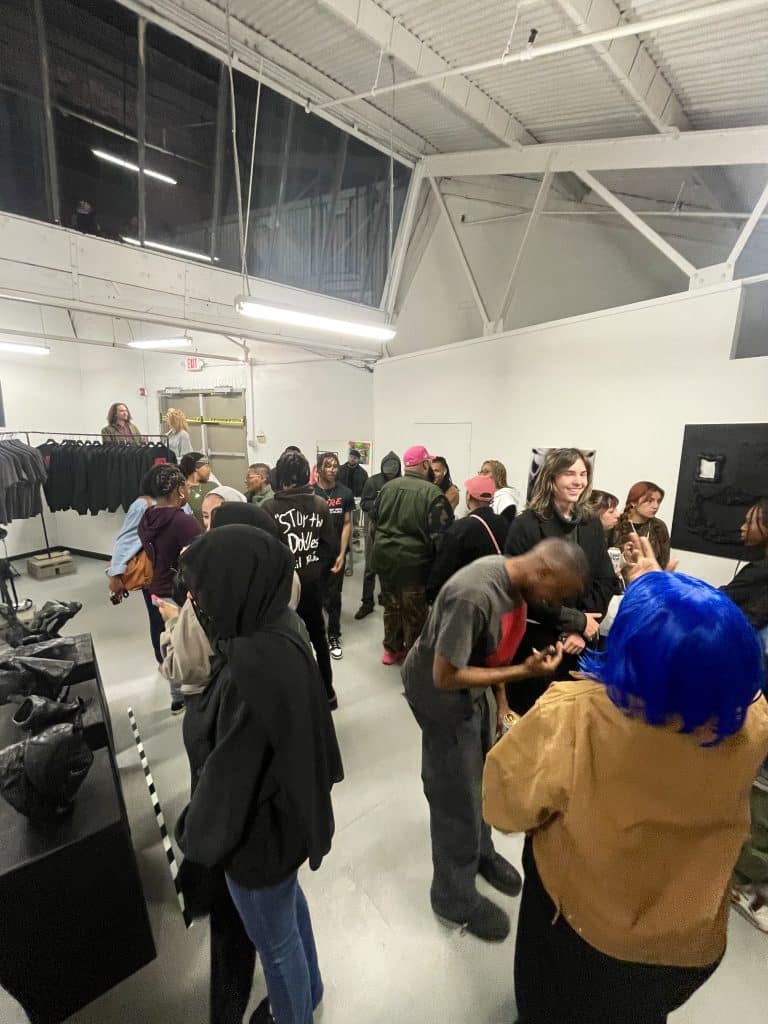
Larry Robertson first had thoughts about opening his own gallery in 2016, shortly after Columbus police shot and killed Ty’re King, 13, and two years after Cleveland police killed 12-year-old Tamir Rice.
“And in 2016, I was marching and protesting, upset about the social injustices that kept happening,” said Robertson, who described how these dual killings hit particularly close to home for him, having been born and raised in Cleveland before later making his way to Columbus. “But even when I was marching, I really wasn’t making the impact I thought I could in the community. I thought with my experience in art … that I could do more to bring people together, and I wanted to have a space where specifically Black and Brown people could meet and learn the behind-the-scenes goings on at an art gallery, how to sell their art, how to create an online shop, and all of these other things.”
In the years that followed, however, Robertson set this idea aside as he crisscrossed the country, taking part in fashion trade shows (he has a background in design) and touring as part of the production team for bands such as All Them Witches and Ghost. Heading into 2020, Robertson intended to continue these travels in more streamlined form, releasing his debut poetry collection and then launching a companion book tour that he envisioned carrying him through the end of the year. “And then Covid happened and everything shut down,” Robertson said. “And when it was obvious I wasn’t going to go anywhere, it gave me time and then the reason to really plant roots and see what was needed here in Columbus.”
A donation powers the future of local, independent news in Columbus.
Support Matter News
At the time, Robertson was renting a small studio space at 400 West Rich in Franklinton, and working there he became aware of a section of the building that he believed was being underutilized, serving then as an ad hoc storage facility. “It was almost like this big warehouse, and it had water damage, and this and that,” said Robertson, who went to work clearing out the space, teaming with the 400 maintenance crew to build walls and create what opened in the early spring of 2021 as WIT Gallery, which will celebrate its five-year anniversary with a group exhibition and concert beginning at 6 p.m. on Friday, June 12. “It’s an unconventional space, and I’ve had some people look around like, ‘This is an art gallery?’ … But the idea was to provide a little bit of joy and offset some of that stress and that feeling of frustration you can get from life, which can be a lot. It’s nice to have those community spaces where you can go crack some jokes, see some nice art, celebrate your friends. And that was the idea. And five years in, we’ve done a lot of that.”
That growing community that has come up around the gallery is reflected in the sprawling roster of artists showing as part of the anniversary exhibition, including Cameron Granger, Alek Shabazz, Ian N. Njau, Isaac Harris, Isaiah Smalls, Janai Rakes, James Drakeford, Jordan Burton, Khaila Carr, Okell Lee, Patrick Hicks, Praise Godswill, 7thgrl, and Ryenne Rowan. Music will be provided by ASL Princess, DJ Aka, Dojo, and Red.
Ten years after Robertson brainstormed the concept, and five years after he brought WIT Gallery to life with a masked-and-distanced opening exhibition from the artist Kara Young, he continues to view local spaces focused on elevating Black and Brown voices as a necessity. “There’s still a need at a foundational level, at a resource level, at an infrastructure level,” said Robinson, who also hailed the impact of galleries such as Streetlight Guild and the King Arts Complex.
Reflecting on the gallery’s formative years, Robertson said he benefited from having launched when he was essentially a starving artist himself, his lack of resources helping to temper expectations in a way that allowed him to better appreciate those modest early successes. “I knew I didn’t have the means to do some big brand concept, or to sell tens of thousands of dollars a show,” he said. “But at a minimum, I wanted to provide some joy, some good energy around art, and help some artists get their work out there. And if they can make some money, great. And if the gallery could pay its rent, that was even more incredible. … I mean, if anything, I might have exceeded expectations, still being around, having worked with all of the artists I’ve worked with, getting them exposure, getting them real-world experience. … I’m amazed to make it five years. And now maybe some of the thoughts I had in the beginning – a small staff that could be paid, bringing in national or global artists here and there – in another five years maybe we can finally get there.”
Author
Related Articles
Scrawl meets Scrawl
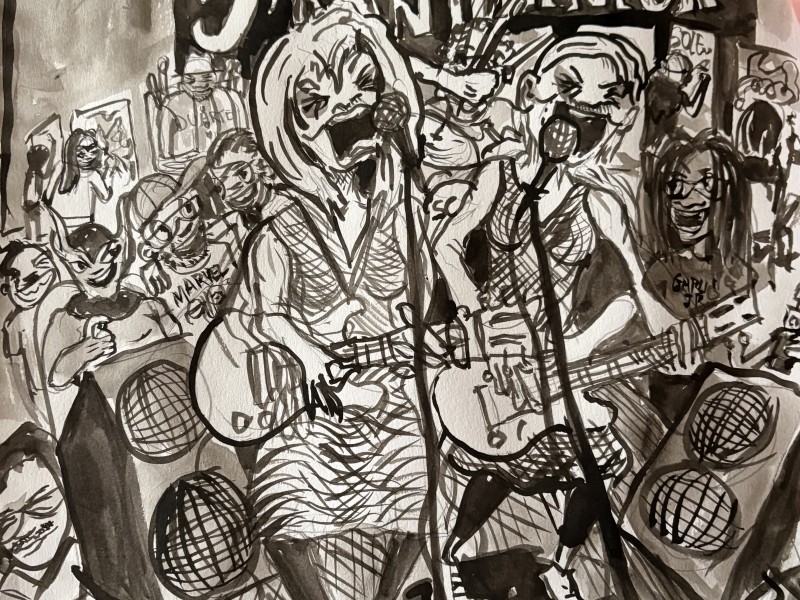
Marcy Mays and Sue Harshe recently joined pioneering Urban Scrawl artist Dan Gerdeman for a conversation ahead of the band’s performance at the Franklinton art event that has been a longtime source of confusion for some of their fans.
‘Immigration: A Journey of Belonging’ seeks deeper understanding
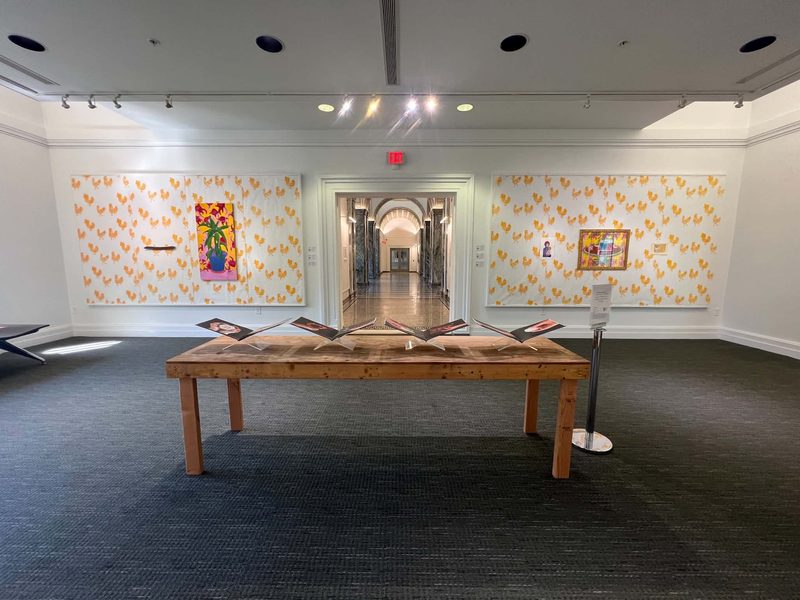
The new group exhibition, open now at the Losinski Gallery at the Main Library, will host a reception from 2-4 p.m. on Saturday, Oct. 3.
Deep conversations pave the way to ‘Chasing the Light’
A couple of years ago, Loren Bucek invited a group of artist friends to her Clintonville home. The gathering soon evolved into regular meetups that shaped the creation of a new exhibition opening this week at McConnell Arts Center.