
Travis McClerking emerges from the dark of ‘Running Away Without a Walkable City’
The Columbus poet, recently named as a semifinalist for the 2025 Berkshire Prize, said the collection reflects the heaviness of the times in which it took shape.
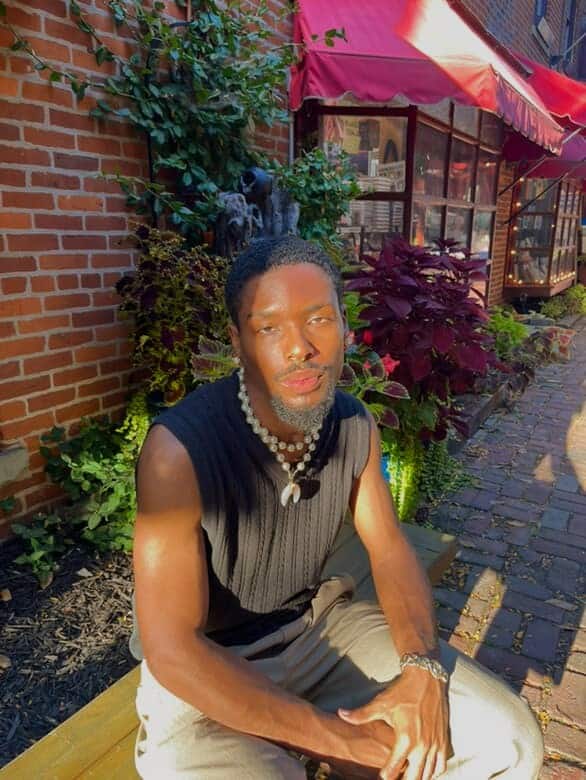
Growing up, Travis McClerking’s earliest influences weren’t poets, but instead family members with a flair for turning the stories they told at holiday gatherings into showstopping spoken word performances.
“Once uncle, he had this way of creating peaks and valleys in his stories, regaling everybody at the table, the turkey sitting in the center,” said McClerking, who years later developed an understanding of the ways in which this relative employed tone and pacing when he began to study spoken word poetry more seriously under the tutelage of Dr. Sidney Jones, Jr. at Columbus Alternative High School. “I spent one summer watching close to 2,000 videos of poets reading. And I felt like I was entering a wardrobe into a whole new world, where seeing the performance of it really helped to solidify, oh, I can make this sound, and the crowd will react in a certain way. And then it just clicked, like, okay, that’s what my uncle was doing. He could make this gesture or this noise, and he would get this response.”
Owing to these influences, McClerking said his writing tends to have a natural sonic weight – a characteristic further burnished by having initially come to the form via spoken word, where the poems harness their power in part from how they live in the air. The influences McClerking absorbed in these early days, including Rudy Francisco and the Columbus writer Hanif Abdurraqib, also imprinted on the structure he took within his writing, the poems frequently centering on a narrative turn that could emotionally floor readers.
A donation powers the future of local, independent news in Columbus.
Support Matter News
“I was drawn to the people who could make the turns in their poems the most devastating, who could make you feel it in your gut once you realized what they were actually talking about,” said McClerking, who pointed to Francisco’s poem “Rifle” as just one example of this approach. “And Hanif, he’s really wonderful because you can tell how urgently he needs to get the words out, where the words are almost running, sprinting off the page.”
The sense of urgency McClerking viewed in Abdurraqib’s writing often bleeds into his own work. Witness Running Away Without a Walkable City, which serves as a deep examination of the poet’s evolving Columbus home and also his efforts to survive within it, and which was recently named as a semifinalist for the 2025 Berkshire Prize.
“I think a lot of the urgency comes out in the book where it’s a very real chance I might not see tomorrow,” said McClerking, who revisited the collection in the wake of the Berkshire announcement and was struck by the dark spaces many of the poems inhabited. “I wouldn’t recommend that anyone who can’t deal with grief or see the good in interrogating it read this one. And if someone is still going through something immediate and is looking for a way out, this book is not the answer. … And that, I think, is how it’s honest in its own way. It doesn’t offer you any reprieve, because in those moments you don’t feel reprieve.”
That’s not to say the collection is without its moments of humor, however fleeting. But the overriding tone is forged by the sense of desperation McClerking felt in attempting to navigate his surroundings as a young Black man in the decade after George Zimmerman killed Trayvon Martin – a feeling he said is encapsulated within Elizabeth Alexander’s book The Trayvon Generation.
“That book is the closest thing to what I’m feeling in [Running Away Without a Walkable City],” said McClerking, who recalled the way developing technologies helped to shape these fears, having grown up in an environment where the violent deaths of countless young Black men and women repeatedly flooded his social media timelines. “Even when death is said to be a normal thing, it can be impossible for a young person to understand. But for people who look like me, it’s not coming in a normal way. And if it’s not coming in a normal way, then it can come from all angles. And if it can come from all angles, everybody is a potential enemy. And if everybody is an enemy, then I need to make some friends fast or I need to hide and I need to run. And that fight or flight instinct just becomes embedded in your bloodstream.”
And yet, there also exists within these poems a call to enlist your community in your survival – an idea McClerking has continued to wrap his arms around, and which he said has left him feeling less isolated in the times when these oceanic swirls of grief arise within him. (One segment of this community can be witnessed routinely at the Poetry Cauldron open mic, for which McClerking serves as a co-host and collaborator.)
“There are poems in there I would never consider writing now, because they’re so fraught, where it was a site of grieving or a reaction to grief that I would hope to never do again,” McClerking said. “I’ve gone through plenty of hard situations in the time since, but I’ve actually engaged with it, paid attention, worked through it, and didn’t shut people out, which is something I would have done in 2019, and something I would have done in the poems. … Now, that response is much more community centered. It’s much more of a turn toward a village rather than a room.”
Author

Related Articles
Edward Julian Sr. embraces poetry as a means to release and reflect
Ohio’s poet laureate features at Urban Arts Space tonight (Thursday, Sept. 24), appearing as part of the Poetry Festival, which continues through the weekend at Thurber House and the Grange Insurance Audubon Center.
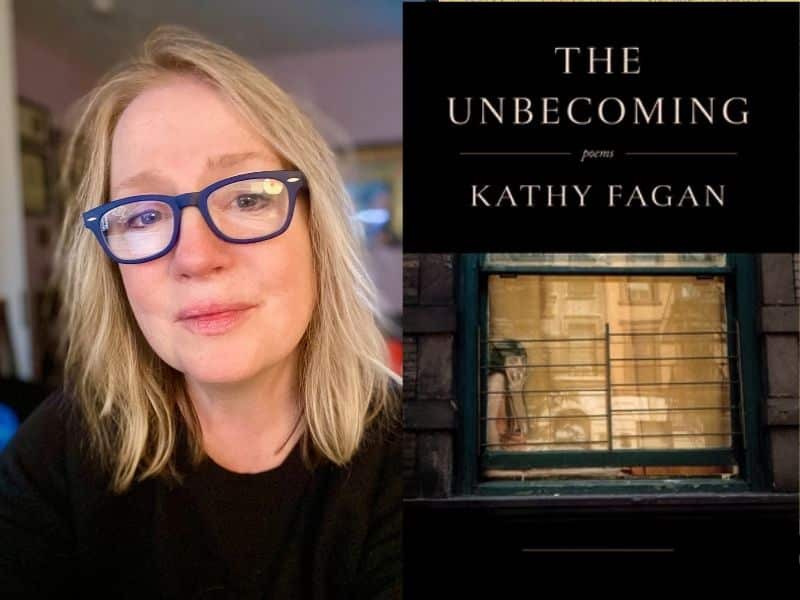
Kathy Fagan takes stock with ‘The Unbecoming’
The poet will celebrate the release of her new collection with a reading at Gramercy Books on Thursday, Sept. 24.
Derf Backderf delves into the past, finds lessons for the present with ‘The Dissidents’
The Cleveland cartoonist will celebrate the release of his sprawling, deeply engaging new book with an appearance at the Wexner Center for the Arts on Wednesday, Sept. 23.