
Erin Osmon brings it back home with ‘Won’t Back Down: Heartland Rock and the Fight for America’
The Indiana-born, Nashville-based music journalist will discuss her new book in conversation with Columbus poet Maggie Smith at Prologue Bookshop tonight (Monday, May 4).
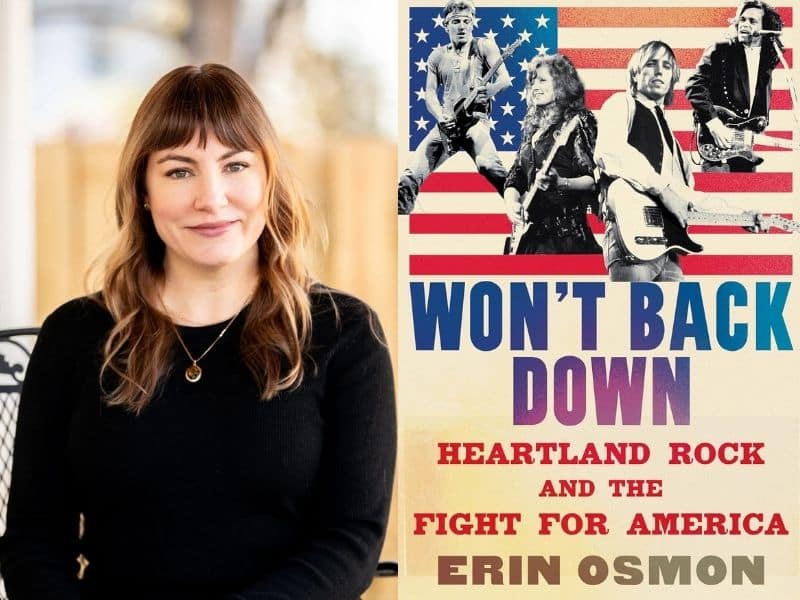
Attending college at Indiana University, music journalist and author Erin Osmon said she would roll her eyes on those occasions when she would spy Bloomington resident and famed Indiana native son John Mellencamp driving around town in one of his fancy cars.
“I sort of grew up in the shadow of Mellencamp,” said Osmon, whose rebellious stance toward the musician has softened over the years, particularly as she worked on her latest book, Won’t Back Down: Heartland Rock and the Fight for America, released last week, which she’ll discuss in conversation with the Columbus poet Maggie Smith at Prologue Bookshop tonight (Monday, May 4). “There’s just a lot more to him than he allowed people to see in the ’80s. … When he started … he was bratty and overly sexual and trying to be the misfit, trying to be the loudmouth. And then he matured with [1985 album] Scarecrow, and he matured when he began writing from his own backyard in a mature, holistic way. … And so, I went from really resenting him being seen as Indiana’s mascot to being really proud of it. And when the [Indiana] Pacers were doing well last year and people were singing ‘Hurts So Good’ in the streets of Bloomington, I was like, ‘Yes. He’s my guy.’”
Within the deeply reported, beautifully written Won’t Back Down, Osmon positions Mellencamp among the four musicians she views as the Mount Rushmore of heartland rock, joining Bruce Springsteen, Tom Petty, and Bob Seger. But while these four feature prominently, Osmon’s coverage extends both deeper and wider, incorporating forgotten players and the women and people of color who were often overlooked in early coverage of the scene, including Bonnie Raitt, Tracy Chapman, Melissa Etheridge, and Lucinda Williams, among others. Osmon’s scope is also unrestrained by geography, her concept of “heartland rock” rooted in the working-class populism present in the Midwest, sure, but also extending to both coasts.
A donation powers the future of local, independent news in Columbus.
Support Matter News
“By all metrics, Springsteen is the king of this thing, and he’s from New Jersey, which is clearly not the heartland,” Osmon said. “I think for a lot of critics that embrace the term, it’s an ideological geography championing class and politics. This is music for the 99 percent. … So, I looked at it from the perspective of any place that pumps proverbial blood, whether it was manufacturing towns on the East Coast or the farms of California’s Central Valley.”
The initial seed for the book extended from a fascination Osmon developed with the intersection existent between music and place – a connection that featured heavily in her previous books about the singer/songwriters Jason Molina (Riding with the Ghost, from 2017) and John Prine (John Prine, from 2021).
“And these were both Midwestern songwriters creating iconic art outside of cultural capitals. And then I realized that was part of my story, but also part of my professional fascination, and I decided I wanted to interrogate it on a much broader scale,” said Osmon, a native of Evansville, Indiana, who now makes her home in Nashville. “And so, I was like, what fits that criteria? What do I have the authority to write about? Obviously, heartland rock, which is some of the most commercially successful music ever released, and also the soundtrack of my youth in a brainwashing sort of way, right? … It was in every bowling alley, every grocery store, every radio station. It was everywhere all the time.”
As a result, Osmon instinctively recoiled from the music as a teenager, gravitating toward the nascent grunge and alternative scenes and later immersing herself in the indie, punk, and underground music that bubbled up in places such as Bloomington and Louisville, Kentucky, a short, two-hour drive to the south. “And then you start to reach a place where you really appreciate the place that you came from, and you realize how it’s imprinted on you at this cellular level,” she said. “And I definitely went through that transformation of not wanting to see or hear what I grew up around to wearing it as this badge of honor.”
In the time she researched and wrote the book, Osmon served as a professor at the University of Southern California, which granted her access to the school’s vast library system. She augmented these available materials by going down internet wormholes, reading books, and watching films and videos, further benefiting by incorporating interviews she’d conducted throughout her writing career, including one with Mellencamp for a 2023 Los Angeles Times profile where she was initially granted 30 minutes but ended up spending more than three hours in conversation with the musician at his art studio.
Osmon organized these thick reams of research by utilizing a mix of tools both high tech (bookmark organizers) and low (Post-it notes), deploying it in chapters broken up by year and stretching from 1980 to ’89 – a decade the author viewed as a natural framework since it aligned neatly with the genre’s creative and commercial peak.
“And of course all of this music, whether explicitly or implicitly, was written, produced, and released against the backdrop of Reaganism and the rise of new conservatism, so it felt very important to look at the socio-political context of the music, too,” said Osmon, who writes about Springsteen’s decision to call the election of Reagan “frightening” from the stage during a November 1980 concert as a marked turning point in how musicians within heartland music confronted the politics of the day. “A lot of these guys either rode both sides of the fence or claimed to be apolitical … so that moment when Springsteen stood onstage in Tempe, Arizona, and said, ‘This is terrifying,’ it felt monumental.”
Describing the shift that she viewed taking place within the scene, Osmon writes that the genre’s figureheads “seemed to transform into omniscient narrators evangelizing the plights of the marginalized and those who worked but had little.”
Part of the book also interrogates how this strain of left-wing progressive populism was over time watered down and co-opted, beginning with Reagan, who took to using Springsteen’s protest song “Born in the U.S.A.” in his 1984 reelection campaign. “And Reagan’s not dumb, he’s a smart guy, and it’s possible he understood the core of ‘Born in the U.S.A.’ but saw an opportunity to use it to his advantage if he clipped out and used that anthemic chorus,” said Osmon, who ascribed the ease with which some of heartland rock’s messaging was exploited by opportunistic politicians to a number of factors, including the way that nuances tend to be obliterated at scale. “It’s really tough to convey nuance in an arena. If we think about Tom Petty’s ‘Southern Accents,’ which he really viewed as interrogating his roots in the South and his misgivings in this life in a really nuanced way, which did not translate at all. … And I think all of these things create a perfect recipe for misinformation, where the original message can be completely obscured.”
Though decades removed from these events, there are numerous places within the book where it feels like Osmon could be writing about this current social and political moment. At one point, she writes how in 1980 “unemployment was growing, nuclear power was ominous, and fallout from the Vietnam War rippled,” which, if one subs in Iran for Vietnam, could have been written about recent months.
“I mean, one of the most revelatory and also horrifying things that I took away from this project is how everything has changed and nothing has changed,” said Osmon, who pointed to the myriad cultural wedge issues embraced by Reagan that continue to shape American politics as just one example. “And a point I wanted to make in the book is to kind of remind people that in this period, which was becoming ever more pernicious, from the offices of the presidency down, people could still exist in the same spaces together and disagree. If you look at something like Farm Aid, the heartland rock guys were pretty clear about their stances on things, but they never meant to exclude anyone, especially because someone like a Mellencamp lived in Bloomington surrounded by hundreds of people, if not thousands, who voted for Reagan. And that’s his community, and he never meant to reduce anyone to a cartoonish rendering of evil, which is kind of what happens today. … And if people can be reminded of that, touched by that, and maybe in some way softened by that in reading this book, then I’ll feel like I’ve done my job.”
Author

Related Articles
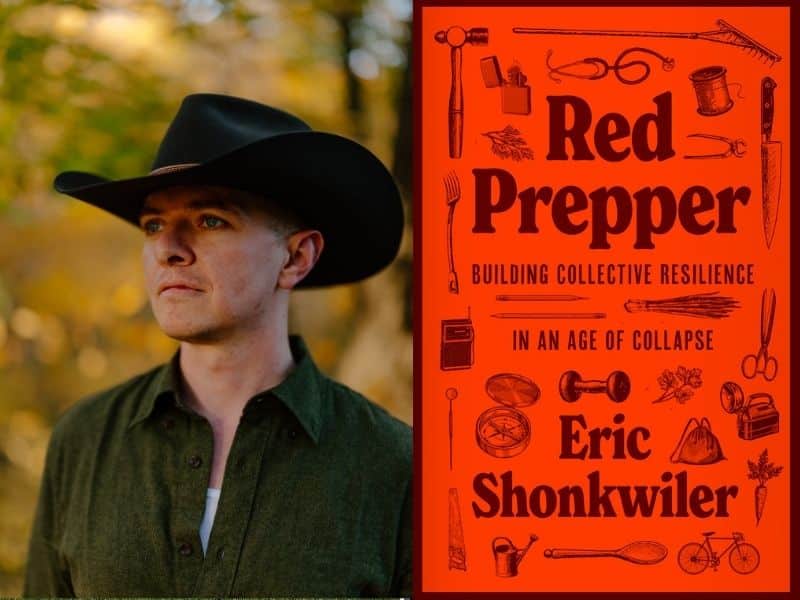
Eric Shonkwiler wants to help you survive societal collapse
The Columbus author will celebrate the release of ‘Red Prepper: Building Collective Resilience in an Age of Collapse’ with an event at Prologue Bookshop on Thursday, Oct. 22.
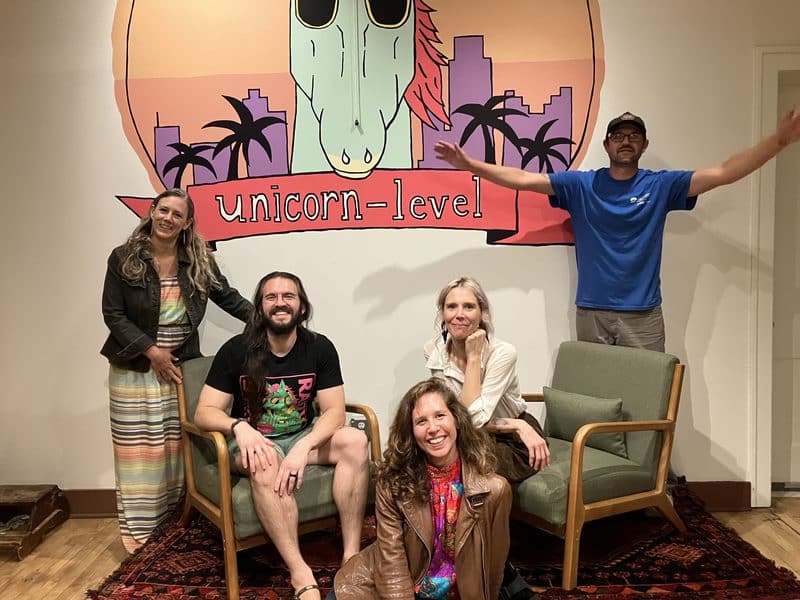
Two Dollar Radio HQ reopens with an expanded ownership group and a similarly expanded vision for the future
‘I think a big part from opening was to give authorship of the space to people with good ideas, to open the doors to people to try different things.’
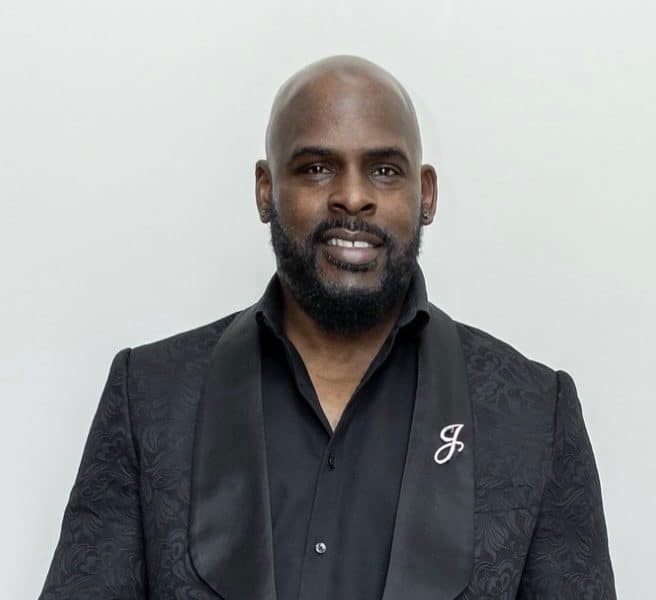
Edward Julian Sr. embraces poetry as a means to release and reflect
Ohio’s poet laureate features at Urban Arts Space tonight (Thursday, Sept. 24), appearing as part of the Poetry Festival, which continues through the weekend at Thurber House and the Grange Insurance Audubon Center.