
Filmmaker Logan St. Hilaire explores the in betweens with ‘Maroon’
The Columbus native turned the camera on his Haitian family for his new short film, which screens this weekend at the Wexner Center for the Arts as part of Cinema Columbus Film Festival.
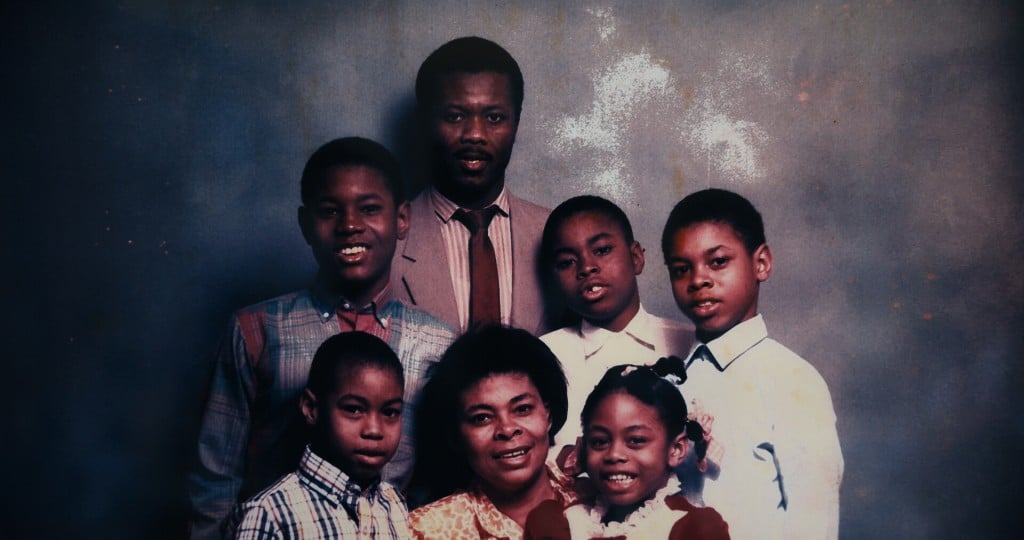
At one point early in “Maroon,” Columbus filmmaker Logan St. Hilaire addresses the racism his relatives faced after emigrating to New York City in the 1980s, recalling how as a child his Haitian father and siblings were subjected to the taunts of those who blamed Africans for causing the AIDS pandemic.
“Stories about us never seem to change,” St. Hilaire writes in the voiceover, delivered by his father in Haitian Creole, a language the filmmaker’s parents declined to teach their Ohio-born children, not wanting their English to be hampered by having to learn to speak multiple tongues.
The idea that Haitians have long been the target of racial prejudice has become more concrete for St. Hilaire in recent times, with U.S. Immigration and Customs Enforcement last month ramping up deportations of Haitian people living in Springfield, Ohio, whose temporary protected status (TPS) was revoked in late July by President Donald Trump. This ongoing purge arrives in the wake of the racist lie that Haitians in Springfield were eating people’s pets, which began spreading in right-wing circles in 2024 and was quickly seized upon by the Trump administration, with JD Vance amplifying the claims, and then, when challenged, stating it was okay to “create stories” as a means to drive media attention.
A donation powers the future of local, independent news in Columbus.
Support Matter News
“Beginning work on [‘Maroon’], there were talks of the attacks on TPS, and I remember being on campus when there were a lot of discussions on how to really handle ICE,” said St. Hilaire, an Ohio State graduate who will premiere “Maroon” at Wexner Center for the Arts on Friday, Sept. 11 as part of the “Sightlines: Ohio Documentary Shorts” block of Cinema Columbus, which takes place at multiple venues across the city from Thursday through Sunday, Sept. 10 through 13. (Click here for a full schedule of film times and locations.) “So, I think [the film’s] grounding in Ohio makes it feel a lot more poignant to the issue, because … this is where you’re now seeing this violent mobilization against Haitian people. But then it also documents the lives of Haitian people and Haitian Americans in such an honest, almost neo-realist way, where nothing is really happening.”
Intently focused on his family’s story, the 15-minute short routinely lingers on small moments, including an extended scene in which the director’s father and a friend repair a car. From this minutia, however, a more complex picture gradually emerges, with the film exploring everything from the interpersonal dynamics that can shape a family to what it means to be an engaged, committed citizen of a nation.
These ideas are often drawn forth by St. Hilaire’s evocatively written narrative, the director routinely surfacing meaningful insights in relatively few words. In recounting the increased migration of Haitians to the United States following a catastrophic 2010 earthquake, for instance, the filmmaker writes of a country “rediscovered by the world in collapse.” Additional layers of meaning come from this dialogue being read by his father, a man with whom St. Hilaire said he has often been at odds throughout his life.
“Him being able to vocalize what I couldn’t in Haitian Creole was an important moment for us, because I got to see a side of my father I didn’t really know,” said St. Hilaire, who attributed some of this distance between the two to an aspect of the Haitian spirit that compels the youngster to pursue those things he believes in deeply, and which can at times conflict with the expectations held for him by his father. “Having my exact thoughts and feelings verbalized in Haitian Creole was something very special. And seeing my dad as sort of this vessel for myself, it was very ancestral. … I think working on the project brought us closer.”
Growing up in Columbus, St. Hilaire said he tended to keep his Haitian roots hidden, citing as a primary reason the bullying experienced by his father upon his arrival in the United States. “And so, I’d often tell people I was mixed,” said the filmmaker, whose mother is Saint Lucian, and who traced the eventual thaw he experienced to learning about the Haitian Revolution in which his ancestors successfully overthrew French colonial rule to establish the independent Black republic of Haiti in 1804. (The film’s title is taken from the word maroonage, defined within the short as the act of enslaved people “risking everything in the pursuit of freedom.”) “And knowing that I’m directly related to these brave men and women who sacrificed everything for a better future really made me want to claim more of that in myself.”
There also exists within “Maroon” an exploration of who gets to claim themselves as American, which is reflected in St. Hilaire’s decision to bookend the short with recitations of the Pledge of Allegiance, the first spoken by his father in Haitian Creole and the second by the director in English. “I was really thinking about what it means to dedicate your life to a country,” said St. Hilaire, who sees represented in his parents chosen paths – his mother works in health care and his father is a truck driver – an innate dedication to their chosen country. “Because you are the backbone, and without health care and truck drivers the nation wouldn’t run.”
The commitments made by his parents have also enabled St. Hilaire a degree of freedom in crafting his own path, with the photographer and director tracing his initial interest in filmmaking to an emergency appendectomy he underwent at age 16 or 17. In the aftermath, St. Hilaire, 22, spent a couple weeks immobilized in bed, recalling how he told himself at the time that he would never again sit still for such a prolonged stretch. And so, emerging from the hospital, he threw himself headlong into skateboarding, often filming the exploits of his skater friends, which quickly led to him making short documentaries focused on the other fellow outsiders who existed within his high school orbit.
These earliest shorts tended to be more broad-spectrum, said St. Hilaire, who described himself at the time as “a video journalist asking bigger questions.” A turning point arrived during his sophomore year at Ohio State, when he viewed Kirsten Johnson’s 2016 documentary “Cameraperson,” a visual memoir constructed from 25 years of unused footage.
“And in that, you really see how … there are so many beautiful things when you’re not just looking at the bolded letters,” he said. “And that definitely shifted my perspective and helped me understand I’m not an events person, like, this event, this event, this event. I want to drift and flow within the in-betweens.”
Author
Related Articles
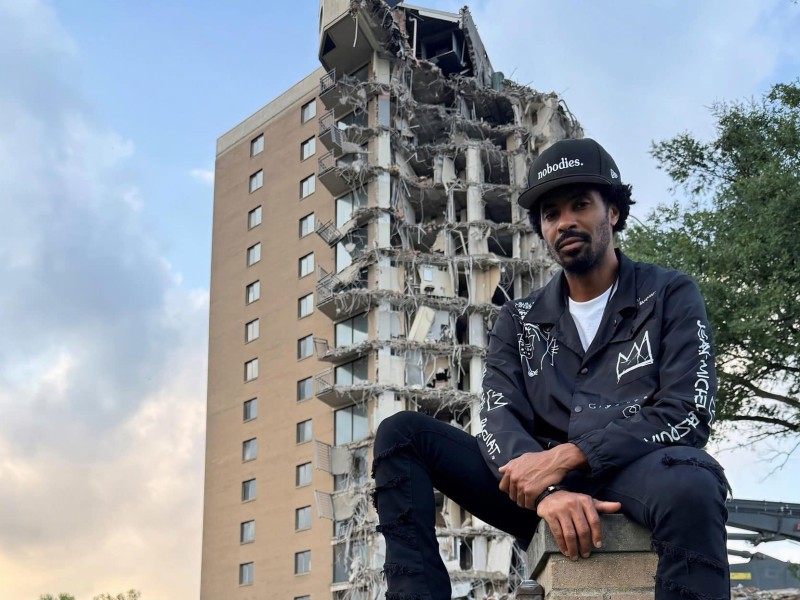
Damon Mosley and Darryl Dunning II join forces to help people feel seen
The new collaborative film project brewing between the director and actor has its roots in the East Side Columbus neighborhood in which the two were born and raised.
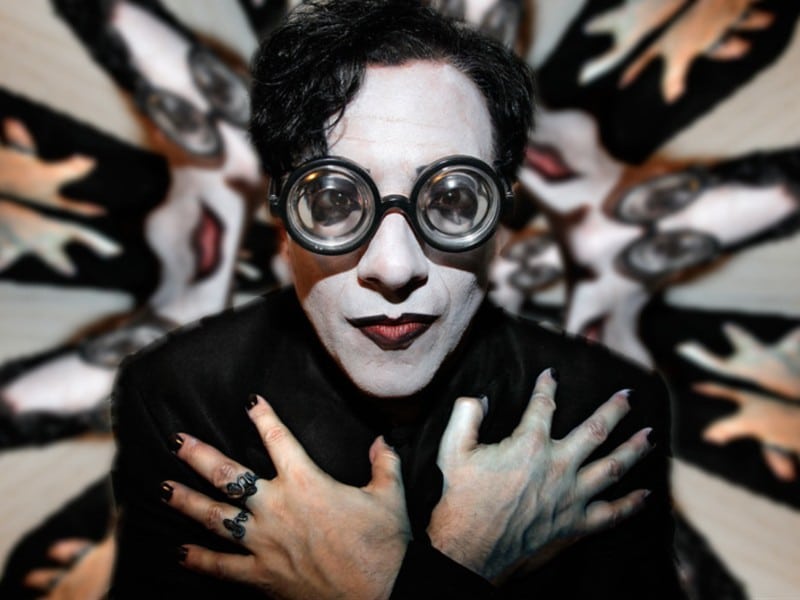
The age of Damon Zex
Remembrances flow for the video provocateur and free speech champion, who passed away June 21, and for the Columbus DIY scene from which he emerged.
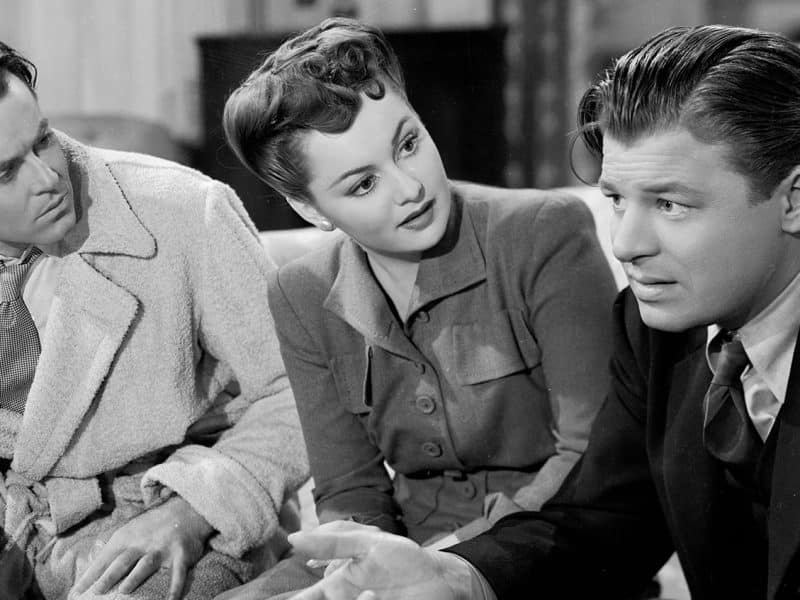
‘The Male Animal’ finds fresh relevance amid university crackdowns
During a February screening at Wexner Center for the Arts, the audience broke into applause both times the film’s main character defied university administrators who were attempting to clamp down on academic freedom.